
India emerging as global power hub with huge growth potential: Global experts at Davos

Davos, Jan 22 (IANS) India is fast emerging as a strong global power hub, driven by its large and young population, expanding economy and growing innovation ecosystem, global industry leaders said on Thursday.
Speaking to IANS on the sidelines of the World Economic Forum here, business leaders highlighted India’s rising importance in global economic development and its ability to attract long-term international investment.
Sharing a global perspective, Tu Chang, Founder of the Forum for Business, Taiwan, said India’s demographic advantage makes it one of the most important economic forces in the world today.
“India is emerging as a strong global power hub. With its large and young population, India offers immense potential for growth and innovation,” Chang stated.
Tu Chang said India is already being seen as one of the key powerhouses of global economic growth and will continue to play this role in the coming years.
He added that the World Economic Forum is addressing a wide range of issues this year, including sustainable development, capital flows, investments and political challenges, all of which are closely linked to economic progress.
“The country’s demographic advantage and expanding economy are key factors that will attract more global investment,” he explained.
He also praised Prime Minister Narendra Modi’s leadership, saying that the Indian government is making strong efforts to improve economic performance.
“India’s young workforce is a major strength and under Prime Minister Modi’s leadership, the country is well-positioned to perform even better in the years ahead,” Tu Chang said.
Milind Pimprikar, Founder of Caneus International, said discussions at the World Economic Forum this year are focused on scaling up technologies in a responsible manner.
He said Caneus is working with the Government of Maharashtra and the Government of India to create a new framework that helps startups and deep-tech innovations move from development to large-scale commercialization.
"Today at the World Economic Forum, the theme is how to scale up technologies responsibly,” he said.
“Through our partnership with the Government of Maharashtra and India, we are proposing to create a so-called mid-technology readiness level to scale up these technologies and startups to the next level,” Pimprikar told IANS.
Pimprikar said the partnership aims to introduce a “mid-technology readiness level” that will help promising technologies and startups reach the next stage of growth.
He added that an agreement was signed with the Maharashtra Chief Minister to establish an institute dedicated to the commercialization of deep technologies, which will support innovation-led growth in India.
"India’s strong economic momentum, expanding infrastructure, and mature business ecosystem make it an attractive destination for global investors," Frank Meehan, co founder, frontier one, Australia said.
--IANS
pk
India gains green energy advantage as costs of solar panels, batteries plunge
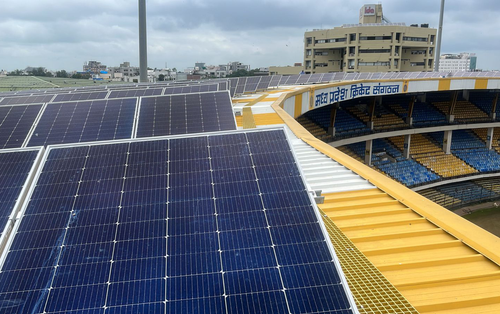
New Delhi, Jan 22 (IANS) Rapidly declining costs of electrotech like solar panels and batteries have unlocked a new energy path for countries like India that did not exist a decade ago when China was expanding its power sector.
In 2004, when China crossed 1,500 kWh of electricity use per capita, coal generation was about ten times cheaper than nascent solar photovoltaics (PV). This led to coal accounting for nearly 70 per cent of the growth in China’s electricity generation over a decade.
In contrast, as India now crosses 1,500 kWh of electricity use per capita, solar-plus-storage costs around half as much as new coal plants. This gap is widening as solar and battery costs fall along predictable learning curves, while coal power becomes more expensive with declining utilisation, according to an article published on the website of Ember, a global energy think tank.
Similarly, for the transport sector, in 2011, when China reached road transport oil demand of 150 litres of gasoline equivalent per capita, batteries were ten times more expensive than they are now, and the electric vehicle industry barely existed.
Meanwhile, India’s road oil demand at 96 litres per capita, is unlikely to ever reach even 150 litres per capita. Electric vehicles are already undercutting internal combustion engines on price which will lead to fall in the country’s oil import bill and reduction in pollution.
“The implication is that the energy pathway that makes economic sense for India today, as it rapidly industrialises, is not what made sense for China when it made the same journey,” the article states.
The article points out that India is already achieving greater success at earlier stages of development of renewable energy and Electric Vehicles.
Looking at electricity generation first. In India, solar reached 5 per cent of total generation at around $9,000 GDP per capita; in China, it took until about $23,000 to reach that level. Where solar goes, batteries are following fast: The share of renewable tenders paired with battery storage has climbed from about 12 per cent in 2021 to half in 2024, the article points out.
Meanwhile, India’s coal-fired generation in 2025 is set to fall year-on-year, though solar’s rise continues uninterrupted.
Ember and TERI’s least-cost pathway projects plateauing coal demand through to 2030.
Similarly, IEA’s Stated Policies scenario (which has historically underestimated electrotech growth) sees India’s coal demand in 2035 at roughly today’s level. In all likelihood, India will reach $20,000 GDP per capita without coal generation ever exceeding the levels China was burning at $5,000, the article added.
--IANS
sps/rad
India Post on track for Rs 17,546 crore revenue target in FY26: Scindia
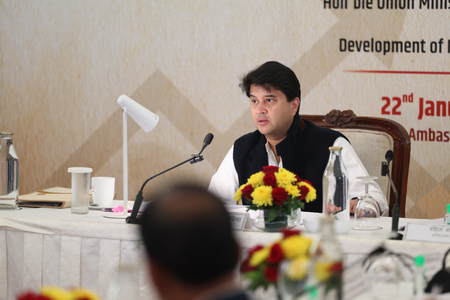
New Delhi, Jan 22 (IANS) India Post has set an ambitious revenue target of Rs 17,546 crore for the financial year 2025–26, significantly higher than the previous year, Union Minister for Communications and Development of North-Eastern Region Jyotiraditya Scindia said on Thursday.
Chairing the Quarterly Business Review (QBR) meeting for the third quarter of FY26 here, Scindia said the organisation is steadily moving towards becoming a parcel- and logistics-driven institution to meet the growing needs of e-commerce and citizen-centric services.
During the meeting, senior officers and Heads of Circles from across the country reviewed the performance of India Post across its key business verticals.
“India Post has already earned Rs 10,155 crore in the first three quarters of FY26, putting it on a strong path to achieve its annual target,” Scindia said.
“This progress reflects a strategic shift towards logistics, integrated supply chains and improved service delivery,” he stated.
“While overall growth remains positive, core verticals such as Parcels, Mail and International Mail have not performed up to expectations,” the minister noted while reviewing the Q3 performance.
He stressed that the future growth of India Post depends on strengthening these core services and said parcels and mail must start performing at full capacity.
He asked major circles like Kerala, Karnataka, Tamil Nadu, Maharashtra and Delhi, which together account for nearly 60 per cent of India Post’s business potential, to quickly adopt best practices.
Circle-wise performance showed mixed results. Rajasthan emerged as the best-performing circle overall, achieving 82 per cent of its Q3 targets.
Karnataka performed strongly in the Post Office Savings Bank segment, achieving 112 per cent of its target.
Citizen Centric Services saw exceptional growth, with Delhi recording 240 per cent achievement, followed by Maharashtra at 166 per cent and Rajasthan at 165 per cent.
Uttar Pradesh topped the Postal Life Insurance segment with 129 per cent achievement, while Rajasthan performed strongly in mail operations with 153 per cent.
Looking ahead, Scindia called for strong peer learning, with underperforming circles adopting successful models from Punjab, Delhi, Rajasthan and Telangana.
He stressed the need for clear accountability, measurable outcomes and zero tolerance for non-performance, while ensuring balanced contributions from all circles.
--IANS
pk
MSDE joins World Economic Forum to boost India’s skilling ecosystem

New Delhi, Jan 22 (IANS) The government on Thursday said the Ministry of Skill Development and Entrepreneurship (MSDE) has signed a Memorandum of Understanding (MoU) with the World Economic Forum (WEF) to collaborate on strengthening India’s skills and Technical and Vocational Education and Training (TVET) ecosystem.
MSDE will collaborate with the WEF to launch and implement a Skills Accelerator in India, a multistakeholder platform aimed at identifying, scaling, and accelerating innovative solutions and public–private partnerships to address critical skills gaps in the workforce.
The Accelerator will support efforts to strengthen India’s Technical and Vocational Education and Training (TVET) ecosystem by ensuring closer alignment between skilling initiatives and the evolving demands of industry and the global economy.
“What began as a strategic vision to align India’s skilling ecosystem with the future of work has now taken a structured and global form. The formalisation of the India Skills Accelerator, in partnership with the World Economic Forum, marks a key milestone in building a future-ready, globally competitive workforce,” said Jayant Chaudhary, Minister of State (Independent Charge) for Skill Development and Entrepreneurship.
Aligned with NEP 2020 and Viksit India at 2047, it reinforces skilling as a central pillar of inclusive growth and national transformation, he added.
Sukanta Majumdar, Minister of State for Education said this collaboration strongly complements the vision of the National Education Policy (NEP) 2020 by integrating education with skilling, fostering lifelong learning, and aligning curricula with future industry needs.
The Skills Accelerator will focus on strategically addressing skills gaps by promoting lifelong learning, upskilling, and reskilling.
The initiative will encourage flexible curriculum, integration of vocational and higher education pathways, mutual recognition of qualifications, and capacity building across institutions.
MSDE will work closely with higher education institutions, vocational training institutions, and regulatory bodies such as AICTE and UGC to support awareness, implementation, and scale the Accelerator.
This collaboration marks a new chapter in India and WEF relations, building on the momentum generated during India’s participation at the 55th WEF Annual Meeting in Davos-Klosters, Switzerland, in January 2025, where skill development was highlighted as a strategic pillar for inclusive growth and global collaboration.
--IANS
na/
India’s digital payments boom: BHIM app records over 300 pc growth in monthly transactions in 2025

New Delhi, Jan 22 (IANS) The BHIM Payments App has witnessed a sharp surge in usage in calendar year 2025 -- reflecting India’s growing shift towards UPI-based digital payments.
Monthly transactions on the app rose more than four times during the year -- highlighting increased trust, ease of use and expanding payment options for users across the country.
Data released by NPCI BHIM Services Limited shows that monthly transactions on the BHIM app grew from 38.97 million in January 2025 to 165.1 million in December 2025.
This marks a growth of over 300 per cent in transaction volumes, with the platform recording an average month-on-month growth of around 14 per cent throughout the year.
Along with higher volumes, the value of transactions also saw a strong jump. In December 2025, transaction value crossed Rs 20,854 crore.
Compared to the same period last year, volumes increased by nearly 390 per cent, while transaction value rose by more than 120 per cent.
This indicates that users are increasingly using BHIM not only for small daily payments but also for high-value transactions.
Delhi emerged as one of the leading markets for the BHIM Payments App in 2025. The growth in the national capital was mainly driven by small-ticket, high-frequency transactions.
Peer-to-peer payments accounted for 28 per cent of total transactions, followed by grocery purchases at 18 per cent.
Fast-food outlets contributed 7 per cent, eating places 6 per cent, telecom services 4 per cent, service stations 3 per cent and online marketplaces 2 per cent.
The app also gained popularity for IPO mandate authentications and other high-value transactions, underlining its reliability for critical payment and authentication needs.
Commenting on the performance, Lalitha Nataraj, Managing Director and CEO of NPCI BHIM Services Limited, said the BHIM Payments App has been designed to offer safe, convenient and inclusive digital payments, even in areas with low internet connectivity.
---IANS
pk
60 pc of Indian firms confident in scaling AI have mature frameworks in place: Report

New Delhi, Jan 22 (IANS) Nearly 60 per cent of Indian businesses confident in scaling AI responsibly have mature responsible AI (RAI) frameworks in place, though gaps remain on data access and regulatory clarity, a new report said on Thursday.
The report from National Association of Software and Service Companies (Nasscom) said that 30 per cent of respondents have established mature RAI practices and 45 per cent are actively implementing formal frameworks, marking a clear improvement from 2023.
The findings are based on a survey of 574 senior executives from large enterprises, SMEs and startups involved in the commercial development and use of AI in India.
The report highlighted a strong correlation between AI capability and responsible practices, with large enterprises leading at 46 per cent maturity while SMEs and startups gained ground with 20 per cent and 16 per cent.
The sectoral maturity is led by BFSI at 35 per cent, Technology, Media and Telecommunications (TMT) at 31 per cent and healthcare at 18 per cent, with nearly half of businesses across these industries actively advancing their frameworks.
Workforce enablement is a central focus, with nearly 9 in 10 organisations investing in sensitisation and training, the report said. Business leaders felt most confident about meeting data protection obligations, even as monitoring-related compliances remain a key concern.
“As AI becomes deeply embedded in critical decisions across finance, healthcare, and public services, responsible AI is no longer optional; it is foundational to building trust, ensuring accountability, and sustaining innovation,” Sangeeta Gupta, Senior VP and Chief Strategy Officer, Nasscom.
The real measure of India's AI leadership will not just be in the scale of adoption, but in how responsibly and inclusively these systems are designed and deployed, Gupta added.
Companies report highest confidence in meeting data protection obligations, reflecting the maturity of privacy frameworks, though monitoring-related compliances remain an area requiring further strengthening, the report noted.
—IANS
aar/na
Sensex, Nifty snap three-day losing streak

Mumbai, Jan 22 (IANS) Indian stock markets ended higher on Thursday, snapping a three-day losing streak, as positive global cues and easing geopolitical tensions boosted investor confidence.
Market sentiment improved after US President Donald Trump said he would not impose tariffs on European Union nations on February 1.
He mentioned that a ‘framework for a future deal’ had been reached with NATO on Greenland.
His remarks about a ‘great’ trade deal between the US and India further encouraged buying across the markets.
At the close of trade, the Sensex rose 397.74 points, or 0.49 per cent, to settle at 82,307.37.
The Nifty also ended higher, gaining 132.4 points, or 0.53 per cent, to close at 25,289.9.
“As long as the index holds above 25,120, the broader setup remains stable with scope for a gradual push toward 25,400–25,500,” an expert said.
“A decisive close above 25,600 will be required to confirm a bullish breakout and shift momentum firmly in favour of the bulls,” an analyst stated.
Failure to defend 25,120 may reopen downside pressure toward 25,100, according to market watchers.
Buying interest was seen in several heavyweights on the BSE, with stocks such as Adani Ports, BEL, SBI and Tata Steel leading the gains.
On the other hand, Eternal, Titan, Maruti Suzuki and ICICI Bank ended the session in the red.
Sector-wise, markets showed broad-based strength. Except for Nifty Realty and Consumer Durables, all sectoral indices finished higher.
Nifty PSU Bank and Nifty Media emerged as the top performers, rising more than 2 per cent each.
The broader markets also reflected positive momentum. The Nifty MidCap 100 index climbed 1.34 per cent, while the Nifty SmallCap index ended 0.76 per cent higher.
Commenting on Nifty technical outlook, market experts said that the outlook remains range-bound to be cautiously positive, favouring a buy-on-dips near supports and selling near resistance until a clear directional breakout emerges.
--IANS
pk
Industry leaders hail India as a promising growth hub at Davos
Davos, Jan 22 (IANS) Industry leaders and investors from across Europe and beyond have expressed strong confidence in India’s economic future, describing the country as one of the most attractive markets for global businesses.
Speaking to IANS on the sidelines of the World Economic Forum (WEF) here, they highlighted India’s large consumer base, stable political environment, rapid infrastructure development and growing trust among international investors.
Satish Rao, President of the Swiss Chamber, said India stands out as an exceptional market in today’s global scenario.
"I strongly believe and agree that in today’s situation, India is an amazing market for global players for the following reasons,” he mentioned.
“Number one, it has a captive consumer base of 1.4 billion people. It has a steady and stable political environment," Rao added.
Echoing similar views, Dewi Leitner, President of the European Small Size Enterprise, said she is extremely positive about the Indian economy.
Having visited India three times, she said she is excited not just about the country’s economic potential but also about its people.
"I think the relationship is growing very well. I’m truly impressed by how fast India’s economy is growing. It is a trustworthy country, and I definitely plan to start a startup there," Leitner mentioned.
Entrepreneur Jochen Hurlebaus said India has a very strong economic future ahead. He pointed out that the country is investing heavily in infrastructure and is transforming its economic environment to support business growth.
“I have seen the country investing heavily in infrastructure and transforming the economic environment to allow companies to thrive. This is one of the key reasons why I believe India will be very successful in the future," Hurlebaus added.
Investor Juliana also expressed optimism about India, saying economic ties with the country are strengthening rapidly.
She said she is impressed by the speed at which India’s economy is growing and described it as a trustworthy nation.
Reflecting growing global interest, she added that she definitely plans to start a startup in India.
--IANS
pk
Indian aviation industry outlook stable, disruptions expected to be temporary: Report

New Delhi, Jan 22 (IANS) The outlook on the Indian aviation industry is “stable,” driven by the anticipation of modest growth in domestic air passenger traffic in FY26, according to an ICRA report on Thursday.
ICRA has revised its forecasts for the domestic air passenger traffic growth in FY26 to 0-3 per cent, reaching 165-170 million, lower than its previous expectations of 4-6 per cent on a YoY basis. This is attributed to cross-border escalations (that led to flight disruptions and cancellations earlier during the year); the aircraft accident tragedy in June 2025 that made travellers hesitant, at least during the period immediately post the accident; the impact on business travel owing to the headwinds stemming from US tariffs; and the impact of operational disruptions at IndiGo from December 3, 2025 to December 8, 2025, resulting in around 4,500 flight cancellations.
However, ICRA maintained its Stable outlook on the industry as these disruptions are expected to be temporary, with ICRA’s growth forecast for FY2027 remaining unchanged at 6-8 per cent, although the low base of FY2026 would mean lower-than-earlier projected domestic air passenger traffic (175-182 million in FY2027 as per revised forecasts, against 179-186 million projected earlier).
ICRA had also revised its international air passenger traffic growth forecast for Indian carriers for FY2026 to 7-9 per cent from its earlier projection of 13-15 per cent.
ATF prices in January 2026 were lower by around 7.2 per cent on a sequential basis. The yield movement will remain monitorable due to its linkage with aviation turbine fuel (ATF) prices and the INR to USD exchange rate, both of which have a significant bearing on airlines’ cost structures. ATF prices from April 1, 2025, to January 1, 2026, have been lower by 4.2 per cent (on-year).
Fuel costs account for 30-40 per cent of airlines’ operating expenses, including aircraft lease payments. Further, 35-50 per cent of the operating expenses, which include fuel expenses and a substantial share of aircraft and engine maintenance costs, are denominated in dollar terms. Also, some airlines have foreign currency debt. As the INR continued to depreciate in Q3 FY2026, airlines are likely to face further forex losses, the report states.
The report expects the industry’s net losses to increase to Rs 170-180 billion in FY2026, higher than its earlier expectations of net loss of Rs 95-105 billion for the year (against net loss of Rs. 56 billion in FY2025). The primary contributor to this larger deficit is IndiGo’s elevated losses, stemming from the financial impact of flight cancellations, passenger refunds and elevated operating expenses due to the operational disruptions experienced in the first week of December 2025.
While some airlines have adequate financial assistance from strong parent companies, supporting their credit profiles, the credit metrics and liquidity profiles of others continue to remain under pressure, despite some improvement in recent years, the report added.
--IANS
sps/na
Budget 2026 likely to see 15 pc capex growth, fiscal deficit target at 4.2 pc
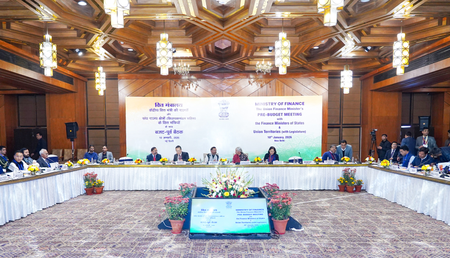
New Delhi, Jan 22 (IANS) The government will likely unveil Budget 2026 with roughly Rs 53.5 trillion worth of total expenditure, a capital expenditure growth of about 15 per cent and a fiscal deficit target of 4.2 per cent, a report projected on Thursday.
The report from investment management firm OmniScience Capital said that tax revenues are projected to grow about 10 per cent year‑on‑year in FY27 on a nominal GDP growth assumption of around 9 per cent.
Non‑tax receipts are also expected to grow near 10 per cent, reflecting normalised dividend payouts and steady central public sector enterprise profitability (CPSE) without assuming exceptional transfers from the RBI, the report said.
Borrowings are projected to rise modestly by about 3 per cent year‑on‑year, implying a FY27 fiscal deficit of around 4.1–4.2 per cent of GDP, consistent with the ongoing consolidation path.
The report highlighted a structural transformation in successive Union Budgets over the past decade, with capex rising from roughly 20 per cent of total budgetary spending in FY16 to over 30.6 per cent in FY26.
The rising allocation for capex signalled a decisive shift towards asset creation and long-term growth, it noted.
Capital expenditure has grown at about 15 per cent compound annual growth rate (CAGR) over the past 10 years, materially outpacing revenue expenditure growth of 8.8 per cent.
This reflects a sustained policy focus on infrastructure development, productivity enhancement, and crowding-in of private investment, rather than consumption-led fiscal expansion, the report said.
The projected capex includes grants for capital assets. Total public capex is estimated at roughly Rs 17 lakh crore in FY27, reinforcing the infrastructure-led growth strategy.
Budgetary allocations continue to reflect continuity in fiscal priorities, with defence and core infrastructure remaining dominant spending heads, according to the firm.
"However, a gradual rebalancing towards technology, energy, and urbanisation, even as interest payments remain a structural constraint on revenue-side flexibility,” it said.
—IANS
aar/na