
AI can unleash $550 billion for 5 pivotal sectors in India by 2035: Report

Davos, Jan 23 (IANS) Artificial intelligence (AI) has the potential to contribute $550 billion to five priority sectors -- agriculture, education, energy, healthcare and manufacturing -- in India by 2035 at a nominal level, positioning the country as a potential global benchmark for how emerging economies can deploy AI in a manner that is both transformative and equitable, said a PwC India report released at the World Economic Forum's (WEF) annual meeting here on Friday.
The report showed that AI can be a driver of sectoral growth, from boosting crop productivity and reducing agri-waste to improving school governance, cutting power theft, accelerating disease detection, and enhancing manufacturing quality.
Real world pilots already demonstrate this potential: AI enabled crop advisories delivered double digit efficiency gains, smart metering flagged high accuracy theft cases, and AI driven TB detection improved notification rates dramatically. Scaling such applications, even to modest levels, could save hundreds of millions annually, said the report.
"Al is more than a technological leap; it's a nation building force. It gives us the power to reimagine growth not just in GDP terms, but through a people first lens. By investing in infrastructure, talent, and governance, we can ensure that innovation and equitable development move hand in hand. This is how we shape a Viksit Bharat that leads the world," explained Sanjeev Krishan, Chairperson, PwC in India
Maharashtra Chief Minister Devendra Fadnavis, while unveiling the report here, said, "AI is revolutionising all spheres of life, and we are embedding it in governance to democratise its impact”.
“We have done well in creating a strong digital infrastructure, and we are now in a position to leverage data to drive deeper digitisation. We have developed an AI‑based application for farmers, available in Marathi, which is being actively used to understand crop cycles and the appropriate understanding around pesticide usage. At the same time, we are building an innovative city that will help push the state’s larger AI agenda. EODB is another key focus area. In Maharashtra, we have recently cancelled 17 laws as part of our decriminalisation drive,” he noted.
In the report, PwC also introduced the AI Edge framework, defining the five tangible outcomes India should expect from AI deployed at scale: operational excellence, sustainability, good governance, resilience, and financial discipline.
These outcomes shift the global AI conversation from efficiency alone to a broader focus on transparency, environmental stewardship, system reliability and inclusive value creation across public and private ecosystems.
Speaking on India’s evolving business and policy environment, Nikhil Kamath, entrepreneur and investor, noted that “the business environment is getting better. We have seen strong policy stability in recent years, and India as a country is trying to do better.”
--IANS
na/
Indian equity markets navigating consolidation phase, not a structural shift: Report

Mumbai, Jan 23 (IANS) Indian equities are currently trading near multi-cycle relative lows compared with gold and silver and historically, such valuation divergences between financial and real assets have coincided with phases where diversification beyond pure equity exposure has helped investors preserve capital and manage volatility more efficiently, a report showed on Friday.
Importantly, this does not signal a structural shift away from equities, but rather highlights the importance of balance during transitional phases of the market cycle, according to the report by PL Asset Management, the asset management arm of PL Capital Group (Prabhudas Lilladher).
It noted that Indian equity markets are navigating a phase of consolidation marked by global uncertainty, uneven participation and cautious investor sentiment.
“While domestic macro fundamentals remain structurally strong, near-term equity performance has been constrained by external headwinds, resulting in market returns being driven by a narrow set of stocks rather than broad-based participation,” the findings showed.
Technical indicators suggest that only a small proportion of stocks have consistently traded above their long-term moving averages, highlighting the fragility beneath index-level resilience.
This divergence indicates that while Indian equities remain fundamentally sound, the market has yet to transition into a durable, broad-based uptrend, the report noted.
Against this backdrop, precious metals have significantly outperformed Indian equities, reinforcing their role as effective portfolio stabilisers during periods of equity consolidation.
Gold and silver have benefited from a combination of global factors, including sustained central bank demand, currency volatility and persistent geopolitical uncertainty. Silver has additionally been supported by its dual role as a precious and industrial metal amid constrained supply conditions, said the report.
“Markets are currently in a phase where outcomes are being driven more by asset allocation than by broad-based equity rallies. While India’s long-term growth fundamentals remain intact, near-term volatility is inevitable. Gold and silver have once again demonstrated their relevance as portfolio stabilisers, helping investors manage risk and stay invested through periods of market consolidation,” explained Siddharth Vora, Head-Quant Investment Strategies and Fund Manager, PL Asset Management.
Looking ahead, Indian equities are expected to benefit from a gradual recovery in domestic earnings and potential global capital rotation as valuations in AI-led global markets normalise.
--IANS
na/
Gold, silver prices continue to touch new highs amid global uncertainty

New Delhi, Jan 23 (IANS) Gold and silver prices surged to record highs on Friday, as the US dollar weakened and geopolitical tensions surged over threats of US intervention in Iran.
MCX gold February futures rose 1.23 per cent to Rs 1,58,261 per 10 grams around 11.25 am. Meanwhile MCX silver March futures rose 2.63 per cent to Rs 3,35,900 per kg.
International markets also saw gold trading near historic highs, holding firm around the $4,951 zone after marking a fresh record at $4,967.
The prior resistance band of $4,900–$4,940 turned into a support zone, an analyst said, adding, the broader outlook remains firmly bullish due to steady central-bank accumulation and expectations of accommodative global liquidity.
COMEX silver surged to fresh all-time highs near $98.92 and consolidated around $98.30–$98.70 after mild profit booking.
US President Donald Trump said that the United States has an “armada” heading toward Iran but hoped he would not have to use it. Trump reiterated his warnings to Tehran against restarting its nuclear programme.
US’ aircraft carrier USS Abraham Lincoln and several guided-missile destroyers will arrive in the Middle East in the coming days, according to reports, citing sources.
The precious metals rebounded in the previous session amid signals that some European nations may reduce exposure to US Treasuries.
"Gold has support at Rs 1,54,650-Rs 1,52,310 zone while resistance at Rs 1,58,850- Rs 1,60,150. Silver has support at Rs 3,20,810 to Rs 3,10,170 zone while resistance at Rs 3,31,810 to Rs 3,37,470 zone," said Rahul Kalantri, VP Commodities, Mehta Equities Ltd.
A new report from Motilal Oswal Financial Services Ltd. (MOFSL) said silver’s exceptional rally of over 200 per cent in the last 12 months, sharply outperforming gold’s 80 per cent surge has created a condition in favour of yellow metal in near term.
Silver's sharp surge from Rs 60,000 to Rs 3,20,000 could lead to a phase of consolidation at elevated levels or rebalancing by market participants becomes more likely, it forecasted.
—IANS
aar/na
Gulfood 2026: India to showcase diverse agri-food ecosystem

New Delhi, Jan 23 (IANS) India’s participation at the ‘Gulfood 2026’ event is aligned with the opportunities emerging from the India–UAE Comprehensive Economic Partnership Agreement (CEPA), which has strengthened bilateral trade ties and enhanced market access for Indian agri and food products in the Gulf region, an official statement said on Friday.
The Agricultural and Processed Food Products Export Development Authority (APEDA) is participating at the ‘Gulfood 2026’.
India is the Partner Country at the event from January 26-30, underscoring its strategic importance as a reliable sourcing destination and a key contributor to global food security and resilient supply chains.
According to Commerce Ministry, exhibitors from 25 States and regions are participating, reflecting India’s vast agricultural and regional diversity.
The participation highlights region-specific agri-products, GI-tagged items, organic produce and value-added food products, demonstrating India’s expanding engagement in international agri-trade.
The statement said that the Indian Pavilion has doubled in size compared to last year, reflecting the expanding footprint of Indian agri-food exports, increasing global demand for Indian products and enhanced participation from exporters, institutions and startups.
It features 161 exhibitors across a wide range of categories, including processed foods, fresh and frozen products, pulses, grains and cereals, beverages, value-added food products and agri-export startups.
The Indian Pavilion brings together exporters, Farmer Producer Organisations (FPOs), cooperatives, startups, State Government agencies and national institutions, presenting a comprehensive view of India’s agri-food ecosystem and export readiness, said the statement.
Located in the Startup Zone at the Dubai World Trade Centre, the ‘BHARATI Pavilion’ features eight high-potential Indian startups, selected through a national-level process from over 100 applicants.
These startups are showcasing innovative products, technology-driven solutions and export-enabling offerings aligned with APEDA’s Farm to Foreign vision.
While Dubai Expo City hosts the World Food Hall, Pulses, Grains and Cereals Hall and Gulfood Green, focusing on sustainability, innovation and future food systems, the Dubai World Trade Centre (DWTC) hosts the Beverage Hall and the Startup Hall, including the BHARATI Pavilion.
—IANS
na/
Silver’s exceptional 200 pc rally boosts near term case for gold: Report
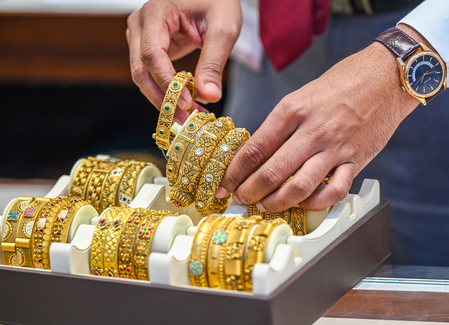
New Delhi, Jan 23 (IANS) Silver’s exceptional rally of over 200 per cent in the last 12 months sharply outperforming gold’s 80 per cent surge has created a condition in favour of yellow metal in the near term, a new report has said.
The report from Motilal Oswal Financial Services Ltd. (MOFSL) said that the current gold–silver ratio favours the yellow metal after silver’s outsized run.
The sharp outperformance of silver over has led to a "significant compression in the gold–silver ratio, which has fallen from pandemic highs of 127 to around 50 at the start of 2026," the report mentioned.
This reset suggests that while the long-term outlook for precious metals remains constructive, the near-term risk-reward equation may now be shifting in favour of gold after silver’s outsized run.
“While we remain positive on both metals and silver continues to have long-term upside backed by industrial demand and tight physical market conditions, the recent rally has also increased near-term volatility," said Navneet Damani, Head of Research Commodities and Manav Modi, Commodities Analyst, Motilal Oswal Financial Services Ltd.
Damani maintained that in this phase of silver's sharp outperformance, a higher allocation to gold can help manage fluctuations while staying invested in precious metals.
Silver showed more volatility with sharper price swings, while gold continues to offer relatively better stability—making it a preferred near-term hedge in uncertain market conditions, the report said.
Silver's sharp surge of over 200 per cent, from Rs 60,000 to Rs 3,20,000, could lead to a phase of consolidation at elevated levels or rebalancing by market participants becomes more likely.
The brokerage emphasised that the view is not a negative call on silver, but a risk-managed reallocation strategy after an aggressive up move.
Global silver ETFs saw outflows of over 3 million ounces in 2026, while gold ETFs experienced comparatively steadier inflows.
Global liquidity is expanding, the report said, citing an increase of money supply in the US and China, with the latter's money supply growing over 8 per cent YoY — conditions that historically boost demand for safe‑haven assets such as gold.
—IANS
aar/na
Growth picks up pace for both manufacturing, services in India in Jan: HSBC Flash PMI

New Delhi, Jan 23 (IANS) Growth picked up pace for both manufacturing and services in India in January as the HSBC Flash PMI figures on Friday showed quicker increases in new orders and output, alongside the reinstatement of job creation and a rebound in business confidence in the country.
Rising from 57.8 in December to 59.5 in January, the HSBC Flash India Composite Output Index – a seasonally adjusted index that measures the month-on-month change in the combined output of India’s manufacturing and service sectors – indicated a sharp rate of expansion that was above the long-run series average.
Trends improved at both manufacturers and service providers. Meanwhile, aggregate rates of input cost and output charge inflation remained moderate despite quickening since December, said the HSBC Flash India PMI by S&P Global.
“Growth, as signalled by the HSBC flash PMI, picked up pace for both manufacturing and services. Despite the rise in the manufacturing PMI, January’s figure remained below the 2025 average,” said Pranjul Bhandari, Chief India Economist at HSBC.
After losing some momentum at the end of 2025, new orders rose more rapidly – led by a faster pick up in domestic orders. Input cost pressures rose quickly, though more for goods producers than for service providers, Bhandari mentioned.
There were quicker increases in output at manufacturing companies and their services counterparts, with rates of growth broadly similar.
According to the report, underpinning the acceleration in growth of private sector activity was a faster expansion in overall new business intakes.
According to survey members, sales were fuelled by strengthening demand conditions and aggressive marketing campaigns. Manufacturers noted a quicker upturn than service providers, though growth picked up pace in both cases.
“January data showed a marked upturn in aggregate international orders, one that was the greatest in four months. Asia, Australia, Europe, Latin America and the Middle East featured in the qualitative part of the survey as the main destinations for Indian goods and services in the latest month,” said the report.
Hiring across India's private sector resumed in January, following no change in employment during December.
When assessing the 12-month outlook for business activity, Indian private sector companies were optimistic, the report mentioned.
—IANS
na/
Amazon’s 2nd round of 30,000-job cut plan likely next week: Report

New Delhi, Jan 23 (IANS) US e-commerce giant Amazon is likely to announce a second round of job cuts next week, in its plan to trim its workforce by 30,000, due to efficiency gains from artificial intelligence (AI), according to reports.
The new round of layoffs is expected to impact white collar roles across divisions including Amazon Web Services (AWS), the People Experience and Technology unit (human resources), Prime Video and retail, according to reports.
In October last year, Amazon reduced 14,000 white-collar employees from its workforce, around half of its total target 30,000. The magnitude of job cuts next week is expected to be of the same level, according to a Reuters report, citing sources.
The company was yet to comment on the report.
The e-commerce giant had linked the October round of job cuts to the rise of artificial intelligence (AI) software in an internal letter. “This generation of AI is the most transformative technology we’ve seen since the Internet, and it’s enabling companies to innovate much faster than ever before,” according to the letter.
Later, however, Amazon CEO Andy Jassy told analysts during the company’s third-quarter earnings call that the reduction was not "really financially driven" or "AI-driven." He said, “it’s culture," alluding that the company had too much bureaucracy.
“You end up with a lot more people than what you had before, and you end up with a lot more layers," he said.
Jassy had said earlier in 2025 that Amazon’s corporate workforce would get smaller over time from efficiencies gained through AI implementation.
Though the job cut affecting 30,000 employees would be the largest layoff in Amazon’s three-decade history after 27,000-job cuts in 2022, it would represent a small portion of Amazon’s 1.58 million employees.
Affected workers could remain on the payroll for 90 days, during which time they could apply for jobs internally or seek other employment, according to reports.
Leading business executives of tech companies at the World Economic Forum meeting in Davos said this week that artificial intelligence would not replace human jobs but can only reshape work by automating tasks.
—IANS
aar/na
Daily forex turnover hits record high in 2025: BOK
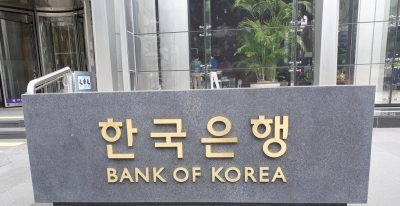
Seoul, Jan 23 (IANS) Daily foreign exchange (FX) trading by banks in South Korea hit an all-time high last year, driven by increased cross-border stock trading, central bank data showed on Friday.
Average daily FX turnover, including derivatives trading, came to US$80.71 billion in 2025, up 17 per cent from the previous year's $68.96 billion, according to the data from the Bank of Korea (BOK), reports Yonhap news agency.
It marked the highest annual level since the central bank began compiling such data under the current statistical standards in 2008.
"Amid extended foreign exchange market trading hours, stock investment-related trading by residents and foreign investors increased sharply," a BOK official said.
Average daily spot FX turnover climbed 26.1 per cent on-year to $32.38 billion last year, while derivatives trading increased 11.6 per cent to $48.33 billion over the cited period.
Residents' overseas stock investment amounted to $129.4 billion in the first 11 months of last year, already higher than the previous year's $72.2 billion, the data showed.
Foreign investors' investment in South Korean stocks also jumped 129 per cent on-year to $50.4 billion in 2025, according to the data from the BOK.
Meanwhile, more than one in four financial experts believe increased volatility in the foreign exchange (FX) market poses the biggest risk to the country's financial system, a central bank survey showed on Friday.
According to the survey conducted by the Bank of Korea (BOK) on 75 financial experts at home and abroad between November and December, 26.7 percent said heightened volatility in the local FX market is the biggest risk, among others, to the financial system in Asia's fourth-largest economy.
Some 16 per cent said high household debt poses the second-largest risk to the financial system.
The South Korean won has long traded below the multiyear low of 1,450 won to the greenback, in the face of capital outflows caused by increased overseas stock investment and geopolitical risks stemming from the Middle East and Europe.
The respondents cited uncertainties in economic and monetary policies among major economies, and an adjustment in the global asset market as major external factors that may hurt the financial system.
Some 12 per cent said there is a high possibility of a short-term shock occurring within a year undermining the financial system, the survey showed.
—IANS
na/
Sensex, Nifty open on positive note as geopolitical tensions ease
Mumbai, Jan 23 (IANS) The Indian stock market opened higher on Friday, extending gains for the second consecutive trading session while tracking positive global cues.
As of 9.30 am, the Sensex added 132 points, or 0.16 per cent to reach 82,440 and the Nifty advanced 52 points, or 0.21 per cent to 25,342.
Main broad-cap indices performed in line with benchmark indices, as Nifty Midcap 100 added 0.32 per cent, and the Nifty Smallcap 100 advanced 0.24 per cent.
All sectoral indices were trading in the green except Nifty media, PSU bank, realty as well as oil and gas.The top gainer was Nifty metal, up over 0.9 per cent. Nifty Media was the notable loser, down 0.74 per cent.
Immediate support for Nifty is placed at 25,100-25,150 zone, while key support is seen at 25,400–25,450 zone, market watchers said.
Asia-Pacific markets rose in the morning session, tracking Wall Street gains as geopolitical concerns moderated. Investor optimism rose as the Bank of Japan kept interest rates steady.
The pattern of sustained FII selling and DII buying, which dominated the market trend in 2025, have continued in 2026 so far. Investors look for a change in this pattern from cues in Budget 2026.
The FII's stance on India depends on growth in India’s corporate earnings as they can invest in other markets with cheaper valuations and better earnings, analysts said.
Since earnings growth may take some time, FII selling is expected to continue, pre-empting any healthy rally. FIIs are adding to the short positions on every rally triggered by some positive news, they added.
In Asian markets, China's Shanghai index added 0.27 per cent, and Shenzhen gained 0.24 per cent, Japan's Nikkei added 0.5 per cent, while Hong Kong's Hang Seng Index advanced 0.29 per cent. South Korea's Kospi added 0.92 per cent.
The US markets ended in the green overnight as Nasdaq advanced 0.91 per cent. The S&P 500 gained 0.55 per cent, and the Dow added 0.63 per cent.
On January 22, foreign institutional investors (FIIs) sold net equities worth Rs 2,550 crore, while domestic institutional investors (DIIs) were net buyers of equities worth Rs 4,223 crore.
—IANS
aar/na
FY27 likely to be a year of fiscal restraint after tax breaks in FY26: Report
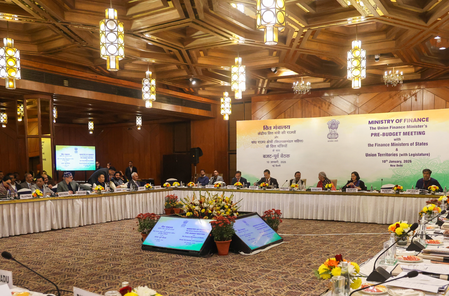
New Delhi, Jan 23 (IANS) The next fiscal (FY27) is likely to be a year of fiscal restraint for the upcoming Union Budget 2026-27, after having given a lot of tax breaks in FY26, according to a new report.
As far as expenditure is concerned, at least a 10 per cent capex growth is assumed with limited room for revenue expenditure (as per our base case), according to the Budget Preview from HSBC Mutual Fund.
“In terms of deficit, the commitment to walk the fiscal glide path suggests a fiscal deficit of Rs 16.6 lakh crore (base case) — 4.2 per cent of GDP; translating into debt-to-GDP ratio of 55.6 per cent for FY27 (estimated),” the report projected.
Overall, the deficit targets would be met at 4.4 per cent of GDP even as Nominal GDP ‘growth rate’ is lower, the absolute level is still higher than that laid out at the time of FY26BE, the report said.
As of January, the FY27 redemptions stand at Rs 5.5 lakh crore.
Assuming some buyback/switches/retirement, the redemptions could be brought down to Rs 4.5 lakh crore, still higher than the Rs 3.3 lakh crore in FY26. This in itself takes the Gross Borrowing higher to Rs 16.3 lakh crore (base case), the report mentioned.
The Nominal growth is assumed at 10 per cent YoY and the rise in liabilities is assumed to rise at a slower clip of 8 per cent.
At the same time, the weighted average borrowing cost (as of FY25 was about 7 per cent and till Q2 FY26, it was somewhere in the region of 7.20 per cent, while Nominal GDP growth was just about 8 per cent YoY, which, in some way, makes it challenging to layout a rosy path for fiscal consolidation especially in terms of debt-to-GDP ratio, the report said.
—IANS
na/