
FII confidence in Indian market to resume with stronger corporate earnings, US-India deal

New Delhi, Jan 24 (IANS) If foreign institutional investor (FII) confidence in Indian market is to resume, corporate earnings have to improve in the next quarter (Q4) and the US-India trade deal should happen, analysts said on Saturday.
While the former is likely in the January-March quarter (Q4 FY26), there is no clarity at all on the timeline of the latter.
“This is the biggest uncertainty weighing on the market now,” said Dr VK Vijayakumar, Chief Investment Strategist, Geojit Investments Ltd.
FPIs not only continued their selling spree in the week ended January 23, but also increased the intensity of their selling.
Total FPI selling in the equity market this month (through January 23) stood at Rs 33,598 crore, as per NSDL data. This the highest monthly selling figure since August 2025.
“Sentiments remained very weak due to a combination of factors such as sustained rupee depreciation, lack of any finality regarding US-India trade deal and unimpressive Q3 results, so far, which are not indicating any pick up in corporate earnings,” said Vijayakumar.
The sustained selling by FIIs has led to 2.5 per cent decline in Nifty for the week ending January 23, resulting in erosion of Rs 16 trillion of market cap in a week, said analysts.
A major factor that pushed FII selling has been the continuous decline in the rupee which touched Rs 91.96 to the dollar on Friday.
Market participants believe that the delay in the US-India trade agreement will widen India’s trade and current account deficits further impacting the rupee. Sustained FII selling is in anticipation of this rupee depreciation.
Investors are keeping an eye ahead for cues from Union Budget 2026 and guidance from the Fed on the trajectory of interest rate cuts. Analysts maintain that elevated FII short positions, oversold momentum indicators, and pre-Budget positioning could trigger bouts of short covering.
--IANS
na/
India well placed to outperform peers despite near‑term volatility

New Delhi, Jan 24 (IANS) While volatility is likely to persist in the Indian markets in coming months, the country remains well positioned to outperform many global peers over the medium to long term, a report said on Saturday.
The wealth management firm, PL Wealth preferred the financial sector as the core portfolio anchor as credit growth is expected to stay healthy, asset quality stable and capital adequacy strong.
"Select private banks, PSU banks, and well-managed NBFCs offer attractive risk-reward, particularly during market corrections," the report said.
Industrials and capital goods are also well positioned, supported by sustained government capex, infrastructure spending, and rising order books across defence manufacturing, power equipment, and infrastructure ancillaries, the firm added.
Indian equity markets are expected to stay range‑bound in the near term, with January 2026 characterised by selective opportunities rather than broad rallies, the firm forecasted. Valuations across large caps and quality mid caps have normalised following last year’s consolidation, shifting focus to earnings delivery.
Large‑cap stocks with strong balance sheets and predictable cash flows should offer relative stability, while stock‑specific opportunities may emerge in select mid‑cap names as earnings visibility improves.
“India enters 2026 with a rare combination of strong growth, low inflation, and improving corporate fundamentals,” said Inderbir Singh Jolly, CEO, PL Wealth Management.
Urban consumption remains steady, while rural demand is likely to improve on the back of stable inflation, income growth, and a normal monsoon, it predicted.
Autos, consumer durables, and discretionary consumption show early signs of demand recovery, though stock selection remains critical.
Telecom continues to benefit from stable cash flows and structural growth driven by rising data consumption, it said.
The report highlighted India’s stronger macro footing versus many major economies. India's FY26 GDP growth is seen at 6.5–6.8 per cent, inflation has moderated sharply, and the RBI’s policy stance has become more growth‑supportive after cumulative rate cuts and liquidity measures.
However, inflation in the US though it eased around 3 per cent, it remains sticky above target, keeping markets focused on the timing and pace of rate cuts, the firm said.
GDP growth of Europe is forecasted at approximately 1–1.2 per cent, weighed down by structural challenges and weak external demand, while China’s growth is expected to slow to around 4.7–4.8 per cent in 2025.
--IANS
aar/pk
Credit, deposit growth indicators in green as policy actions begin to show impact

New Delhi, Jan 24 (IANS) The recent policy actions are beginning to show positive effects across the economy, with improvements in credit and deposit growth, industrial activity, and several consumption-related indicators, a new report has said.
The report from BNP Paribas India said improvements in indicators such as credit and deposit growth, IIP, auto sales, port traffic, GST e-way bills, fuel consumption, and consumer sentiment, though export growth and GST collections have moderated.
“Most indicators of consumption, including auto sales, fuel consumption, PMI, credit card payments, urban wage growth, and consumer sentiments, remain robust. In our view, the government’s focus on consumption through expansionary fiscal and monetary policy should support growth,” the report said.
Urban consumption indicators looked positive, with vehicle sales (PV, 2W, tractors), fuel consumption, deposit growth, e‑way bills, airline passenger traffic, and hiring demand all recorded upticks.
Rural indicators are mixed as the GST rate cut is positive and monsoon has been good, but low agri-realisation could continue to hurt in the near term, the brokerage said.
After a weak festival season in October, rural indicators are showing signs of recovery, it said, adding that agricultural exports, tractor sales, and reservoir levels have all improved.
The firm estimated that the food inflation has hit its trough and should turn positive this quarter due to the base effect dynamics. Food inflation and the government’s renewed emphasis on consumption should provide support for rural wage growth.
Industry and services are showing signs of recovery, with YoY credit growth around 12 per cent, deposit growth at 12.7 per cent, higher airline and port activity, robust PMI readings, and government expenditure.
Industrial production rose after the festive season, and manufacturing output, PV production, new order growth, and cement production remain high, the report said.
On the expenditure side, capital expenditure for the year seems to have been front-loaded and could moderate in the coming months, according to the brokerage.
--IANS
aar/rvt/
S. Korean trade minister urges USTR to separate Coupang probe from trade issues
Seoul, Jan 24 (IANS) Trade Minister Yeo Han-koo said on Saturday he has stressed to US trade officials that Seoul's investigation into e-commerce giant Coupang over a major data breach should be treated separately from broader trade issues between the two countries.
Yeo made the remarks regarding Coupang to reporters at Incheon International Airport after returning to South Korea following his participation in the World Economic Forum in Davos, Switzerland, reports Yonhap news agency.
Coupang, a U.S.-listed company founded by Korean American entrepreneur Kim Bom-suk, also known as Bom Kim, generates about 90 percent of its revenue in South Korea.
The minister met with U.S. Trade Representative Jamieson Greer on the sidelines of the Davos forum and exchanged views on pending bilateral trade issues.
Yeo said he conveyed to Greer Seoul's position that the investigation does not constitute discriminatory treatment against a U.S. company and should not be elevated into a trade dispute.
"I explained that it is not because Coupang is a U.S. company," Yeo said, adding that authorities would have conducted the same non-discriminatory and transparent investigation if a South Korean firm had experienced a similar data breach.
Yeo also met with Greer and key lawmakers from both the U.S. Senate and House of Representatives during a separate visit to Washington last week to explain Seoul's stance on the Coupang probe and address concerns over South Korea's digital regulatory environment.
Meanwhile two US investors in e-commerce giant Coupang notified the South Korean government of their intent to bring arbitration claims against it over what they called "discriminatory" acts toward the US-listed firm, and requested a US government probe into the matter.
Greenoaks Capital Partners and Altimeter Capital Management took the actions, decrying South Korean authorities' investigations into Coupang following revelations in November about a massive customer data leak, according to documents that their legal representative, Covington & Burling LLP, submitted to the two governments.
The Seoul government, along with experts, has been conducting a probe into the incident, in which about 33.7 million customers are believed to have been affected. Coupang has claimed a perpetrator accessed data from only about 3,000 of the accounts in question.
—IANS
na/
Market volatility over Greenland issue to continue due to ‘few sticking points’: Report

New Delhi, Jan 24 (IANS) Investors are likely to remain on edge over the proposed US framework on Greenland, and near-term volatility related to this issue can continue, a report has said.
The report from Bank of Baroda said that market participants are awaiting more details that could determine whether negotiations succeed or unravel.
"Going ahead, investors are likely to await more details of the deal, as there are a few sticking points which can derail the negotiations. Hence, some volatility can be expected," the report said.
Several analysts expect the arrangement to resemble an update of the existing security agreement between the US and Denmark, which was signed in 1951, the report noted.
Further negotiations will follow in due course which will cover areas such as US military presence in Greenland, as well as use of its mineral resources and sovereignty, said Aditi Gupta, Economist, Bank of Baroda.
US President Donald Trump has framed Washington’s interest in Greenland as driven by national security concerns, but the island’s largely unexplored mineral wealth including oil, gas and rare earth elements is of interest to US, the report said.
"The announcement of a framework deal between the US and NATO has helped to soothe investors’ nerves, however the details of the deal are still fuzzy," it added.
Geo-political tensions escalated and markets went into turmoil after the US President intensified rhetoric to annex Greenland and threatened economic measures against European countries that oppose US plans. In response, several European nations, including France, Germany, Sweden amongst others increased military deployment in Greenland, further escalating tensions.
Trump had announced a 10 per cent additional tariff on goods from the UK, Denmark, Norway, Sweden, France, Germany, Netherlands and Finland from February 1, 2026. The rate was expected to increase to 25 per cent by June 1, 2026.
Later, he backed off from his threat of imposing tariffs on European countries along the sidelines of the World Economic Forum meeting in Davos.
—IANS
aar/na
From trade tensions to peace-building, WEF 2026 addresses world’s most challenging issues

Davos, Jan 24 (IANS) The 56th annual meeting of the World Economic Forum (WEF) here this week served as an essential and leading platform for convening decision-makers for consequential dialogue that enabled progress on the most challenging issues facing the world today.
According to the WEF, close to 3,000 leaders from across regions, sectors and generations from 130 countries came together, including a record 400 top political leaders, nearly 65 heads of state and government, a majority of G7 leaders, close to 830 of the world’s top CEOs and chairs, and almost 80 leading unicorns and technology pioneers.
“This is a moment of uncertainty, but also possibility; not a moment to retreat, but a moment to engage,” said Borge Brende, President and CEO, World Economic Forum.
“The World Economic Forum is not about responding to current events. It is about creating the right conditions that enable us to move forward,” Brende added.
Experts assessed the direction of US-China relations in the wake of the November trade deal, weighing its implications for global economic stability and geopolitical competition between the world’s two largest economies.
Another session identified urgent measures to bolster financial-sector resilience in the West Bank and Gaza amid economic pressures.
Religious leaders examined how interfaith engagement could contribute to stabilisation efforts in Gaza and inform peace-building approaches in other conflict-affected contexts, in line with the Gaza Peace Plan.
“But opportunities that are bigger and grander than ever before in human history are right before us,” said US President Donald Trump.
We need dialogue with our friends and partners and also, if necessary, with our adversaries, added Ursula von der Leyen, President of the European Commission. “The world has changed permanently and we need to change with it too,” she said.
The ‘Chief Economists’ Outlook’ offered a real-time snapshot of the global economic sentiment for the year ahead, noting the economy’s relative resilience amid turbulence and guiding leaders through uncertainty around asset valuations, sovereign debt crises, and the economy-wide roll-out of artificial intelligence (AI).
“AI is a tsunami hitting the labour market and, even in the best prepared countries, I don't think we are prepared enough,” said Kristalina Georgieva, Managing-Director, International Monetary Fund.
“I would advocate for the developing countries: build your infrastructure, get engaged in AI and recognise that AI is likely to close the technology divide,” said Jensen Huang, Founder, President and Chief Executive Officer, Nvidia.
According to the WEF, five Nobel laureates in economics presented their latest research and insights on the global economy. Leaders also cautioned against deepening fractures in the global trade system, particularly between some of the world’s largest economies, emphasising the mutual benefits of international trade.
--IANS
na/
Indian stock market down over 2 pc this week amid global uncertainties, FII outflows

Mumbai, Jan 24 (IANS) Indian equity benchmarks closed this week down over 2.5 per cent due to profit-booking, sustained foreign institutional investor (FII) outflows and renewed concerns over global trade disruptions stemming from the US tariff rhetoric.
All sectoral indices ended in the red this week, with Realty logging the worst-performance, dipping 11.33 per cent. Consumer durables, telecom, and consumer discretionary sectors went down over 5 per cent.
Nifty dipped 2.51 per cent during the week and 0.95 per cent on the last trading day to 25,048. At close, the Sensex was down 769 points or 0.94 per cent at 81,537. It dipped 2.43 per cent during the week.
Broader indices posted stronger losses during the week, with the Nifty Midcap100 down 4.58 per cent while Nifty Smallcap100 declined 5.81 per cent.
Bank Nifty ended the week with a firmly bearish technical tone after a decisive breakdown below the crucial 58,800 support.
Analysts said that the early-week sentiment found some support from earnings upgrades at select IT and banking stocks, but earnings disappointments that came later, with muted results from sectoral peers, weighed on market sentiments.
Escalating geopolitical tensions — particularly around the U.S. administration’s aggressive posturing on Greenland and tariff threats — unsettled global markets, culminating in a broad-based sell-off across domestic equities.
Further, rising global bond yields and uncertainty surrounding the US Supreme Court’s review of Donald Trump-era tariffs further restrained risk-taking.
Since January 1 2026, both the Sensex and the Nifty have declined over 4 per cent. The global risk-off environment has prompted aggressive selling by foreign portfolio investors, who have offloaded equities worth over Rs 36,500 crore during the month.
The Indian rupee has slipped to near 92 per US dollar, amplifying concerns around imported inflation.
Investors are keeping an eye ahead for cues from Union Budget 2026 and guidance from the Fed on the trajectory of interest rate cuts.
Analysts maintain that elevated FII short positions, oversold momentum indicators, and pre-Budget positioning could trigger bouts of short covering.
However, durability of any recovery is likely to remain contingent on global cues, earnings follow-through, and investor positioning ahead of the Union Budget, they added.
—IANS
aar/na
RBI made UPI a public good by making it less expensive for users: NR Narayana Murthy
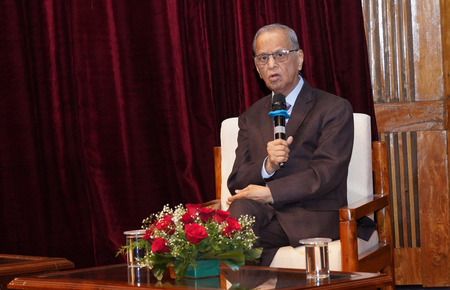
New Delhi, Jan 24 (IANS) The Reserve Bank of India (RBI) has been a catalytic, kind, wise and eternal enabler, making UPI a public good by making it less expensive for users and accessible -- thereby earning trust of the common man, according to NR Narayana Murthy, Founder of Infosys.
“When you have leaders who have high aspirations and are well intentioned, you can transform the nation”, he highlighted during an event in Bengaluru.
Murthy said that if you want to build an organisation with strong values and want to protect the dignity of every employee, “you, as a leader, has to walk the talk. Value will not come from speeches, but from actions. Values, discipline, strong leadership and compassionate capitalism will take the society/country forward”.
During a fireside chat with Dr. Balakrishnan Mahadevan, Post Doctoral Fellow, IIM Bangalore, at the Center for Digital Public Goods at the institute, Murthy discussed his perspective on the values, governance principles and institutional choices that underpinned India’s digital payments transformation.
He said that technology is a perishable commodity.
“Till now, India has been following an oral tradition, as against a written one, in terms of documentation of organisational progress. But how institutions are built, the sacrifices, challenges and constraints involved, the foibles of leaders, complexity of working in teams, how working on the leading edge of technology is, how contributions to society are made, are valuable information,” he noted.
All these will add to the compendium of institutional memory, and the foundations of India’s progress will rest on such key knowledge and information by modern authors, said Murthy.
According to him, the most important lesson is making the code a public code which is low cost.
“This will prevent monopoly and create the platform for innovation. Combining innovation with sturdy foundation needs top quality leaders,” he said.
Stating that leaders should follow a simple life without any vulgar display of wealth, he told the students, “You, the future leaders, are the evangelists of compassionate capitalism, who will take the society/country forward. That will encourage entrepreneurship as well.”
—IANS
na/
27.08 lakh candidates trained under PMKVY 4.0 across 38 sectors: Govt
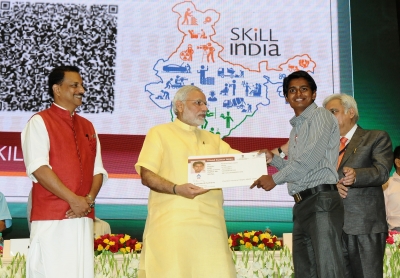
New Delhi, Jan 24 (IANS) At least 27.08 lakh candidates have been trained under Pradhan Mantri Kaushal Vikas Yojana (PMKVY) 4.0 across 38 sectors, covering 36 states and 732 districts (as on December 7, 2025), according to the government.
Between April 2024 and December 7, 2025, more than 7.5 lakh candidates have been trained in sectors such as IT-ITeS, aerospace and aviation, agriculture, rubber, leather, and tourism and hospitality across 34 states and 670 districts.
PMKVY is the flagship short-term skilling scheme of MSDE. Over its four phases, it has evolved from a pilot incentive-based certification programme to a large-scale, demand-driven, outcome-oriented skilling ecosystem, according to the Ministry of Skill Development and Entrepreneurship.
Moreover, 77 customised courses and 102 future-skill job roles have been introduced to improve employability in emerging domains including AI, Industry 4.0, green jobs and digital services.
“Over 15,500 institutions are implementing PMKVY 4.0, including more than 7,000 Skill Hubs in schools, higher educational institutions and ITIs. Institutes of national importance such as IITs, IIMs, IIITs, NITs, government institutions and PSUs are participating under PMKVY for the first time,” said the ministry.
Between April 2024 and September 2025, Rs 1,652.89 crore was utilised under the scheme.
Under PMKVY 4.0, a dedicated outlay of Rs 200 crore has been earmarked to create a National Pool of Trainers and Assessors, with standard operating procedures, curricula and certification frameworks issued by NCVET and hosted on the Skill India Digital Hub (SIDH).
From April 2024 to November 2025, 34,505 Trainers and 13,844 Assessors have been certified under PMKVY 4.0-linked ToT and ToA efforts, informed the ministry.
When it comes to Industrial Training Institutes (ITIs), these remain the backbone of long-term vocational education in India. Between 2014 and 2025, the number of ITIs increased from around 9,977 to over 14,682, with 4,605 new ITIs established.
“Enrolments have risen from about 9.5 lakh to over 14 lakh trainees, reflecting growing trust in vocational education. The number of National Skill Training Institutes (NSTIs) has increased from 25 to 33; Institutes for Training of Trainers (IToTs) from 11 to 120, with 17,475 sanctioned CITS seats across NSTIs and IToTs," according to the ministry.
—IANS
na/
RBI to inject over Rs 2 lakh crore in banking system to ease liquidity
Mumbai, Jan 23 (IANS) The Reserve Bank of India (RBI) on Friday announced a series of liquidity-enhancing measures that will pump in more than Rs 2 lakh crore into the banking system to ease liquidity pressure.
The RBI said it will use a combination of open market bond purchases, a foreign exchange swap, and a variable rate repo operation to ease liquidity conditions in the financial system. The steps are being undertaken following a review of current liquidity and financial conditions.
As part of the measures, the central bank will conduct a 90-day variable rate repo (VRR) operation for an amount of Rs 25,000 crore on January 30, allowing banks to borrow funds at market-determined rates against collateral assets to be provided by them. A VRR is a tool where banks borrow short-term funds through an auction, with the interest rate determined by market bids, not fixed in advance.
The central bank will also carry out a dollar-rupee buy/sell swap auction of $10 billion for a tenor of three years on February 4. Under this programme, the banks will sell dollars to the RBI for rupees and simultaneously agree to buy those dollars back later at a fixed forward rate. This effectively means the RBI borrows rupees for a period while managing exchange rate risk and boosting market liquidity without permanently altering forex reserves.
Besides, the Reserve Bank will purchase government securities for an aggregate amount of Rs 1 lakh crore via open market operations (OMO). This will be done in two tranches of Rs 50,000 crore each, which will be held on February 5 and February 12.
According to the RBI statement, detailed instructions for each operation that has been announced will be issued separately.
The apex bank further stated that it will continue to monitor the evolving liquidity and market situation and take measures as appropriate to ensure orderly liquidity conditions.
--IANS
sps/vd