
Final preparations for Budget 2026 begin with Halwa ceremony
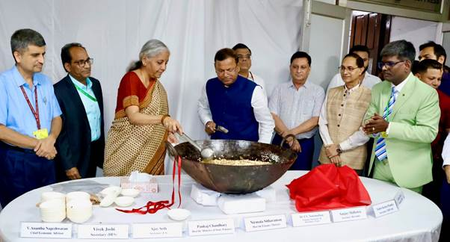
New Delhi, Jan 27 (IANS) The traditional Halwa ceremony, which marks the final stage of preparations for the Union Budget 2026-27, was held on Tuesday at the Budget Press in North Block.
The ceremony took place in the presence of Union Finance and Corporate Affairs Minister Nirmala Sitharaman and Union Minister of State for Finance Pankaj Chaudhary.
The Halwa ceremony is an important ritual that signals the beginning of the ‘lock-in’ period for officials involved in preparing the Budget.
Once the ceremony is completed, these officials remain cut off from outside contact to ensure complete confidentiality until the Budget is presented.
The Union Budget 2026-27 is scheduled to be presented in Parliament on February 1.
During the ceremony, the Finance Minister was joined by secretaries of various departments under the Ministry of Finance and other senior officials associated with the Budget-making process.
FM Sitharaman also visited the Budget Press to review the final preparations and extended her best wishes to the entire team working on the Budget.
The government also announced that all Union Budget documents will be made available in digital format for easy public access.
These include key documents such as the Annual Financial Statement, also known as the Budget, the Demand for Grants and the Finance Bill.
“All Union Budget documents, including the Annual Financial Statement (commonly known as Budget), Demand for Grants (DG), Finance Bill, will also be available on the ‘Union Budget Mobile App’ for hassle-free access of Budget documents by Members of Parliament (MPs) and the general public in a digital accessible mode,” Ministry of Finance said in a statement.
The Budget documents will be accessible through the Union Budget Mobile App, which is available in both English and Hindi.
The app can be downloaded on Android and iOS platforms and is also accessible through the Union Budget website, indiabudget.gov.in.
However, the Budget documents will be made available on the mobile app and the website only after the Finance Minister completes her Budget speech in Parliament on February 1.
“The Budget documents will be available on the Mobile App and the website after the completion of the Budget Speech by the Union Finance Minister in Parliament on February 1,” the ministry added.
--IANS
pk
Unprecedented preferential access for Indian exports in EU FTA a game changer: Industry
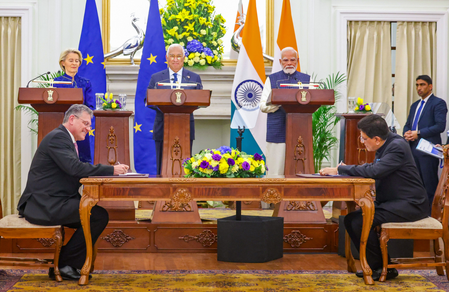
New Delhi, Jan 27 (IANS) The unprecedented preferential access secured for over 99 per cent of Indian exports is a game-changer for Indian industry, the Confederation of Indian Industry (CII) said on Tuesday.
With the India-EU deal, Rs 6.41 lakh crore ($75 billion) worth exports are poised for take-off, with $33 billion of exports in labour-intensive sectors like textiles, leather, marine products, gems and jewellery are set to gain immensely from preferential access under the FTA.
According to Chandrajit Banerjee, Director General, CII, the landmark agreement represents a strategic breakthrough in India’s global trade engagement and significantly deepens the partnership between two major democracies and economies that together account for nearly 25 per cent of global GDP.
“It decisively improves competitiveness in the EU’s high-value market, anchors Indian manufacturers and service providers deeper into global value chains, and accelerates investment, technology inflows, and scale,” Banerjee said.
“Key sectors of focus include textiles and apparel, leather and footwear, gems and jewellery, marine products, engineering goods, automobiles, agriculture and processed foods, IT and IT-enabled services, and other business and professional services,” he added.
By delivering tangible gains for labour-intensive sectors and MSMEs, and by enabling a future-ready mobility framework for Indian talent, the agreement lays a foundation for sustained, inclusive, and globally competitive growth which is fully aligned with India’s vision of Viksit Bharat at 2047, said CII.
Balbir Singh Dhillon, Brand Director, Audi India, welcomed the proposed FTA, recognising its potential to deepen economic ties with one of the world’s largest trading blocs.
“This constructive approach to trade could support the broader automotive ecosystem, including innovation, supply-chain efficiency, and technology collaboration. That said, any implications for pricing and market can only be assessed once the final terms are available and carefully reviewed, including the timeframe of implementation. Until then, it would be premature to draw conclusions on specific commercial or product strategies,” he mentioned.
Dhillon said the India-EU FTA will create a stable and predictable environment for European automakers to invest, innovate, and better serve Customers in India.
The FTA brings tariffs on European cars entering India to 10 per cent from the current high level of 110 per cent. This lower duty will apply under an annual quota of 250,000 vehicles. At present, India charges a 70 per cent duty on imported passenger cars priced below $40,000, while vehicles costing more than $40,000 attract an effective customs duty of 110 per cent.
The move opens up new opportunities for European carmakers in the Indian market, which is currently the world’s third-largest by sales.
--IANS
na/
Budget 2026: Business leaders seek lower tax for manufacturing units, sector-specific incentives
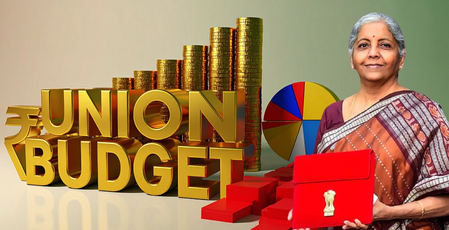
New Delhi, Jan 27 (IANS) Business leaders in India voiced strong demand for targeted tax incentives and manufacturing linked lower tax rate regime in anticipation of the Union Budget 2026 and the implementation of the New Income Tax Act, a report said on Tuesday.
The report from KPMG India said 34 per cent of respondents called for the return of the manufacturing‑linked lower tax rate regime, as many income-tax incentives already expired or approached sunset.
Earlier a lower tax rate of 15 per cent was available u/s 115BAB to manufacturing units.
Meanwhile, 50 per cent respondents wanted the government to focus on targeted sector‑specific incentives, the report said.
"The launch of the New Income Tax Act has certainly been a big step towards a simplified income-tax law," most respondents said, however, when asked where rationalisation is needed most, respondents ranked TDS and TCS compliances followed by the assessment and litigation process, and the capital gains tax regime among top priorities.
The business consultancy firm said that the survey of over 100 industry respondents showed that 51 per cent of them wanted "some form of safe harbour provisions" for International Financial Services Centre (IFSC) structures. Roughly 73 per cent respondents wanted a significant hike in the standard deduction for salaried individuals.
Nearly 50 per cent of respondents shared their view of the Dispute Resolution Panel route not effectively reducing unwarranted litigation, the report said.
“The increase in slab rates for individuals in the last Budget coupled with GST rate cuts have enhanced disposable incomes and raised consumption. However, stakeholders continue to look forward to furthering reforms and tax incentives," Sunil Badala, Partner and National Head of Tax, KPMG in India.
A major expectation is the overhaul of the dispute resolution mechanism under direct tax laws, including the introduction of mandatory timelines for the disposal of appeals, Badala noted.
Around 71 per cent of respondents said they believed transfer pricing safe harbour rules need a revamp, particularly in terms of margins and thresholds across different business categories.
Almost 82 per cent of respondents supported a review of the GST Invoice Management System and provide enhanced reconciliation capabilities to reduce the mismatches and increase in GST tax liabilities.
The survey took responses from 100 respondents including C-Suite leaders and senior management of diverse sectors including financial services, technology, life sciences, pharmaceuticals and healthcare, and consumer markets, the report noted.
--IANS
aar/
Sensex, Nifty end higher as India-EU trade deal boosts sentiment

Mumbai, Jan 27 (IANS) India’s benchmark stock market indices ended higher on Tuesday after a highly volatile trading session, supported by improved investor sentiment following the announcement of a bilateral trade deal between India and the European Union.
At the close of trade, the Nifty rose 0.51 per cent, or 126.75 points, to settle at 25,175.40. The Sensex also ended higher, gaining 319.78 points, or 0.39 per cent, to close at 81,857.48.
“A sustained breakout above 25,400 would be required to revive a stronger bullish trend, while a decisive breakdown below 25,000 could invite accelerated selling toward the 24,900–24,600 zone,” an expert stated.
“Until a directional trigger emerges, the index is likely to remain confined within the 24,900–25,200 consolidation band,” as per the expert.
Under the deal, EU goods exports to India are expected to double by 2032, as tariffs on nearly 96.6 per cent of EU goods exported to India will be eliminated or reduced.
At the same time, the European Union will remove or lower tariffs on about 99.5 per cent of goods imported from India, boosting trade prospects for both sides.
Despite the overall positive finish, several heavyweight stocks weighed on the market.
Shares of Mahindra & Mahindra, Asian Paints, Kotak Mahindra Bank, Eternal, ITC and Maruti Suzuki India ended lower, with some stocks declining by as much as 4 per cent.
On the other hand, buying interest was seen in stocks such as Axis Bank, Adani Ports, NTPC, Tech Mahindra, Tata Steel and State Bank of India, which rose by up to 5 per cent and supported the indices.
Broader markets also reflected positive sentiment. The Nifty Midcap 100 index ended 0.59 per cent higher, while the Nifty Smallcap 100 gained 0.41 per cent by the end of the session.
Among sectoral indices, the metal sector emerged as the top performer, with the Nifty Metal index jumping 3 per cent.
In contrast, the Nifty Media index declined 1.4 per cent, while the Nifty Auto index ended the day 0.9 per cent lower.
Analysts said that markets managed to close on a positive note as investors reacted to the long-term trade benefits expected from the India-EU agreement, even as stock-specific selling and sectoral weakness kept volatility high during the session.
"In the near term, investors are awaiting the US FED’s upcoming interest rate decision and the Union Budget for future direction," an analyst stated.
--IANS
pk
Dollar weakness could boost India inflows as rupee steadies: Report
New Delhi, Jan 27 (IANS) Global currency markets are witnessing heightened volatility as the US Dollar continues to lose strength against major currencies, but Indian rupee has found relative stability and weakness in dollar could lead to FII inflows, a report said on Tuesday.
The report from Emkay Wealth Management Limited said the volatility in global currency markets and decline of dollar is driven by expectations of further US Federal Reserve rate cuts and geopolitical developments.
The US Fed's accommodative stance and expectations of additional cuts helped push the Dollar lower, the report said citing market participants.
Meanwhile, the Indian rupee 'appears to have found relative stability around Rs 90 against the US Dollar,' with intermittent two‑way volatility observed amid market estimates that the currency may consolidate around current levels in the near term, the report said.
"India’s status as a net importer continues to weigh on the Rupee from a trade perspective; however, improving prospects for foreign investment inflows could provide some support," the wealth management firm said.
FIIs have been net sellers in Indian equities for about 18 months, creating more attractive valuations across sectors. Analysts said that deeper rate cuts in the US, could compress dollar yields, and revive investor appetite for emerging markets such as India.
“A softer US Dollar, coupled with potential capital reallocation towards emerging markets, creates both opportunities and risks for investors. For India, sustained foreign inflows, supported by stable macro fundamentals, could help the Rupee maintain its current range despite global volatility,” said Parag Morey, Head of Sales, Emkay Wealth Management.
The Dollar Index fell nearly 9 per cent to around 98.60 since early 2025.
Currency experts noted that investor scepticism on the dollar also stemmed from speculation of a potential change in the US Federal Reserve leadership by mid-2026. Expectations that a new Fed Chair may align monetary policy more closely with executive priorities have added to assumptions of prolonged low interest rates, which could further weaken the US Dollar against global majors.
However, the firm noted that prudent hedging strategies are advisable as disruption to shipping lanes or oil flows could trigger short-term spikes in crude prices and temporary flights to the Dollar.
--IANS
aar/pk
India’s economy poised for steady growth, repo rate likely unchanged till 2027

New Delhi, Jan 27 (IANS) India’s GDP growth is forecasted at 6.5 per cent in 2026 and 6.4 per cent in 2027, keeping it among the fastest‑growing major economies, a report said on Tuesday.
The report from DBS Bank said that CPI inflation is expected to rise from 2.2 per cent in 2025 to 3.5 per cent in 2026 and 4.5 per cent in 2027, indicating gradual price normalisation.
It stated that the Reserve Bank of India is expected to keep policy rate steady at 5.25 per cent through 2026 and 2027, signalling a stable monetary stance.
"India’s 10‑year government bond yield is projected to ease from 6.60 per cent in early 2026 to 6.40 per cent by end‑2027 despite global rate volatility," the report said.
Recalling the major events in global bond markets last week, the bank said that bond yields in developed markets "marched higher last week to levels not seen in decades."
However, the DBS bank judged the sell‑off as a market normalisation rather than a harbinger of a crisis, the report said.
"The selloff may be disconcerting, but the developments are not harbingers of a crisis, in our view," it added.
In development markets other than Japan, the higher yields are also a reflection of market conditions normalising, it said, adding that "central bank credibility and fiscal monetary coordination could keep the bond boat steady."
The bank forecasted the US Federal Reserve to pause policy moves at its January 27-28 FOMC meeting, following three consecutive rate cuts.
"We expect the Fed to pause this month not to signal its intransigence against President Trump," the bank said, adding that the Central bank could assess the impact of earlier cuts and upside inflation risks.
Regarding the US economy, the report said that job growth may have softened, but the unemployment rate is low, and wages are growing in positive real terms.
--IANS
aar/rvt/
India’s oil & gas sector offers investment opportunities worth 500 billion dollars: PM Modi
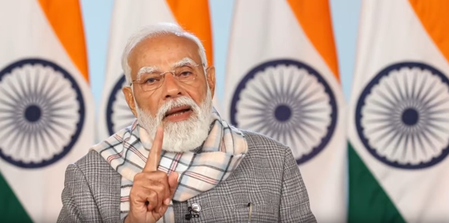
New Delhi, Jan 27 (IANS) Prime Minister Narendra Modi on Tuesday said that India’s energy sector offers investment opportunities worth 500 billion dollars as he urged global oil and gas majors to “Make in India, Innovate in India, Scale with India, Invest in India.”
Addressing the India Energy Week 2026, via video conferencing, being attended by representatives from nearly 125 countries in Goa, PM Modi said that the country’s energy sector has vast investment opportunities across different areas of the energy value chain.
He highlighted that India has significantly opened up its exploration sector and referred to the deep-sea exploration initiative known as the Samudra Manthan Mission. By the end of this decade, India aims to raise investments in the oil and gas sector to 100 billion dollars, with a target of expanding the scope of exploration to one million square km. More than 170 exploration blocks have already been awarded, and the Andaman and Nicobar basin “is emerging as the next hydrocarbon hope,” PM Modi said.
Underlining that several reforms have been undertaken in the exploration sector, including reducing the no-go areas, the Prime Minister added that suggestions received during previous editions of India Energy Week have been incorporated into changes in Acts and Rules. He affirmed that companies investing in the exploration sector are certain to see increased profitability.
PM Modi further stated that India possesses a very large refining capacity and currently ranks second in the world, and is poised to become the number one country globally in refining capacity. The country’s present refining capacity stands at around 260 million metric tonnes (MMT) per annum, and continuous efforts are underway to raise it beyond 300 MMT per annum, he added.
Highlighting that LNG demand in India is continuously rising, and the country has set a target to meet 15 per cent of its total energy demand through LNG, the Prime Minister emphasised the need to work across the entire LNG value chain and noted that India is undertaking large-scale efforts in transportation. India is working to build the vessels required for LNG transportation domestically, supported by a recently launched ship-building program worth Rs 70,000 crore. Numerous investment opportunities have also been created in constructing LNG terminals at Indian ports, as well as in regasification projects, he added.
The Prime Minister stressed that India requires a vast pipeline network for LNG transportation, where significant investments have already been made, but large-scale opportunities still remain. He pointed out that city gas distribution networks have already reached many Indian cities and are rapidly expanding to others, making this sector highly attractive for investment.
PM Modi observed that with India’s large population and steadily growing economy, the demand for petrochemical products will continue to rise, necessitating extensive energy infrastructure. He affirmed that investment in this area will yield substantial growth and added that there are also abundant opportunities in downstream activities for investors.
“Today’s India is riding on the Reforms Express and undertaking rapid reforms across every sector”, PM Modi remarked.
He emphasised that reforms are being carried out to strengthen domestic hydrocarbons while creating a transparent and investor-friendly environment for global collaborations. India is developing an energy sector ecosystem capable of meeting local demand and, through affordable refining and transportation solutions, making exports highly competitive for the world, he added.
--IANS
sks/skp
India’s retail sector hits 3-year high with 54 pc leasing growth in 2025

Mumbai, Jan 27 (IANS) The year 2025 delivered exceptional 54 per cent year-on-year growth in gross leasing volume in India as retail sector achieved a three-year peak in gross leasing activity, a report showed on Tuesday.
Brick and mortal retail in the top seven cities of India reached a three-year high as gross leasing volume hit a total of 12.5 million square feet in 2025, according to a JLL report.
This surge reflects unwavering retailer confidence across key metropolitan markets and aggressive expansion strategies, as India redefines its consumption narrative against an uncertain global backdrop.
A resilient economy, coupled with rising discretionary spending, is fuelling this leasing renaissance, with offline retail formats witnessing an influx of premium brands commanding strong consumer loyalty, said the report.
India's retail sector maintains its robust growth trajectory, driven by substantial supply additions of 6.3 million sq. ft that have facilitated aggressive retailer expansion.
Delhi NCR, Hyderabad, and Mumbai witnessed the launch of 15 shopping malls in 2025, collectively contributing to the nation's overall mall inventory. As of end of 2025, the mall stock in the top seven cities stood at nearly 92 million square feet.
Shopping malls captured 45 per cent of the total leasing activity in 2025, while high streets commanded a dominant 48 per cent share.
“While fashion and apparel (34 per cent) and food and beverage (20 per cent) together comprised more than half of the annual leasing, the share of Fashion and Apparel has moderated from 41 per cent in 2023 to 34 per cent in 2025 though it still retains the top slot due to demand emanating from renowned domestic and D2C brands,” said Dr Samantak Das, Chief Economist and Head of Research and REIS, India, JLL.
Another interesting trend that became more pronounced during the year was the direct-to-consumer (D2C) brands going full throttle in terms of setting up physical store footprint garnering 0.9 million sq. ft of gross leasing volume, Das informed.
Demand from domestic retailers continued to accelerate as they accounted for 82 per cent of 2025’s gross leasing activities. The Indian retail sector has witnessed $2.3 billion institutional investment during the last 5 years.
—IANS
na/
How realme is shaping future of comfortable listening with Buds Clip

New Delhi, Jan 27 (IANS) Wireless audio has become a constant companion in everyday life, with earbuds now used across work calls, entertainment, fitness, travel, and casual listening.
As daily usage hours continue to rise, the focus on personal audio is gradually expanding beyond sound quality alone to include comfort, long-term wear, and overall ear health and wellness.
Consumers today are increasingly aware of how devices feel over extended periods, especially since earbuds are worn continuously throughout the day rather than in short listening bursts.
Ear health specialists and audio researchers often point out that the ear is a sensitive and naturally balanced environment. Comfort during long listening sessions depends not just on fit, but also on airflow, pressure, and how the ear interacts with a device over time.
Listening formats that reduce continuous contact inside the ear canal can feel more breathable and relaxed for some users, particularly those who spend several hours a day on calls or music. This has led to growing interest in open-ear and ear-clip style audio, which offers a different way to experience sound without sitting inside the ear.
Ear-clip earbuds approach this by resting along the outer ears rather than sitting inside the ear canal. By keeping the ear open, they allow natural airflow to continue while still delivering sound clearly.
This design can feel lighter during long sessions and supports a more breathable wearing experience, particularly for users who prefer earbuds that feel unobtrusive throughout the day. Because the ear remains open, ear-clip designs can also suit situations where awareness of surroundings is important, such as walking, commuting, or working in shared environments.
This is where realme brings a thoughtful addition to its audio range with Buds Clip, created to support different listening preferences and daily routines. realme Buds Clip are shaped to follow the natural curves of the outer ear, helping them stay in place comfortably without relying on pressure inside the ear. The result is a natural wearing experience that remains comfortable even during extended use, making them suitable for long workdays, travel, or continuous media consumption.
The lightweight 5.3g build plays an important role in long-term comfort. Lighter earbuds place less strain on the ear, which can help reduce tiredness over time.
The use of titanium-based memory metal allows the structure to gently adapt to different ear shapes while remaining strong and reliable. This flexibility helps the earbuds stay secure during movement while maintaining a soft, pressure-free feel that supports all-day wear.
Sound performance has been tuned specifically for an open-ear listening experience. realme Buds Clip feature a large dual-driver setup supported by AI-based sound tuning that balances bass, vocals, and clarity.
Spatial audio adds depth and dimension, creating an immersive experience while maintaining a natural and open feel. This approach allows users to enjoy engaging sound without isolating the ear, aligning well with longer listening sessions and everyday comfort.
realme Buds Clip also reflects the brand’s broader philosophy of introducing meaningful innovation through thoughtful design. Rather than replacing existing earbud styles, the clip-style format adds another option to realme’s growing audio lineup, catering to different listening preferences and evolving habits.
The minimalist, easy-to-wear form factor is designed to blend seamlessly into daily life, from commuting and working to casual listening and leisure.
The upcoming launch further reinforces realme’s wider ecosystem vision, as the brand continues to build a diverse range of smart, connected audio and AIoT products tailored to young consumers and modern usage patterns.
As audio consumption becomes increasingly woven into everyday routines, realme Buds Clip represent an effort to offer users greater choice in how they experience sound.
With the launch expected soon, realme is set to bring clip-style audio to a wider audience, aligning comfort, usability, and everyday practicality with the way people listen today.
--IANS
rvt/
India’s plastics exports projected to double to $20 billion by 2030

New Delhi, Jan 27 (IANS) India’s plastics industry is projected to reach $44.5 billion by 2030 at a CAGR of 11 per cent, with exports surging from about $10 billion in 2025 to $20 billion by 2027, a report said on Tuesday.
Apex body of plastic industry, PlastIndia Foundation, said the growth of industry valued at $26.5 billion in 2025 will be driven by large-scale infrastructure programmes and accelerating consumer demand across packaging, automotive, construction, electronics and healthcare.
Packaging accounts for nearly 42 per cent of the market, supported by rapid e-commerce expansion, underlining the plastics industry’s critical role in modern commerce, said Ravish Kamath, President, PlastIndia Foundation.
‘PLASTINDIA 2026’ billed as the "world’s largest international plastics exhibition" and "India’s first 100 per cent zero‑waste" expo will be held at Bharat Mandapam here from February 5–10.
The event will feature over 2,000 exhibitors and an expected footfall of over 6 lakh, where the scale, strength and global competitiveness of the Indian plastics industry will be showcased, Kamath said.
The event will showcase plastic films, industrial parts and specialty polymers and aims to "further boost exports and position India as a global plastics leader" by connecting Indian manufacturers with global buyers, investors and technology partners.
The industry event includes a CEO Conclave, a reverse buyer‑seller meet and a Startup Search Initiative in collaboration with IIM Calcutta Innovation Park, the report said.
‘PLASTINDIA 2026’ will feature a 20,000 sq. ft. Open Air Museum, a first-of-its-kind initiative in India to showcase the positive and responsible role of plastics through towering sculptures, interactive installations and themed zones.
The exhibition will highlight innovation, sustainability and digital transformation across the entire plastics value chain, clearly demonstrating that Indian manufacturers are ready to meet global demand, said Alok Tibrewala, Chairman, National Executive Committee, 'PLASTINDIA 2026'.
—IANS
aar/na