
Zero tariffs on Indian agri products in US; no concession for American items: Shivraj Singh Chouhan
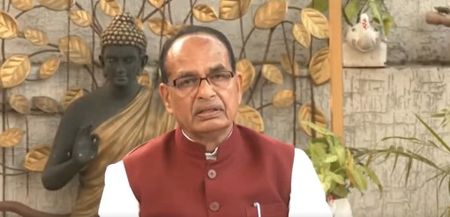
New Delhi, Feb 8 (IANS) Union Agriculture Minister Shivraj Singh Chouhan said on Sunday that many agricultural products of Indian farmers will now be exported to the United States of America with zero tariffs and American farmers' agricultural products will not receive this concession in the Indian market.
Stressing that India's interests in agriculture and dairy are fully protected, the Union Minister added that the US has made significant reductions in tariffs on many products in the agricultural sector.
"These include spices, tea, coffee, coconut, coconut oil, betel nut, cashew, vegetable wax, avocado, banana, guava, mango, kiwi, papaya, pineapple, mushrooms, and some grains as well," Union Minister Chouhan said.
"In 2024-25, India's agricultural exports reached $4.45 billion. There has been an 88 per cent increase in spice exports. Now, following this trade deal, "our spices will also gain a new and large market in the US," the Union Minister noted, adding that this agreement will further accelerate the exports of spices and other agricultural products.
"No compromise has been made on the interests of Indian farmers, and no product that could harm farmers has been included in the agreement. All sensitive items have been kept outside the agreement," he reiterated.
No tariff concessions of any kind have been given on products such as soybean, corn, rice, wheat, sugar, coarse grains, poultry, dairy, banana, strawberry, cherry, citrus fruits, green peas, chickpeas, mung beans, oilseeds, ethanol, and tobacco.
"The greatest worry was that our major grains must remain secure, and I can proudly say that all of them have been kept completely secure. No doors have been opened for the US for major grains, major fruits, and dairy products," the Union Minister said.
"Many American agricultural products will not be able to enter the Indian market. Hulled grains, flour, wheat, corn, rice, millet, potato, onion, peas, beans, cucumber, mushrooms, pulses, frozen vegetables, oranges, grapes, lemons, strawberries, and mixed canned vegetables will not come to India," he added.
Regarding dairy products as well, the Union Minister said that in dairy products -- liquid milk, powder, cream, yogurt, buttermilk, butter, ghee, butter oil, paneer and cheese -- none of these will get entry into India.
Apart from agriculture and dairy, India will not import black pepper, cloves, dry green chilies, cinnamon, coriander, cumin, asafoetida, ginger, turmeric, carom seeds, fenugreek, cassia, mustard, mustard seeds, husks, and other powdered spices from the US.
"The meaning is clear: our spices and our farmers are completely secure," Union Minister Chouhan added.
The Union Agriculture Minister said that this agreement will provide new opportunities for Indian farmers, women, and especially youth, to move forward.
--IANS
na/khz
US tariffs: S. Korean PM meets presidential chief of staff, ruling party chief
Seoul, Feb 8 (IANS) The prime minister held talks with key ruling Democratic Party (DP) lawmakers and the presidential chief of staff on Sunday to discuss a special bill on implementing South Korea's investment pledges to the United States and other pending issues, officials said.
The meeting, held at the residence of the prime minister, came as rival political parties agreed last week to establish a special committee to handle the investment bill amid U.S. President Donald Trump's tariff hike threats, reports Yonhap news agency.
"A delay in passing the special bill on South Korea's strategic investment in the U.S. also affects follow-up measures related to tariff negotiations," Prime Minister Kim Min-seok said at the meeting, expressing hope that the bill would be enacted swiftly.
Presidential chief of staff Kang Hoon-sik also called on the National Assembly to accelerate its legislative efforts to pass the special investment bill and other key legislation related to people's livelihoods.
During the meeting, DP Rep. Jung Chung-rae called for swift passage of the special bill to ease concerns among South Korean companies, stressing the need for the government, the DP and the presidential office to "work as a team" for the success of the Lee Jae Myung administration.
Last month, Trump threatened to raise "reciprocal" tariffs and auto, lumber and pharmaceutical duties on South Korea to 25 percent from 15 percent, citing a delay in the parliamentary process to pass a special investment bill facilitating the implementation of a trade deal reached by the two countries.
Under the trade deal, South Korea has committed to investing US$350 billion in the U.S., among other pledges, in return for the U.S. lowering reciprocal tariffs on South Korea to 15 percent from 25 percent.
At Sunday's meeting, the officials also discussed the government and the DP's move to ease restrictions on so-called dawn delivery, or late-night and early-morning delivery services, for the country's large discount store chains.
"Rationalising regulations on online delivery by large retailers, thereby bringing convenience to the public and strengthening the competitiveness of the local retail industry, has become a task that we can no longer delay," Rep. Jung said.
Earlier this month, the DP proposed a bill that will allow big-box store chains to operate online businesses for 24 hours so that they would be able to do overnight delivery services.
The bill was part of efforts to map out "win-win" measures for offline stores and online shopping platforms. But labour groups are opposed to the legislative move, citing an increase in nighttime work hours.
—IANS
na/
Bithumb to reimburse users after accidental 620,000-bitcoin transfer
Seoul, Feb 8 (IANS) Bithumb, one of South Korea's crypto exchanges, said on Sunday it will reimburse customers who suffered losses from panic selling triggered by an internal transfer error last week.
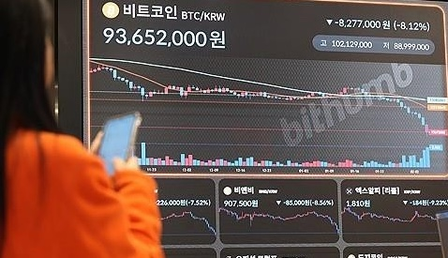
The cryptocurrency exchange mistakenly transferred 620,000 bitcoins to 249 users participating in a promotional event around 7 p.m. Friday, reports Yonhap news agency.
That amounted to an average of 2,490 bitcoins worth 244 billion won ($166 million) per user. Some recipients sold the bitcoin, causing a brief but sharp drop in prices.
The company said it will fully compensate affected customers for their losses and provide an additional 10 percent compensation.
The exchange also said it will waive trading fees on all listed assets for one week starting at midnight Monday.
Bithumb said it has activated a companywide crisis management system led by senior executives and formed a task force to address investor losses.
Bithumb earlier said it had recovered 618,212 bitcoins and later recouped 93 percent of the 1,788 bitcoins sold by users.
The crypto exchange halted the transactions and withdrawals of the users' accounts at 7:40 p.m. Consequently, Bithumb still failed to recover 125 bitcoins.
The accident took place as a Bithumb employee mistakenly typed the payment unit as "BTC" instead of the "Korean won" for a reward to the users of the promotional event.
The fallout caused a brief drop in the bitcoin price on Bithumb as users sold the bitcoin received.
The company estimated the amount of customer losses due to the erroneous payment to be around 1 billion won.
It confirmed cases where transactions occurred under unfavorable conditions, and announced its plan to compensate affected customers who panic-sold by covering the full price difference plus an additional 10 percent bonus.
CEO Lee Jae-won offered an apology and vowed to "take full responsibility" for the incident. The Financial Supervisory Service (FSS) will look into the crypto exchange's measures to protect its users and the possibility of a full recovery of mistakenly sent bitcoins.
—IANS
na/
US trade deal – a booster shot for India’s AI hardware ecosystem

New Delhi, Feb 8 (IANS) The finalisation of the first tranche of the India–US trade deal comes as a booster shot for the AI hardware, particularly advanced computing components, as it is expected to significantly lower costs and facilitate domestic capacity building.
For the first time, AI compute infrastructure has effectively been treated as a strategic asset within a bilateral trade arrangement between two major economies, a move that could have long-term implications for India's technology landscape, according to an article in Khalsa Vox news portal.
One of the sector's biggest challenges so far has been the steep import duties on enterprise-grade GPU servers, which currently range between 20 and 28 per cent. These levies have pushed up the cost of GPU-based services in India, making them substantially more expensive than in competing hubs such as Singapore or the UAE.
Industry estimates suggest that rationalising duties could reduce the cost of setting up GPU-enabled data centres by around 14 per cent, potentially unlocking large-scale investments across the country, the article explains.
The timing is also seen as favourable. While India generates close to one-fifth of the world’s data, it hosts only a small fraction of global data centre capacity and an even smaller share of installed enterprise GPUs.
With global cloud and hyperscale companies expected to invest more than $80 billion in India by the end of the decade, the trade framework is being viewed as a catalyst that could help bridge this gap and position the country as a serious contender in global AI compute services, the article states.
It also highlights that industry experts have emphasised the need for safeguards. They are of the view that easier access to advanced hardware must go hand in hand with policies that protect data sovereignty, national security and domestic value creation. Without such measures, there is a risk that India could end up providing low-margin compute services while the real economic and strategic benefits flow to other countries, the article added.
--IANS
sps/svn
51 pc of India Inc rank cyber breaches as top risk to organisational performance: Report

New Delhi, Feb 8 (IANS) About 51 per cent of India Inc rank cybersecurity breaches as the top risk to organisational performance, a survey showed on Sunday.
This is followed closely by changing customer demands and expectations at 49 per cent, while 48 per cent point to geopolitical events as a key risk factor, according to the FICCI-EY ‘Risk Survey’.
The report draws on inputs from senior leaders across sectors, on factors affecting pricing, supply chains, talent strategies and technology investments, making risk management central to business strategy.
“In a business environment shaped by volatility, the ability to anticipate, absorb and adapt to risk is emerging as a defining capability for sustained growth. The report indicates that organisations are moving away from treating risk as episodic and are instead embedding it into strategic decision-making, governance structures and long-term planning,” said Rajeev Sharma, Chair, FICCI Committee on Corporate Security and Disaster Risk Reduction.
Technology risk is now tightly linked to operational continuity. The survey shows that 61 per cent of respondents feel that rapid technological change and digital disruption are affecting their competitive position, while an equal proportion (61 per cent) identify cyber-attacks and data breaches as major financial and reputational threats.
More than half, 57 per cent, report potential data theft and insider fraud as significant risks, and 47 per cent acknowledge difficulty in addressing increasingly sophisticated cyber threats, said the report.
Artificial intelligence (AI) is emerging as a dual risk area, where both under-adoption and weak governance are sources of concern.
The survey indicates that 60 per cent of respondents believe inadequate adoption of emerging technologies, including AI, can adversely impact operational effectiveness.
At the same time, 54 per cent feel AI-related risks, including ethical and governance issues, are not being effectively managed.
Sudhakar Rajendran, Risk Consulting Leader, EY India said, “Organisations are navigating a phase where multiple risks are converging rather than occurring in isolation”.
“Inflation, cyber threats, AI governance, climate exposure and regulatory change are interacting in ways that directly influence India Inc’s performance and resilience. Boards are being pushed to strengthen oversight, improve data quality and integrate resilience into core strategy,” Rajendran mentioned.
—IANS
na/
Revised inflation data, details on US trade deal key triggers for markets next week
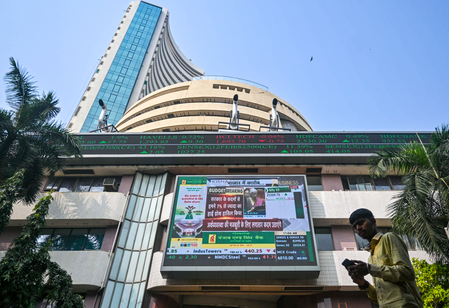
New Delhi, Feb 8 (IANS) The coming week features several important domestic and global triggers for the stock markets, including inflation (with revised base year of 2024) and more details on the India-US trade deal.
In India, investors will closely track retail inflation data due on February 12 with updated base year, followed by WPI inflation and foreign exchange reserves data on February 13, for insights into price trends and external sector stability.
Further details regarding the India-US interim trade deal framework will also remain in focus, said analysts.
“The earnings calendar stays active, with key results expected which may drive stock-specific action,” they noted.
Globally, participants will monitor a heavy US data calendar and the performance of the Nasdaq Composite following its recent decline.
Geopolitical developments will also remain in focus, particularly the ongoing negotiations between the US and Iran.
Any setback in the talks could heighten volatility across global financial and commodity markets, as it may increase the risk of a US military intervention and a broader regional conflict in the Middle East, said market watchers.
Notably, movements in the Indian rupee — following its sharp recovery from a historic low after the announcement of the India–US trade agreement — and trends in foreign portfolio investor flows will remain key determinants of near-term market direction, serving as important gauges of risk appetite and liquidity conditions, said Ponmudi R, CEO - Enrich Money, a SEBI-registered online trading and wealth tech firm.
With the Union Budget 2026 and the RBI’s monetary policy decisions now largely digested, Indian equity markets have entered a consolidation phase, shifting investor focus toward implementation, capex execution and the pace of actual spending, he mentioned.
Overall sentiment remains cautiously optimistic, with markets expected to stay event-driven in the near term, tracking global cues, capital flows and geo-political developments in the Middle-East, said analysts.
The Nifty index witnessed significant volatility last week. The index recorded a weekly high of 26,341 and a low of 24,679 before settling at 25,693.70, registering a strong gain of 868 points.
On the weekly chart, Nifty formed a strong bullish candlestick and closed decisively above the 20-week EMA, reflecting a positive shift in medium-term trend structure and strengthening bullish sentiment.
“Immediate resistance is placed at 25,800, followed by 26,000 and 26,200 levels. On the downside, support is seen at 25,500 and 25,200. A breakdown below 25,100 could intensify downside pressure and accelerate corrective moves,” said Aakash Shah, Technical Research Analyst, Choice Broking.
--IANS
na/
India’s sovereign AI model strategy delivering results: Ashwini Vaishnaw
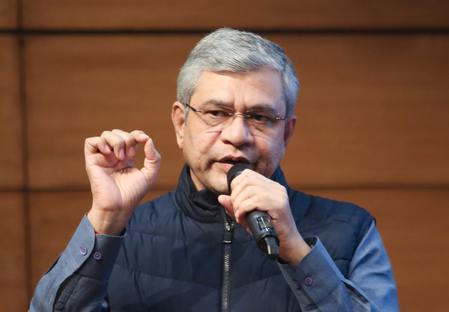
New Delhi, Feb 8 (IANS) Union Electronics and IT Minister Ashwini Vaishnaw on Sunday said that sovereign artificial intelligence (AI) model strategy is delivering results, as he praised an advanced model released by homegrown startup Sarvam AI.
Last year, the startup was selected to build the country’s first artificial intelligence (AI) foundational model. Out of the 67 proposals, Sarvam AI was shortlisted to build India’s first indigenous foundational model.
“Even the most critical reviewers are praising the technologically advanced model released by Sarvam as a part of our AI mission,” Vaishnaw said in an X post.
He further stated that in parallel, “our smart young engineers are working on innovations in materials science, healthcare and cybersecurity that will be noticed by the world as pathbreaking models”.
Sarvam AI has built best text-to-speech, speech-to text, and OCR models for Indic languages.
In December last year, Sarvam AI Co-Founder Pratyush Kumar showcased multilingual AI systems under the IndiaAI Mission, including India’s first sovereign foundational Large Language Model (LLM) for Indian languages.
In a significant step towards bolstering India’s AI ecosystem, the Prime Minister Narendra Modi government in 2024 approved the India AI Mission with the allocation of Rs 10,300 crore. This funding, slated over the next five years, is poised to catalyse various components of the IndiaAI mission.
Last month, PM Modi urged startups to leverage AI for societal good. Chairing a roundtable with Indian AI startups at his residence at 7, Lok Kalyan Marg, the Prime Minister urged making AI affordable, inclusive, and transparent.
He also suggested that Indian AI models should be distinct and should promote local and indigenous content and regional languages.
PM Modi noted that India will host the ‘India AI Impact Summit 2026’ from February 16-20, through which the country will play a major role in the technology sector.
—IANS
na/
CM Stalin urges PM Modi to expedite railway projects, release required funds in full
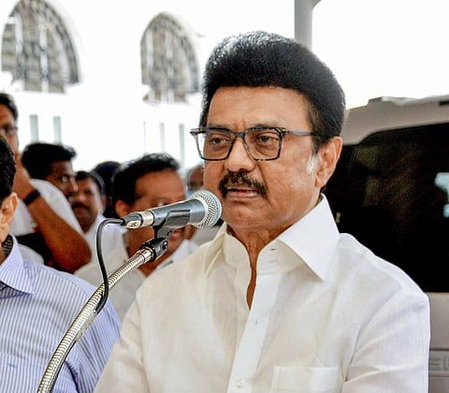
Chennai, Feb 8 (IANS) Tamil Nadu Chief Minister M.K. Stalin has written to Prime Minister Narendra Modi seeking urgent intervention to accelerate long-pending railway projects in the State, highlighting "delays" in fund allocation and stalled land acquisition that have slowed critical infrastructure development.
In his detailed letter, the Chief Minister underscored that Tamil Nadu has already completed most of the groundwork required for railway expansion but is facing setbacks due to the "delayed and piecemeal release" of funds from the Ministry of Railways.
He requested the Centre to release the required funds in full and on priority to ensure faster project execution and timely compensation to the landowners.
According to CM Stalin, administrative sanction has been granted for acquiring 2,500 hectares of land for various Union government railway projects.
Of this, land acquisition has been completed for nearly 94 per cent of the required area for 19 major projects, and the land has been handed over to the Railways.
However, funds have not yet been sanctioned for over 931 hectares, creating bottlenecks in several works.
He pointed out that delays in compensating landowners have disrupted progress and created uncertainty among affected families.
CM Stalin cited the Thiruvananthapuram–Kanniyakumari broad-gauge doubling project as a key example, where funds amounting to Rs 289.78 crore for land compensation are still pending, thereby holding up the project's completion.
The Chief Minister also called for the revival of projects that have been kept in abeyance, including the Thoothukudi–Madurai (via Aruppukottai) line and the Tindivanam–Tiruvannamalai line.
He further urged the Centre to sanction additional new railway projects in line with Tamil Nadu's growing economic stature.
Describing Tamil Nadu as India's second-largest economy and a major manufacturing and export hub, CM Stalin stressed that improved rail connectivity would significantly boost national growth.
He assured that the State government has established a robust monitoring system and is fully committed to extending cooperation for speedy implementation.
Expressing confidence in cooperative federalism, CM Stalin said timely Central support would benefit both Tamil Nadu and the nation at large.
--IANS
aal/svn
S. Korea’s auto parts exports to US fall for 1st time in 5 years
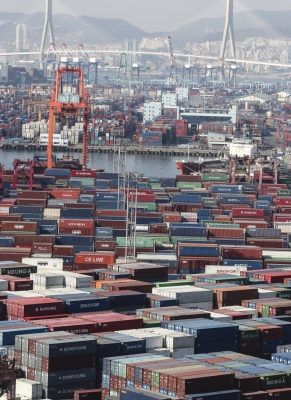
Seoul, Feb 8 (IANS) South Korea's exports of auto parts to the United States fell in 2025 for the first time in five years, data showed on Sunday, as domestic automakers expanded local sourcing in the US amid tariff measures.
Shipments of automotive parts to the U.S. declined 6.7 percent from a year earlier to US$7.67 billion last year, according to data compiled by the Korea Auto Industries Cooperative Association. It marked the first annual fall since 2020, when exports fell 11.5 percent, reports Yonhap news agency.
Exports to South Korea's largest overseas market had since risen steadily in recent years, increasing from $6.91 billion in 2021 to $8.03 billion in 2022, $8.08 billion in 2023 and $8.22 billion in 2024.
The association said proposed 25 percent tariffs on auto imports under the Donald Trump administration dealt a serious blow to South Korea's automotive exports and the broader industry.
Industry analysts said the higher tariffs prompted automakers, including Hyundai Motor Co. and Kia Corp., to expand local parts procurement in the U.S.
The U.S. began imposing a 25 percent tariff on imported auto parts in May last year. Under an agreement between Seoul and Washington, tariffs on South Korean auto parts were later reduced to 15 percent, retroactive to Nov. 1.
However, Trump threatened to raise "reciprocal" tariffs and auto, lumber and pharmaceutical duties on South Korea to 25 percent from 15 percent, citing a delay in the parliamentary process to pass a special investment bill facilitating the implementation of a trade deal reached by the two countries.
Under the trade deal, South Korea has committed to investing US$350 billion in the U.S., among other pledges, in return for the U.S. lowering reciprocal tariffs on South Korea to 15 percent from 25 percent, said the report.
—IANS
na/
Samsung to begin mass production of HBM4 chips later this month
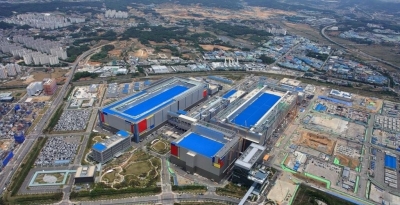
Seoul, Feb 8 (IANS) Samsung Electronics will begin mass production of the world's first sixth-generation high-bandwidth memory, known as HBM4, later this month, industry sources said on Sunday.
The South Korean tech giant plans to start shipping HBM4 chips as early as next week, following the Lunar New Year holiday, for use in graphics processing units (GPUs) made by Nvidia Corp., the sources said. Nvidia's GPUs are widely used in generative artificial intelligence (AI) systems, reports Yonhap news agency.
"Samsung, which has the world's largest production capacity and the broadest product lineup, has demonstrated a recovery in its technological competitiveness by becoming the first to mass-produce the highest-performing HBM4," said an industry source, who declined to be named.
The global HBM market is currently dominated by fifth-generation HBM3E chips, but industry observers expect HBM4 to emerge as a key technology. Nvidia plans to adopt HBM4 in its next-generation AI accelerator, named Vera Rubin.
Samsung has passed Nvidia's quality certification process and secured purchase orders, the sources said, noting that the production schedule was finalised to align with Nvidia's launch plans for Vera Rubin.
The volume of HBM4 samples supplied by Samsung for customer-side module testing has also increased significantly under the latest purchase order, the sources added.
Meanwhile, Samsung Electronics reported a record-breaking operating profit for the fourth quarter, touching the 20 trillion-won (US$13.8 billion) mark for the first time, driven by a supercycle in the chip industry.
The fourth-quarter operating profit marked a more than 200 percent rise from a year earlier, the company said in a preliminary earnings report.
If confirmed, it would mark the first time for the company's quarterly earnings to reach the 20 trillion-won level.
Sales increased 22.7 percent to 93 trillion won. It was also the first time for the quarterly sales to surpass the 90 trillion-won mark.
The data for net profit was not available. The operating profit was 1.8 percent higher than the average estimate, according to a survey by Yonhap Infomax, the financial data firm of Yonhap News Agency.
—IANS
na/