
Exports of large S. Korean firms up 10 pc on semiconductor demand
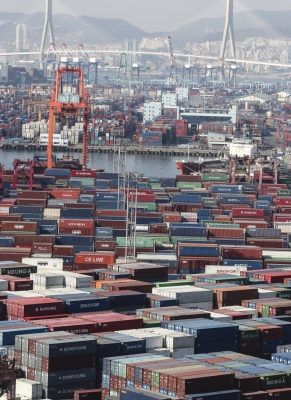
Seoul, Feb 10 (IANS) Exports of large companies in South Korea rose approximately 10 per cent on-year in the fourth quarter, boosted by a rise in global semiconductor demand, government data showed on Tuesday.
Outbound shipments from the top 917 of the country's 70,223 exporting firms came to US$128.1 billion as of end-December, up 10.1 percent from a year ago, according to the data compiled by the Ministry of Data and Statistics, reports Yonhap news agency.
The growth was primarily led by semiconductors, of which exports rose 9.1 percent on-year.
Exports by medium-sized businesses remained unchanged at $30.9 billion, while those from small companies advanced 10.8 percent on-year to $30.3 billion.
By country, exports to the United States fell 3.8 percent from the same period in 2024, partly due to trade uncertainties stemming from the U.S. President Donald Trump administration's sweeping tariffs.
Outbound shipments to Central America and the Middle East, however, rose by a large margin, 32.2 percent and 19.8 percent, respectively, amid efforts to diversify markets.
"Many companies appear to be still unsure about resuming exports to the U.S. amid lingering tariff uncertainties, including ongoing tensions over a pending bill on the trade deal at the National Assembly," a ministry official said.
Meanwhile, sales by major South Korean conglomerates and their affiliates in North America rose at a double-digit pace in the third quarter despite U.S. import tariffs, industry data showed on Tuesday.
Sixty-seven conglomerates and their 194 affiliates posted combined U.S. sales of 343.8 trillion won (US$235.6 billion) in the July-September period, up 14.1 percent from 301.2 trillion won a year earlier, according to a survey by corporate tracker Leaders Index.
The survey covered companies among the country's top 500 firms by sales that disclosed their third-quarter U.S. sales.
Over the same period, the surveyed firms' total global sales rose 8 percent on-year to 1,110.4 trillion won, increasing the share of U.S. sales in overall revenue to 31 percent from 29.3 percent.
By sector, information technology (IT) and electronics firms reported the strongest growth, with U.S. sales jumping 20.7 percent on-year to 157.9 trillion won in the third quarter.
SK hynix's U.S. sales surged 65.5 percent to 45.2 trillion won, while Samsung Electronics Co.'s rose 10.2 percent to 93.3 trillion won during the same period.
—IANS
na/
NITI Aayog releases reports on scenarios towards Viksit Bharat and Net Zero
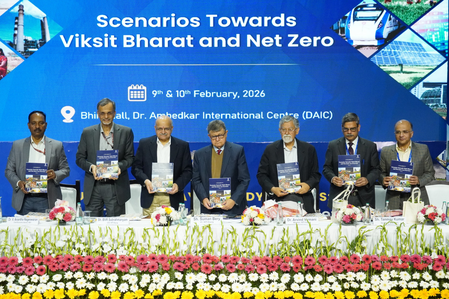
New Delhi, Feb 9 (IANS) NITI Aayog released three of the eleven study reports which it has compiled on scenarios towards Viksit Bharat and Net Zero on Monday at an event held at the Ambedkar International Centre in the national capital.
The remaining eight reports will be released on Tuesday.
The eleven reports detail the findings of India’s first government-led, multi-sectoral, integrated study to assess development scenarios that deliver on the Prime Minister’s vision of Viksit Bharat 2047 while simultaneously reducing net green-house gas (GHG) emissions to zero by 2070, according to an official statement.
NITI Aayog’s study entails a scenario-based analytic modelling exercise that integrates economic growth, India’s development priorities, and climate commitments.
The study has been informed by ten inter-ministerial working groups that examined long-term transition scenarios across key domains like macroeconomic aspects of the transition; sectoral low-carbon transition in power, transport, industry, buildings, and agriculture; financing for climate action; critical minerals; R&D and manufacturing; and the social implications of the transition. NITI Aayog undertook this comprehensive assessment to inform long-term policy planning.
The reports released at Monday’s event include the study on Scenarios towards Viksit Bharat and Net Zero: An Overview (Vol. 1). The synthesis report summarises the key findings emerging from the development scenarios assessed by NITI Aayog. The scenarios consider historical trends, current policies, and additional policy measures to accelerate demand electrification, enhance circularity, improve energy efficiency, promote the rapid development of low-carbon technologies and fuels, and encourage behavioural shifts.
The second report, titled Scenarios towards Viksit Bharat and Net Zero: Macroeconomic Implications (Vol. 2), details the macroeconomic implications of assessed development scenarios on GDP growth, investment, trade, jobs, and public finance, highlighting both trade-offs and synergies in India’s development pathway. The macroeconomic risk that climate change poses to agriculture, infrastructure, and health, compounded by rising carbon-related trade barriers, is also discussed.
The third report on Scenarios towards Viksit Bharat and Net Zero: Financing Needs (Vol. 9) examines India’s investment requirements in the key sectors of power, transport, and industry. The study concludes that an unprecedented capital mobilisation of $22.7 trillion by 2070 is required under the Net Zero scenario, including a projected financing gap of $6.5 trillion, and identifies the need for domestic financial reforms and stronger global capital integration.
Addressing the event, Suman Bery, Vice Chairperson, NITI Aayog, said, “As one of the world’s largest economies by 2070, India must be concerned for the welfare of its own citizens, and for the world that they will inhabit in the coming decades. Accordingly, the goal of Net Zero by 2070 provides guidance to Indian actors about a world beyond Viksit Bharat 2047. India’s own pathways will be influential for those to follow, particularly from the global south. I commend the NITI team for the detailed analysis of technologically feasible paths towards realising the Prime Minister’s vision and promise and, crucially, assessing the resource requirements: financial, technological and diplomatic that will be needed in this journey.”
In his address, B.V.R Subrahmanyam, CEO, NITI Aayog, said, “The Net Zero strategy is simple – first, electrify energy use. Two, green and clean electricity. Three, control demand through Mission LiFE. Four, focus on circularity and efficiency. Last, cheaper external finance is needed. Clearly stated, India’s coal consumption will go up till 2047 even as energy intensity decreases and efficiency goes up, while meeting Net Zero goals. India can leapfrog to be a global leader in clean technologies. 85 per cent of India by 2047 is yet to be built and can be built to be climate-friendly.”
Tanmay Kumar, Secretary, Ministry of Environment, Forest and Climate Change, said, "India will abide by Common and Differentiated responsibility and can meet Net Zero goals".
V. Anantha Nageswaran, Chief Economic Advisor to the Government of India, Ministry of Finance, said, “NITI Aayog has undertaken a comprehensive and rigorous exercise that will serve as a benchmark – a starting point for future discussions on Viksit Bharat and Net Zero. The reports are a great resource for policymakers and researchers on charting India’s course to these twin objectives.”
--IANS
sps/uk
Govt failing to accept insurance companies’ hike in base premiums, says Rajasthan MP Beniwal
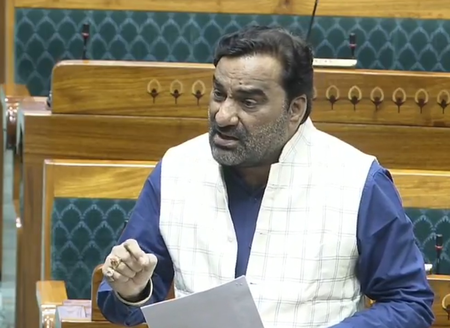
Jaipur, Feb 9 (IANS) Rashtriya Loktantrik Party (RLP) President and Nagaur Lok Sabha MP, Hanuman Beniwal, on Monday, raised a query in the Lok Sabha regarding GST reforms on personal life insurance and health insurance policies.
He said that despite the Union government reducing GST to zero on these insurance products, insurance companies in Rajasthan and several other states have increased base premiums by 8 to 12 per cent.
Nagaur MP Beniwal asked the Union government on what concrete action plan it has to curb this arbitrary practice by insurance companies.
Replying on behalf of the Union Finance Ministry, Minister of State (MoS) Pankaj Chaudhary said that, as per the Insurance Regulatory and Development Authority of India (IRDAI), a one-day, in-person meeting with insurance companies was held on September 17, 2025, to ensure full transmission of GST relief.
Insurance companies were strongly instructed to pass on the complete benefit to policyholders, the MoS added.
He also informed that the IRDAI collected prevailing premium rates as of September 3, 2025, and has been regularly monitoring premiums for new policies as well as renewals to ensure that insured individuals receive the intended benefit.
According to IRDAI, in January 2026, all general and health insurance companies confirmed that they had not revised premiums upward after the Union government's GST relief announcement and that the full benefit had been passed on to policyholders.
The MoS also clarified that for life insurance policies, premiums and benefits once fixed under a policy cannot be altered during the policy tenure.
Nagaur MP Beniwal said that the removal of GST on health insurance should have directly benefited the common people, not insurance companies.
"However, immediately after GST removal, insurance companies increased base premiums by 8 to 12 per cent in Rajasthan and other states, which is a clear betrayal of public trust and a misuse of the Union government's policy decision."
He emphasised that health insurance is not a luxury but a necessity, as illness already weakens individuals financially and mentally.
The profit-driven policies of insurance companies are further burdening the common man, the RLP President said.
The Nagaur MP added that while GST relief was meant for consumers, insurance companies found ways to neutralise its impact, which is against public interest.
He also asserted that the benefits of government reforms are being limited only to corporate profits, a reality the Union government is unwilling to acknowledge.
He urged that IRDAI must exercise strict oversight and take firm action against the arbitrary practices of insurance companies.
--IANS
arc/khz
India’s GDP likely to grow 6.4 pc in FY27, fastest among G20 economies: Report

New Delhi, Feb 9 (IANS) India’s real gross domestic product (GDP) is likely to expand 6.4 per cent in fiscal 2026‑27 -- the fastest among G20 economies -- driven by strong domestic consumption and policy measures, a new report has said.
The report from Moody’s Ratings said the country’s banking system outlook remains broadly favourable amid sufficient reserves to absorb loan losses.
The operating environment for banks will remain strong in 2026, supported by robust macroeconomic conditions and structural reforms, it said.
"The rationalisation of the goods and services tax (GST) in September 2025 and an earlier increase in personal income tax thresholds will help improve affordability for consumers and support consumption-led growth," the global brokerage mentioned.
It expects the Reserve Bank of India (RBI) to ease policy further in 2026‑27 only if there are clear signs of a slowdown in activity, adding that inflation remaining under control would allow the central bank flexibility.
The report forecasts system-wide loan growth to reach 11.13 per cent in FY27, from 10.6 per cent in FY26 (year-to-date), adding that corporate loan quality should stay healthy, supported by stronger balance sheets and improved profitability among large firms.
"Recoveries will taper as banks have resolved stressed loans to large corporate," the report said.
The estimates from ratings agency on FY27 growth is lower than the 6.8–7.2 per cent range projected in the Finance Ministry’s Economic Survey. According to official estimates growth for the current fiscal is expected to touch 7.4 per cent.
The ratings agency had earlier said in a report that decrease in effective GST rates, however, could enhance private consumption and support India's economic growth.
The RBI Monetary Policy Committee (MPC), in its first policy review of 2026, kept the repo rate unchanged at 5.25 per cent.
Analysts said that RBI's decision to keep the policy rate unchanged reflected a favourable assessment of growth and inflation dynamics.
The RBI is expected to maintain an extended pause, due to positive cyclical upswing and confidence from successful conclusion of multiple trade deals, they added.
--IANS
aar/na
India leads in several indicators in global ‘Network Readiness Index’, improves its position

New Delhi, Feb 9 (IANS) The government on Monday said India has improved its global ‘Network Readiness Index 2025’ (NRI 2025) position by four slots and is now placed at 45th rank, leading in several indicators.
The report has been published by the Portulans Institute, an independent, non-profit research and educational institute based in Washington, DC.
“India has not only improved its ranking but has also improved its score from 53.63 out of 100 in 2024 to 54.43 out of 100 in 2025. It is noteworthy that India leads in several indicators,” said Ministry of Communications.
The report maps the network-based readiness landscape of 127 economies based on their performance on four pillars -- Technology, People, Governance and Impact -- covering a total of 53 indicators.
According to the report, India secured 1st rank in “Annual investment in telecommunication services”, “AI scientific publications”, “ICT services exports” and “E-commerce legislation”, 2nd rank in “FTTH/Building Internet subscriptions”, “Mobile broadband internet traffic within the country” and “International Internet bandwidth”, and 3rd rank in “Domestic market scale” and “Income Inequality”.
The ministry said India now has greater network readiness than would be expected given its income level. The country is ranked second in the group of lower-middle-income countries.
Communications Minister Jyotiraditya Scindia said recently that India now has world’s lowest data costs and highest data usage, driven by robust digital infrastructure. There are more than 120 crore mobile users in the country and the 4G network is expected to reach every village by June this year.
BSNL has installed a total of 97,068 4G sites, and 93,511 sites are ‘On-Air’ (till October 31, 2025). The state-run telecom operation aims to upgrade all 4G towers to 5G within the next few months.
Meanwhile, the 5G services have been rolled out in all states and union territories (UTs) across the country and presently, these are available in 99.9 per cent of the districts.
Telecom service providers (TSPs) have installed 5.08 lakh 5G Base Transceiver Stations (BTSs) across rural and urban area of the country.
--IANS
na/
Yotta deploys complete BHASHINI stack to enable sovereign AI cloud
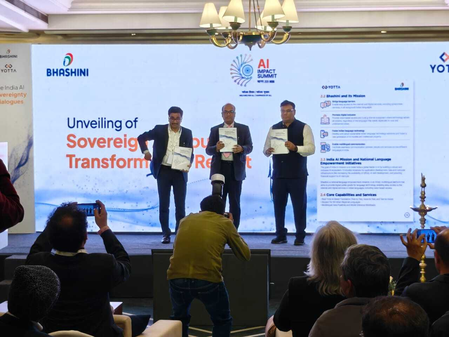
New Delhi, Feb 9 (IANS) Homegrown Yotta Data Services on Monday announced the successful deployment of BHASHINI’s end-to-end sovereign AI cloud transformation on Yotta’s Government Community Cloud (GCC) and Shakti Cloud.
With this development, BHASHINI now operates entirely on Indian cloud and GPU infrastructure, ensuring that language datasets, models, and citizen interactions remain within India’s jurisdiction.
The deployment demonstrates how national digital public goods can be migrated from hyperscaler environments to indigenous cloud infrastructure while delivering up to 40 per cent performance improvement, 20 to 30 per cent cost savings, and sustained 99.99 per cent uptime.
This was achieved with zero data loss across more than 200 TiB of data and over 3.5 billion files.
This was showcased at ‘The India AI Sovereignty Dialogues’, an official Pre-Summit Event of the AI Impact Summit 2026.
Abhishek Singh, Additional Secretary, MeitY, and CEO of IndiaAI Mission said the successful migration of Bhashini to indigenous cloud and GPU platforms demonstrates that India can build, scale, and secure its sovereign AI systems for the public good.
“It underscores the IndiaAI Mission’s vision of developing sovereign compute capacity, models and deploying AI applications that are responsive to India’s unique requirements, including the delivery of reliable, real-time, voice-based services at population scale,” said Singh.
According to Amitabh Nag, CEO, Digital India BHASHINI Division, the move to Yotta’s sovereign AI cloud gives BHASHINI greater control, resilience, and scalability as it continues to serve India’s linguistic diversity.
“This transformation strengthens our ability to deliver inclusive, real-time multilingual services and marks a major step forward for Digital Public Infrastructure in AI. It will also serve as a blueprint for future deployments as we transition to a fully sovereign stack,” Nag added.
The migration covered BHASHINI’s complete AI stack, including multilingual datasets, models, APIs, containerised services, orchestration pipelines, databases, and storage.
“Yotta’s successful deployment of BHASHINI on Shakti cloud marks a defining moment for India’s data sovereignty journey. This transition highlights that hyperscale, mission-critical AI platforms can be built and operated entirely on sovereign infrastructure, without compromise,” said Sunil Gupta, Co-Founder, Managing Director and CEO, Yotta Data Services.
--IANS
na/
India needs to prioritise trade openness, reforms to unlock long-term competitiveness: Report

New Delhi, Feb 9 (IANS) In the backdrop of the interim India-US trade agreement framework, India must prioritise trade openness and reforms to unlock long-term competitiveness, a new report showed on Monday.
These priorities are correcting inverted duty structures, streamlining logistics and customs to cut input costs, fostering assembly-based manufacturing for scale and employment and reducing protectionism, expanding FTAs, boosting R&D, and easing land/labour/skills constraints, according to a Systematix report.
“This integrated approach, disciplining firms through advanced manufacturing and embedding India deeper into GVCs, can elevate India’s manufacturing share and global standing, mitigating the risks of Donald Trump’s bargain while unlocking long-term competitiveness,” the findings showed.
The US–India trade deal grants India tariff relief and deeper market access but binds it to a $500 billion import commitment and an oil ban.
The US-India Bilateral Trade Agreement (February 7, 2026) emphasises reciprocal market access, with India committing to eliminate or reduce tariffs on US industrial goods, food, and agricultural products like Distillers Dried Grains with Solubles (DDGS), red sorghum, tree nuts, fruits, soybean oil, wine, and spirits.
In return, the US sets an 18 per cent reciprocal tariff on select Indian goods (textiles, apparel, leather, plastics, chemicals, machinery), with plans to remove tariffs on items like generic pharmaceuticals, gems, diamonds, and aircraft parts upon successful Interim implementation.
From the US standpoint, this structure aims to balance trade while addressing American concerns over market barriers.
“From India's perspective, the deal provides tariff relief, reducing effective US duties on Indian exports to 18 per cent (below competitors' rates), which the Indian Trade Minister has stated will boost labour-intensive sectors and initiatives such as Make in India and Atmanirbhar Bharat,” said the report.
It also ensures removal of national-security tariffs on Indian aircraft and parts, plus a preferential quota for automotive parts, supports aviation and manufacturing growth.
—IANS
na/
Gold, silver prices jump as US dollar weakens
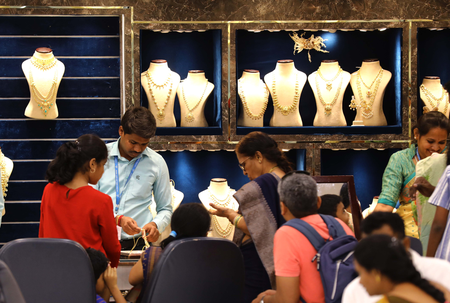
Mumbai, Feb 9 (IANS) Gold and silver prices surged sharply on Monday due to a weaker US dollar and persistent geopolitical uncertainties.
MCX gold February futures jumped 1.31 per cent to Rs 1,57,484 per 10 grams around 10.45 am on an intraday basis. Meanwhile MCX silver March futures climbed 4.81 per cent to Rs 2,61,900 per kg.
On the MCX, silver prices, earlier in the day, had jumped as much as 6 per cent to its day's high of Rs 2,64,885 per kg before a round of profit booking.
The US dollar touched its lowest level since February 4, making greenback-priced metals cheaper for overseas buyers.
Even as Iran’s top diplomat called US–Iran nuclear talks a “good start” on Friday, Tehran has reiterated that the country would retain its right to enrich uranium. Experts anticipate that geopolitical tensions may persist for longer, continuing to drive investors to safe-haven assets.
Market hopes of further rate cuts by the US Federal Reserve got stronger after San Francisco Fed President Mary Daly called for one or two more interest rate cuts to alleviate weakness in the labour market. US Fed rate cut hopes remain another supporting factor for gold and silver prices, analysts said.
"Gold has support at Rs 1,54,000 and Rs 1,51,8000 zones while resistance at Rs 1,57,700 and Rs 1,60,000. Silver has support at Rs 2,36,600 and Rs 2,44,000 levels while resistance at Rs 2,55,500 and Rs 2,62,600," an analyst said.
Silver's sharp surge from Rs 60,000 to Rs 3,20,000 could lead to a phase of consolidation at elevated levels or rebalancing by market participants becomes more likely, according to a recent report.
Structural supply deficits and steady industrial demand continue to underpin the bullish bias in silver. Persistent safe-haven demand, steady central-bank accumulation, and expectations of accommodative global monetary conditions continue to underpin prices of yellow metal, it said.
--IANS
aar/na
Domestic institutional investors surpass FIIs in Nifty50 stocks holding

Mumbai, Feb 9 (IANS) Domestic institutional investors (DIIs), for the first time, have overtaken foreign institutional investors (FIIs) in the ownership of benchmark Nifty50 index, a new report has said.
The data from Motilal Oswal Securities showed that as of the December 2025 quarter, domestic institutions held about 24.8 per cent of the Nifty50, marginally higher than foreign investors at around 24.3 per cent.
Analysts said the FII ownership marked an eight‑quarter low for foreign ownership, and a deepening domestic capital base, adding that the shift is structural rather than cyclical.
While domestic investors had earlier surpassed foreigners in overall equity ownership, they had continued to trail within the Nifty50 until the latest quarter.
Market watchers pointed out strong incremental systematic investment plan inflows of Rs 3.34 lakh crore in 2025, growing pension fund participation and the entry of new asset management companies driving this surge.
Further, domestic institutional investments such as Employees’ Provident Fund Organisation (EPFO) allocations and insurance investments also supported this shift and are likely to moderate rather than reverse in a correction.
Over the past five years, domestic flows have helped the market deliver robust returns even as foreign investors sold nearly Rs 9.96 lakh crore cumulatively, they noted.
The brokerage data showed foreign institutional investor holdings in the Nifty50 fell by 90 basis points year‑on‑year and 20 basis points quarter‑on‑quarter, while domestic institutional ownership rose by 170 basis points YoY and 30 basis points, sequentially.
Foreign investors cut stakes in about 78 per cent of Nifty50 constituents during the quarter, while domestic institutions increased holdings in roughly 82 per cent of index constituents.
In value terms, assets under custody for domestic institutions stood at about $24.8 billion, edging past foreign holdings of around $24.3 billion.
A significant feature of the market behaviour in 2025 was that India’s tepid performance last year (Nifty return of 10 per cent) was despite the massive DII investment of Rs 7.44 lakh crore, which completely eclipsed the total FII selling of Rs 166,283 crore.
A key reason was the poor earnings growth and the consequent elevated valuations, a recent report has said, adding that positive triggers such as an India-US traded deal can reverse the sentiments causing FIIs to return.
—IANS
aar/na
Aiming to build self-growing city on Moon in less than 10 years: Musk

New Delhi, Feb 9 (IANS) Tesla and SpaceX CEO Elon Musk on Monday said he is aiming to build a self-growing city on Moon in less than 10 years, followed by human presence on Mars in about 20 years.
According to the world’s richest man, SpaceX has already shifted focus to building a self-growing city on the Moon, “as we can potentially achieve that in less than 10 years, whereas Mars would take 20+ years”.
In a post on his X social media platform, Musk said the mission of SpaceX remains the same -- extend consciousness and life as we know it to the stars.
“It is only possible to travel to Mars when the planets align every 26 months (six month trip time), whereas we can launch to the Moon every 10 days (2 day trip time). This means we can iterate much faster to complete a Moon city than a Mars city,” he posted.
That said, SpaceX will also strive to build a Mars city and begin doing so in about 5 to 7 years, but “the overriding priority is securing the future of civilisation and the Moon is faster”.
Last September, Musk said that the first uncrewed Starship mission will be launched to the Red Planet in two years when the next Earth-Mars transfer window opens. Starship is the world's most powerful rocket and will be used to send humans to the Moon and then eventually to Mars.
The tech billionaire said the first Starships to Mars will launch in 2 years when the next Earth-Mars transfer window opens. These will be uncrewed to test the reliability of landing intact on Mars. If those landings go well, then the first crewed flights to Mars will be in 4 years.
According to him, flight rate will grow exponentially from there, with the goal of building a self-sustaining city in about 20 years.
—IANS
na/