
India’s GDP likely to grow 6.9 pc in 2026, US trade deal to add 20 bps: Report
Mumbai, Feb 10 (IANS) India’s real GDP growth will likely touch 6.9 per cent in 2026 and 6.8 per cent in 2027, and the recent US-India trade deal should add about 0.2 percentage (20 bps) to annual GDP growth, a new report has said.
The report from Goldman Sachs Research said, "Our analysts expect an incremental growth boost of 0.2 percentage points of GDP (annualised) with these new tariffs, based on India’s goods exports exposure of roughly 4 per cent of GDP to US final demand."
The investment bank expects headline inflation to rise to 3.9 per cent in 2026, close to the Reserve Bank of India’s (RBI) target of 4 per cent.
As the RBI cut rates by 125 basis points last year, with a comprehensive set of measures to inject liquidity into the system, there is limited scope for further easing, said Santanu Sengupta, Goldman Sachs Research’s chief India economist.
"In 2025, our economists expect India’s GDP to have grown at 7.7 per cent year-on-year, despite headwinds from US tariffs—which was the highest imposed on any country in the Asia Pacific region. That said, nominal GDP growth was at a six-year low (excluding the pandemic) due to record-low inflation," the report said.
A combination of policy rate cuts, regulatory relaxation for banks, and a weaker exchange rate eased financial conditions in India, it added. Income tax and GST cuts supported a nascent recovery in urban consumption demand, while the recovery in rural consumption was sustained.
Liquidity measures that injected Rs 6.3 trillion into the banking system should support bank credit growth and real consumption growth is likely to rise around 7.7 per cent in 2026 from 7 per cent in 2025, the report further said.
"Our economists forecast sustained rural consumption in 2026, on a strong winter harvest and continued welfare spending by state governments, particularly those heading into elections," it said.
--IANS
aar/na
SIP inflows hit Rs 31,000 crore in Jan, 7.4 million new accounts opened

Mumbai, Feb 10 (IANS) Mutual fund Systematic Investment Plan (SIP) inflows reached Rs 31,000 crore in the month of January, second consecutive month when SIP inflows were Rs 31,000 crore or more, the data released by the Association of Mutual Funds in India (AMFI) showed on Tuesday.
In December, the SIP inflows stood at Rs 31,002 crore. SIP inflows increased by 17 per cent year-on-year, from Rs 26,400 crore in January 2025.
According to AMFI data, 7.4 million new SIP accounts were opened in January. Meanwhile, 5.5 million SIP accounts were closed during this period.
Furthermore, the total number of SIP accounts in the country increased to 102.9 million, up from 101.1 million in December.
The data further showed that SIP assets under management (AUM) declined to Rs 16.36 lakh crore in January from Rs 16.63 lakh crore in December. This is attributed to the market decline. SIPs account for 20.2 per cent of the overall mutual fund industry's AUM.
According to the AMFI, investments in gold ETFs doubled to Rs 24,039.96 crore in January from Rs 11,647 crore in December. This indicates that people are prioritising safe investments like gold alongside the stock market.
Investments in active equity mutual funds in January stood at Rs 24,029 crore, a decline of approximately 14 per cent from Rs 28,054 crore in December. This means investor confidence in the mutual fund industry remained strong.
In November, equity funds saw an inflow of Rs 29,911 crore, compared to Rs 24,690 crore in October. In July 2025, equity funds saw the highest inflow of Rs 42,702 crore.
However, January proved to be a good month for the overall mutual fund industry. Net investments during this period totalled Rs 1.56 lakh crore, compared to Rs 66,591 crore in December. This clearly indicates that investors are now turning to mutual funds again.
--IANS
abs/na
Defence Ministry nod for buying 114 Rafale fighter jets from France likely this week

New Delhi, Feb 10 (IANS) The Defence Ministry is likely to approve a Rs 3.25 lakh crore deal this week to buy 114 Rafale fighter jets from France for the Indian Air Force, according to reliable sources.
The clearance is scheduled to take place ahead of French President Emmanuel Macron's forthcoming official visit to Delhi.
After the Defence Ministry’s approval, the deal will eventually need clearance from the Cabinet Committee on Security chaired by Prime Minister Narendra Modi.
According to the proposal, India will purchase 18 off-the-shelf Rafales from French defence giant Dassault Aviation, while the remaining 96 fighter jets will be 'made in India'. Some of these jets will be twin-seater aircraft to be used for training. The deal will involve the transfer of state-of-art fighter jet technology and a strategic partnership to give a fillip to the 'Make in India' programme.
The Indian Air Force already has 36 Rafales in its fleet, comprising two squadrons, with the last delivery of the 'C' variant taking place in December 2024. Another 26 Rafale jets of the 'M' version, have also been ordered for the Indian Navy in a deal worth Rs 63,000 crore. The naval variants will be operated from the aircraft carriers INS Vikrant and INS Vikramaditya.
That deal includes facilitation of fleet maintenance, logistics support, and personnel training under a MRO (maintenance, repair and overhaul) agreement.
The Rafale jets were successfully used in Operation Sindoor to hit precision targets in Pakistan, as part of India's military response to the Pahalgam terror attack in May last year.
The Rafales were used to launch the SCALP, an air-launched cruise missile developed that can strike hardened targets over 250 km away with extreme precision. It can also carry Meteor long range air-to-air missiles and the Hammer, a stand-off strike weapon, and the Spectra, an advanced e-warfare suite, as well as advanced radar and targeting systems.
Meanwhile, in June last year, France and India also announced four landmark production transfer deals between manufacturers Dassault Aviation and Tata Advanced Systems Limited, which should significantly speed up delivery of a backlog of Rafales to India.
Tata Advanced Systems is expected to set up a cutting-edge production facility in Hyderabad for the manufacture of key structural sections of the French fighter, including the lateral shells of the rear fuselage, the complete rear section, the central fuselage, and the front section.
The first fuselage segments will roll off the manufacturing line in 2028.
--IANS
sps/na
India’s vehicle retail jumps 17.61 pc in Jan amid healthy rural cashflows
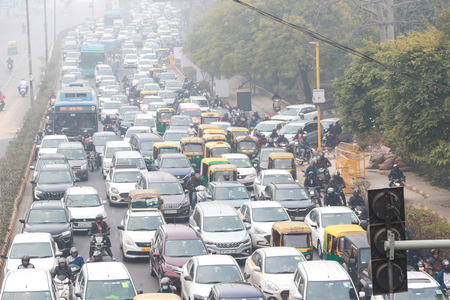
New Delhi, Feb 10 (IANS) Overall vehicle retail market in India grew 17.61 per cent (year‑on‑year) with sales of 27,22,558 units in January, driven by strong demand in two‑wheelers and passenger vehicles, industry body Federation of Automobile Dealers Associations (FADA) said on Tuesday.
Passenger vehicle (PV) retail rose 7.22 per cent to 5,13,475 units in January, with urban markets accounting for about 59.2 per cent of sales volumes, the statement from FADA said.
Rural PV retail grew 14.43 per cent YoY compared with urban growth of 2.75 per cent, the industry body said.
“The growth was powered by continued post‑GST momentum, healthy rural cash flows on the back of harvest and weddings, and sustained demand visibility across mobility and freight,” said CS Vigneshwar, President, FADA.
Dealer feedback highlighted strong enquiry momentum, sharper customer engagement, quicker digital follow-ups, and shift towards higher-value models.
Rural volumes stayed robust, supported by Pongal or Makar Sankranti and marriage-season footfalls, it added.
Selective model-wise supply constraints and aggressive competitive discounting continue to shape the near-term retail playbook in a few pockets.
Two‑wheelers led the growth with 18,52,870 units sold, up 20.82 per cent YoY, and rural share in two‑wheelers around 56 per cent. Commercial vehicles clocked 1,07,486 units, up 15.07 per cent, with light commercial vehicles at 65,505 units and heavy commercial vehicles at 34,287 units, both up around 14 per cent, the statement added.
FADA said the sentiment in February is firmly constructive, backed by supportive macros and on-ground dealer confidence as 72.56 per cent of dealers expect growth and only 4.51 per cent expect de-growth.
The operating environment is being strengthened by a growth-oriented Budget with a clear infra–agri thrust, continued wedding/festival tailwinds. RBI rate stability on top of 2025’s easing—together improving affordability, financing comfort and purchase intent.
The industry body shared its outlook for next 3 months of broad-based growth, reinforced by structural expansion of demand beyond metros. Key enablers for the growth include ongoing affordability gains, rural cash flows, and product momentum.
—IANS
aar/na
Gold ETFs see steep 50 pc rise at Rs 24,040 crore in India in January: AMFI data

New Delhi, Feb 10 (IANS) Gold exchange-traded funds (ETFs) saw a steep 50 per cent rise in India in the month of January, with their monthly inflows exceeding the entire equity mutual fund segment, according to data released by the Association of Mutual Funds in India (AMFI) on Tuesday.
Gold ETF inflows surged to about Rs 24,040 crore in January, more than double the Rs 11,647 crore in December, making gold one of the standout segments for the month.
Meanwhile, equity mutual fund inflows stood at Rs 24,029 crore in January, nearly 14 per cent lower than Rs 28,054 crore in December.
The mutual fund industry saw total flows turn positive at Rs 1.56 lakh crore, led by debt schemes, which recorded net inflows of Rs 74,827 crore, according to the AMFI data.
While Hybrid schemes attracted Rs 17,356 crore, “other schemes”, including ETFs, brought in Rs 39,955 crore.
Despite a volatile month for equity markets, mutual fund AUM expanded in January, highlighting the resilience of investor participation, said analysts.
“Key standout, however, were gold ETFs, with AUM rising nearly 50 per cent and monthly inflows exceeding those into the entire equity segment, pointing to the increasing financialisation of gold as an investment asset,” said Varun Gupta, CEO, Groww Mutual Fund.
The mutual fund industry returned to positive net inflows, with total flows turning positive at Rs 1.56 lakh crore. This was mainly led by debt schemes, which recorded net inflows of Rs 74,827 crore.
The AUM of open-ended equity-oriented schemes stood at Rs 34.86 lakh crore, while open-ended debt-oriented schemes managed Rs 18.90 lakh crore.
Himanshu Srivastava, Principal Research, Morningstar Investment Research India, said that flows remained constructive despite bouts of market volatility, supported by steady SIP contributions and continued confidence in the long-term structural growth prospects of Indian equities.
The moderation in overall inflows was largely driven by cooling momentum in the mid- and small-cap segments, he mentioned. Large-cap and focused funds also witnessed healthy traction in January, recording higher inflows compared with December.
—IANS
na/
Precious metal prices decline amid profit booking, stronger dollar

New Delhi, Feb 10 (IANS) Gold and silver prices dipped moderately on Tuesday due to a stronger dollar and profit booking, even as geopolitical uncertainties extended medium-term support to precious metals.
MCX gold February futures dipped 0.33 per cent to Rs 1,57,550 per 10 grams on an intra-day basis. Meanwhile, MCX silver March futures declined 1.92 per cent to Rs 2,57,567 per kg.
Earlier, silver prices dipped over 2 per cent to its day's low of Rs 2,57,100 per kg and gold prices dipped 1.3 per cent to Rs 1,56,001 per 10 grams, before the precious metals rebounded slightly.
The dollar index rose to 97.01 on Tuesday from 96.82 in the previous session, making greenback-backed bullion slightly expensive for overseas buyers.
Markets are currently pricing in at least two rate cuts of 25 basis points this year, generally positive for bullion due to expectations of a more relaxed monetary policy. Despite indications of diplomatic progress, tensions between the US and Iran remain high, as Washington cautioned US-flagged ships to avoid Iranian seas.
The broader uptrend on COMEX Gold remains intact, with the recent pullback reflecting profit booking and healthy price digestion, market participants said.
Strong buying interest is visible in the $65–$70 support band for COMEX Silver, aligned with prior swing lows and long-term trend support, they added.
“Gold has support at Rs 1,56,600 and Rs 1,54,800 zones while resistance at Rs 1,59,100 and Rs 1,60,000. Silver has support at Rs 2,55,500 and Rs 2,48,800 levels while resistance at Rs 2,68,000 and Rs 2,74,000," an analyst said.
Market watchers said that structural supply deficits and steady industrial demand continue to underpin the bullish bias in silver while persistent safe-haven demand, steady central-bank accumulation, continue to underpin gold's long term outlook.
Investors remain keen on cues from the non-farm payrolls report for January, and inflation data, later this week, for more cues on the US Fed's interest rate trajectory.
—IANS
aar/na
FIIs turn net buyers in Indian markets as valuations moderate

Mumbai, Feb 10 (IANS) Foreign institutional investors (FIIs) became net buyers in Indian equities over the last nine trading sessions, purchasing more than $2 billion worth of shares supporting a rally, according to provisional data from exchanges.
On February 9, they bought shares worth Rs 2,223 crore on a provisional basis, according to exchange data.
However, experts cautioned it was too early to judge the medium‑term durability of the flow, adding that the trend could continue if trade stability persists, corporate earnings improve, and the dollar continues to weaken.
Domestic institutional investors (DIIs) were also active, purchasing equities worth more than Rs 8,973 crore over the same period.
DIIs holding a larger share than FIIs in the Nifty50 underscores a fundamental shift toward stronger domestic participation in India’s equity markets.
This reflects the growing strength of domestic capital pools. The change has been driven by sustained mutual fund SIP inflows, rising retail participation, and steady allocations from insurance and pension funds, even as FIIs turned cautious amid global macro uncertainty, elevated overseas rates, and a stronger dollar, said analysts.
“The increasing dominance of domestic money provides a more stable, long-term source of liquidity, reduces reliance on volatile foreign flows, and could help cushion markets during global risk-off phases, ultimately making India’s equity market structure more resilient and aligned with domestic growth fundamentals,” said Himanshu Srivastava, Principal, Manager Research, Morningstar Investment Research India.
According to analysts, the renewed foreign interest followed a recent sell‑off that improved valuations relative to other Asian markets.
Further the framework for the India–US trade deal eased uncertainties, stabilised bond yields and bolstered risk appetite.
Benchmark indices Sensex and Nifty each rose over 3 per cent during the rally, while the BSE MidCap 150 and BSE SmallCap 250 surged around 5.66 per cent and 6.3 per cent, respectively.
Market participants pointed to the Reserve Bank of India’s dovish stance, improving GDP, robust earnings outlook and steady domestic flows as supporting forces in Indian markets that could attract foreign inflows.
A recent report from Motilal Oswal Securities showed that as of December 2025 quarter, domestic institutions held about 24.8 per cent of the Nifty50, marginally higher than foreign investors at around 24.3 per cent.
Analysts said the FII ownership marked an eight‑quarter low for foreign ownership, and a deepening domestic capital base, adding that the shift is structural rather than cyclical.
—IANS
aar/na
‘Unexecuted’ budget of S. Korea falls to $3.7 billion in 2025, lowest in 4 years
Seoul, Feb 10 (IANS) Unexecuted spending in South Korea's annual budget totalled 5.4 trillion won ($3.7 billion) last year, the smallest amount in four years, the finance ministry said on Tuesday.
Excluding internal transactions, the "practical unexecuted" amount came to 5.4 trillion won in 2025, according to the Ministry of Economy and Finance. The figure is down 3.9 trillion won from 9.3 trillion won the previous year and is the lowest since 2021, when it totalled 5.2 trillion won.
The ministry attributed the decline to spending adjustments made following supplementary budgets that reflected changes in the economy, reports Yonhap news agency.
"Despite domestic and international uncertainties last year, the government actively managed finances through two supplementary budgets and swift execution, greatly supporting economic recovery," a ministry official said.
Separately, final accounting for last year's revenues and expenditures showed that only about 100 billion won would be available for this year's supplementary budget.
Despite the government's insistence that it is not considering a supplementary budget, financial markets speculate that one could be approved before the June 3 local elections.
If the government does move forward with a supplementary budget in the first half of the year, it is likely to rely primarily on this year's excess tax revenues.
Meanwhile, South Korean stocks traded higher late Tuesday morning, as foreign investors and institutions resumed their purchases of local shares amid eased artificial intelligence (AI) bubble woes.
The benchmark Korea Composite Stock Price Index (KOSPI) had added 21.58 points, or 0.41 percent, to 5,337.17 as of 11:20 a.m.
Overnight, the Nasdaq composite gained 0.9 percent, and the S&P 500 added 0.47 percent as investors chipped in tech shares amid soothed concerns over AI valuations and awaited the planned release of key U.S. economic reports throughout this week. The Dow Jones Industrial Average edged up 0.04 percent.
—IANS
na/
Sensex, Nifty trade higher amid sustained foreign inflows
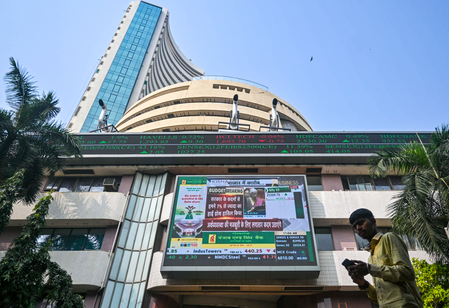
Mumbai, Feb 10 (IANS) The Indian equity markets posted moderate gains early on Tuesday amid strong global cues and continuing foreign inflows.
As of 9.28 am, Sensex added 182 points, or 0.22 per cent, to reach 84,247, and Nifty gained 50 points, or 0.19 per cent, to settle at 25,917.
Main broad-cap indices performed in line with benchmark indices, as the Nifty Midcap 100 added 0.20 per cent, and the Nifty Smallcap 100 edged up 0.58 per cent.
All sectoral indices traded in the green. Most notable gainers were Nifty consumer durables, up 0.85 per cent, realty up 0.55 per cent and metals 0.53 per cent. ONGC was among the top gainers.
Immediate support for Nifty is placed at 25,500-25,700 zone, while resistance is anchored at 26,000–26,100 zone, market watchers said.
Analysts said improving sentiment around renewed foreign inflows, strength in the US markets, and optimism surrounding the interim India-US trade framework are providing near-term support.
In Asian markets, China's Shanghai index lost 0.02 per cent and Shenzhen eased 0.02 per cent, Japan's Nikkei gained 2.49 per cent and Hong Kong's Hang Seng Index edged up 0.6 per cent. South Korea's Kospi gained 0.14 per cent.
The US markets ended in the green in the last trading session as Nasdaq gained 0.9 per cent. The S&P 500 added 0.47 per cent, and the Dow Jones added 0.04 per cent.
On February 9, foreign institutional investors (FIIs) net bought equities worth Rs 2,255 crore, while domestic institutional investors (DIIs) were net buyers of equities worth Rs 4 crore.
Meanwhile, the Indian equity markets posted strong gains on Monday, buoyed by the announcement of an interim framework for the India–US trade deal. At the closing bell, the Sensex had gained 485 points, or 0.58 per cent to settle at 84,065. The Nifty surged 173 points, or 0.68 per cent, to close at 25,867.
—IANS
aar/na
Regulator launches probe into Bithumb’s accidental bitcoin pay out
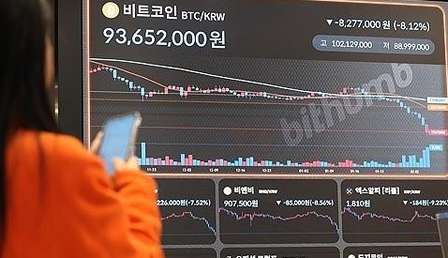
Seoul, Feb 10 (IANS) Financial authorities began a formal investigation on Tuesday into Bithumb, a local crypto exchange, to determine how it was able to pay out over 60 trillion won ($41.2 billion) in bitcoins it apparently did not have, industry sources said.
Regulators informed the crypto exchange Monday that an investigation will be conducted, three days after they conducted an on-site inspection, according to the sources, reports Yonhap news agency.
"We are taking this case very seriously," an official from the Financial Supervisory Service (FSS) said. "The FSS will take stern legal actions against acts that harm the market order."
On Friday, Bithumb erroneously sent 620,000 bitcoins, instead of the 620,000 won originally planned, to 249 customers in a promotional event, triggering a sell-off at the exchange.
Most of the mis-sent bitcoins were retrieved immediately after the accident, but 1,788 tokens were already sold off, the crypto exchange said in a statement.
Centralised exchanges like Bithumb use a "book-entry trading system," in which exchanges record ownership and execute trades electronically within their internal databases, rather than recording every transaction on the public blockchain.
Such a system, if mishandled, could generate "phantom balances," resulting in a discrepancy between listed balances and actual reserves.
Bithumb held around 42,000 bitcoins as of end-September, of which all but 175 tokens were customer-entrusted crypto.
Tuesday's investigation also comes amid pending legislation on virtual assets at the National Assembly.
The country's financial watchdog said that it will introduce a set of measures to impose tougher penalties on financial companies for IT infrastructure-related accidents.
The Financial Supervisory Service (FSS) said it will draw up measures to prevent IT accidents in the financial sector, which will include punitive penalties and enhanced regulations on IT security in order to better protect consumers.
—IANS
na/