
India in 1st group of AI-ready nations with youngest, tech savvy workforce

New Delhi, Feb 12 (IANS) India is in the first group of AI-ready nations, with systematic progress across all five layers of the AI architecture applications, models, chips, infrastructure and energy, an official document said on Thursday.
India is at the forefront of an AI-led transformation, where technology is driving productivity, innovation, and job creation.
“India has one of the youngest workforces in the world, with over 65 per cent of the population under 35. This large, tech savvy talent base can be trained and adapted for AI driven industries, creating a strong foundation for innovation, digital services, and future ready jobs,” the document added.
In preparation for the ‘India AI Impact Summit 2026’, 12 Indian AI startups selected under the Foundation Model Pillar engaged in Roundtable chaired by Prime Minister Shri Narendra Modi, and presented their ideas and work.
According to the statement, these startups are working in a diverse set of areas including Indian language foundation models, multilingual LLMs, speech-to-text, text-to-audio and text-to-video; 3D content using generative AI for e-commerce, marketing, and personalized content creation; engineering simulations, material research and advanced analytics for data-driven decision-making across industries; healthcare diagnostics and medical research, among others.
As per Stanford AI Index Report 2025, India leads the world in AI talent acquisition, with an annual hiring rate of about 33 per cent. As per global data on GitHub AI projects by geographic distribution, India was the second-largest contributor worldwide in 2024, accounting for 19.9% of all AI projects.
According to Standford University's AI Index Report 2025, India the relative penetration of AI skills was 2.5 times greater than the global average across the same set of occupations.
Having one of the most AI-literate workforces globally, second only to the United States, India also enjoys significant potential comparative advantages from its extensive domestic data ecosystems across key sectors such as health, agriculture, finance, education, and public administration, said the statement.
According to World Bank’s South Asia Development Update Report, AI-related job opportunities in South Asia are heavily concentrated in India and Sri Lanka, with India accounting for the majority of listings.
In India, 5.8 per cent of white-collar 2025 listings required AI expertise, driven by the southern technology corridor including Bangalore (11 per cent share of AI jobs) and Hyderabad (9.57 per cent), followed by Pune (6.95 per cent) in Maharashtra, with Chennai (6.62 per cent) also featuring prominently.
--IANS
na/
HAL’s Q3 profit jumps nearly 30 pc to Rs 1,867 crore
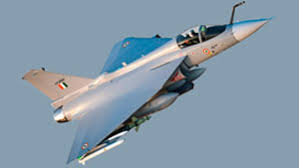
Mumbai, Feb 12 (IANS) Hindustan Aeronautics Limited (HAL) on Thursday reported a strong financial performance for the December quarter of the current financial year (Q3 FY26) as the defence public sector company posted a 29.6 per cent year-on-year rise in its consolidated net profit.
HAL’s profit after tax for the quarter stood at Rs 1,866.66 crore, compared to Rs 1,439.79 crore in the same period last financial year (Q3 FY25), according to an exchange filing.
The company’s revenue from operations also increased during the quarter, rising 10.65 per cent year-on-year to Rs 7,698.80 crore in Q3 of FY26.
Along with the quarterly results, HAL’s Board of Directors announced a first interim dividend for FY26.
The company declared a dividend of Rs 35 per equity share of face value Rs 5 each, fully paid up, the public sector firm said in its regulatory filing.
HAL has set Wednesday, (February 18), as the record date to determine eligible shareholders for the dividend. “The Board of Directors of the Company has declared first interim dividend of Rs 35 per equity share of Rs 5 each fully paid up for the Financial Year 2025-26,” the firm said in its regulatory filing.
The company said the dividend amount will be paid to eligible investors on or before March 14, 2026.
HAL has maintained a consistent dividend payout history over the years and has announced 14 dividends since March 28, 2019.
In the last 12 months, the company has paid dividends totalling Rs 40 per share, resulting in a dividend yield of 0.98 per cent.
The previous dividend declared by HAL was Rs 15 per share, with a record date of August 21, 2025.
--IANS
pk
Hindustan Unilever’s Q3 net profit drops 30 pc sequentially

New Delhi, Feb 12 (IANS) FMCG bellwether Hindustan Unilever Limited on Thursday reported a 30 per cent decline in consolidated net profit to Rs 2,118 crore from continuing operations for Q3 FY26.
On year-on-year, the company’s profit after tax for the period jumped to Rs 6,603 crore, up 121 per cent, according to the stock exchange filing.
The huge growth in PAT was "primarily driven by one-off positive impact arising from Ice Cream demerger accounted for in accordance with the approved scheme of demerger and applicable accounting standards," the statement said.
Excluding exceptional items, Profit After Tax (PAT) at Rs 2,562 crores only grew by 1 per cent, underscoring muted core profitability despite the stronger top line, the firm said in its regulatory filing.
Earnings before interest, taxes, depreciation and amortisation increased 3 per cent to Rs 3,788 crore, but EBITDA margin contracted 70 basis points to 23.3 per cent from 24 per cent in the year‑ago quarter.
The total turnover rose 6 per cent to Rs 16,235 crore from Rs 15,353 crore a year earlier, it added in its filing.
The company reported an exceptional loss of Rs 576 crore in the quarter, compared with an exceptional gain of Rs 538 crore in the same period last financial year.
"We continued to build desirability at scale with our brands, accelerate market development in high-growth demand spaces and strengthen our capabilities to scale Channels of the Future with a dedicated organisation for quick commerce. As market leaders in FMCG, our commitment to build modern brands, lead category creation and invest disproportionately to build future moats, places us in good stead to deliver sustained volume-led growth and create long-term shareholder value," said Priya Nair, CEO and Managing Director.
The company shared its outlook for FY27, saying macro stability coupled with supportive policy measures will foster a conducive backdrop for consumption.
It suggested investors expect FY27 to be better than FY26 led out of portfolio and channel transformation.
Hindustan Unilever had also announced the acquisition of the remaining 49 per cent stake in Zywie Ventures (OZiva) for Rs 824 crore and the planned divestment of its 19.8 per cent stake in Nutritionalab for Rs 307 crore.
--IANS
aar/pk
Precious metals’ prices dip over dollar gains
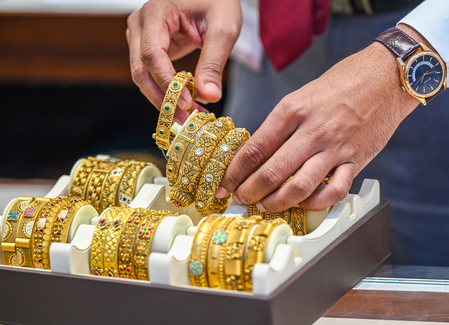
New Delhi, Feb 12 (IANS) Gold and silver prices dipped moderately on Thursday, as the US dollar strengthened.
MCX gold April futures dipped 0.24 per cent to Rs 1,58,371 per 10 grams on an intra-day basis. Meanwhile MCX silver March futures declined 0.72 per cent to Rs 2,61,124 per kg.
The dollar index surged to 96.94 on Thursday from 96.83 in the previous session, due to strong jobs data from the US that suggested underlying economic health. A stronger dollar made greenback-priced bullion more expensive for other currency holders.
Analysts said that US job growth unexpectedly accelerated in January and the unemployment rate fell to 4.3 per cent, signs of labour market stability that could give the Fed room to keep interest rates unchanged for some time while policymakers monitor inflation.
"The largest increase in payrolls in 13 months likely exaggerates the labour market's health, as revisions showed the economy added only 1,81,000 jobs in 2025 instead of the previously estimated 5,84,000," said Manav Modi, commodities analyst, Motilal Oswal Financial services Ltd.
Earlier, in international commodity markets, gold and silver prices had inched up amidst rising geopolitical uncertainties. After talks with Israeli Prime Minister Benjamin Netanyahu, US President Donald Trump informed that a "definitive" agreement was not reached on how to move forward with Iran. However, he added that negotiations with Tehran would continue.
"Gold has support at Rs 1,56,000 while resistance at Rs 1,60,500," an analyst said. COMEX Gold traded within the $5000–$5,150 band after witnessing a sharp correction from highs near $5,500–$5,600.
The broader uptrend remains intact, and the recent pullback appears to be healthy profit booking rather than structural weakness, market participants said.
COMEX Silver is currently trading in the $80–$87 zone after a steep correction from record highs above $121. The medium to long-term outlook remains constructive, supported by structural supply constraints and steady industrial demand, though volatility remains elevated, analysts said.
Investors remain keen on US inflation data due on Friday for more monetary policy cues and on the UK GDP data.
—IANS
aar/na
RBI proposes ban on 3rd‑party sales incentives to bank staff to curb mis-selling
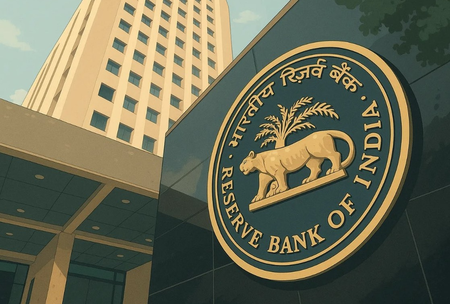
Mumbai, Feb 12 (IANS) The Reserve Bank of India (RBI) has proposed a ban on incentives paid by third parties to bank staff for selling insurance, mutual funds and other products to curb the mis‑selling of financial products.
Further, the central bank prohibited “dark patterns” on commercial banks' user interfaces to lure customers into purchases.
Dark pattern means "any practice or deceptive design pattern that is designed to trick users to do something they originally did not intend, by subverting or impairing the consumer autonomy, decision making or choice, amounting to misleading advertisement or unfair trade practice or violation of consumer rights," the directions read.
“It shall be ensured specifically that no incentive is directly or indirectly received by the employees engaged in marketing or sales of third-party products or services from the third party,” the draft read.
Under the Draft Amendment Directions on Advertising, Marketing and Sales of Financial Products and Services by Regulated Entities, the Central Bank said a bank must not bundle the sale of any third‑party product with its own offerings and must allow customers to buy it from any other provider if a bank product’s sale is made contingent on a third-party product.
The RBI mandated banks to refund the entire sum where mis‑selling has been established and to compensate customers for any losses in line with approved policies.
"Customers can lodge complaints regarding mis-selling of a product or service with the bank within the timeline specified by the respective financial sector regulators. In cases where no such timeline has been specified, customers can lodge complaints within 30 days of receiving the signed copy of the terms and conditions or agreement," the draft said.
Banks should establish a mechanism to seek customer feedback within 30 days of any sale to confirm understanding of product features and risks, and to prepare half‑yearly reports on feedback for policy review.
They must also ensure that practices, such as organising competitions among business units for the sale of products and services, neither create incentives for mis-selling nor encourage employees or direct sales agents to “push” products or services.
The RBI has also set out conduct norms for direct selling agents (DSAs), where telephonic contact and visits to customers should normally take place between 9 am and 6 pm, with any contact beyond those hours requiring customer consent.
—IANS
aar/na
Sensex, Nifty open in red; IT index dips 3.58 pc
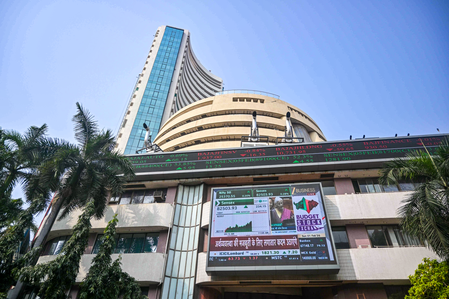
Mumbai, Feb 12 (IANS) The Indian equity markets opened lower early on Thursday weighed down by IT stocks.
As of 9.25 am, Sensex lost 397 points, or 0.47 per cent, to reach 83,836, and Nifty lost 111 points, or 0.43 per cent, to settle at 25,842.
Main broad-cap indices posted stronger losses than benchmark indices, as the Nifty Midcap 100 declined 0.76 per cent, and the Nifty Smallcap 100 dipped 0.88 per cent.
All sectoral indices traded in the red except FMCG, private banks as well as oil and gas. Most notable losers were Nifty IT down 3.58 per cent, realty down 1.11 per cent and media down 1.04 per cent.
Immediate support for Nifty is placed at 25,800-25,850 zone, while resistance is anchored at 26,050-26,100 zone, market watchers said.
Analysts said that the latest US jobs data indicating addition of 1.3 lakh jobs last month and unemployment falling to 4.3 per cent points weakened hopes of rate cuts by the Fed in the near-term.
In India, market watchers said that the rate cutting cycle is over since growth is good and inflation is expected to inch back to the RBI’s long-term target by the end of FY27.
In Asian markets, China's Shanghai index added 0.12, and Shenzhen gained 0.81 per cent, Japan's Nikkei gained 0.1 per cent, and Hong Kong's Hang Seng Index eased 0.97 per cent. South Korea's Kospi gained 2.74 per cent.
The US markets ended largely in the red overnight as Nasdaq eased 0.16 per cent. The S&P 500 traded flat, and the Dow Jones lost 0.13 per cent.
On February 11, foreign institutional investors (FIIs) net bought equities worth Rs 944 crore, while domestic institutional investors (DIIs) were net sellers of equities worth Rs 125 crore.
Indian equities corrected in January amid global volatility and FII outflows; however, the medium-term outlook remains constructive, according to analysts.
—IANS
aar/na
Foreign investors shift to net selling of S. Korean stocks in Jan
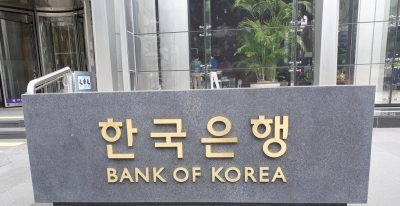
Seoul, Feb 12 (IANS) Foreign investors turned into net sellers of South Korean equities in January, driven by profit-taking following recent gains in the benchmark index, central bank data showed on Thursday.
Offshore investors sold a net US$50 million worth of local stocks last month, reversing from their net purchase of $1.19 billion in December, according to the data from the Bank of Korea (BOK).
Foreign investors, meanwhile, bought $2.44 billion worth of bonds in January, resulting in a combined net inflow of $2.39 billion in local securities, marking the fifth consecutive month of net foreign inflows into domestic securities, reports Yonhap news agency.
"Equity funds posted a net outflow as profit-taking following recent gains in domestic stock prices outweighed expectations of better performances of the semiconductor industry," a BOK official said. "Bond funds saw slower net inflows as investor sentiment weakened amid rising market interest rates."
The benchmark Korea Composite Stock Price Index (KOSPI) jumped more than 22 per cent in January.
The central bank also said daily volatility in the won-dollar exchange rate rose to an average of 6.6 won in January from 5.3 won in December.
"Volatility increased as overseas investment by local investors continued, while the National Pension Service recently reduced its target allocation to overseas equities," the official added.
Meanwhile, South Korean stocks surpassed the 5,500-point mark in midday trading for the first time on Thursday, boosted by sharp gains in blue-chip tech shares, including Samsung Electronics and SK hynix.
The benchmark Korea Composite Stock Price Index (KOSPI) had added 157.13 points, or 2.93 percent, to 5,511.62 as of 10:59 a.m. before dropping just below the threshold as of 11:20 a.m.
This marked the first time the KOSPI surpassed the 5,500-point mark.
Semiconductor shares were the main driving force that pushed up the index, with Samsung Electronics shooting up 6.08 percent and SK hynix soaring 3.26 percent.
—IANS
na/
S. Korea penalises Louis Vuitton, Dior, Tiffany $24.9 million over data leaks

Seoul, Feb 12 (IANS) South Korea's privacy watchdog said on Thursday it has fined the Korean units of luxury brands Louis Vuitton, Dior and Tiffany a combined 36 billion won ($24.9 million) over leaks of customer information.
The Personal Information Protection Commission made the decision in a plenary meeting the previous day, imposing on Louis Vuitton Korea a fine of 21.4 billion won -- the heaviest among the three companies -- over a data breach of about 3.6 million customers, reports Yonhap news agency.
The watchdog said an outside actor stole personal information, such as user names, phone numbers and birth dates, over three occasions by hacking into an employee device. It noted the company had poor security practices for remote logins.
Meanwhile, the regulator fined Christian Dior Couture Korea and Tiffany Korea 12.2 billion won and 2.4 billion won, respectively, for data breaches after employees were tricked into granting internal system access to malicious actors.
Dior suffered a data breach of about 1.95 million users and was unaware of the incident for three months, while the leak at Tiffany involved the personal information of around 4,600 users, according to the watchdog.
The leaked user data from both companies included names and email addresses.
Separately, the watchdog fined BKR, which operates Burger King in South Korea, 924 million for collecting the personal data of minors aged 13 or under without guardian consent.
It imposed a fine of 642 million won on MGC Global, which operates popular coffee franchise Mega MGC Coffee, for sending marketing messages to customers who did not consent to receiving them.
The regulator also fined eight other food and beverage companies for violations of the personal information protection law, said the report.
Meanwhile, South Korea's financial regulator said on Thursday it plans to strengthen de-listing rules to speed up the exit of companies that fail to meet necessary requirements.
The move comes as part of efforts to improve the smaller KOSDAQ market and accelerate the country's transition to productive finance, and also facilitate innovative ventures and startup businesses, the Financial Services Commission (FSC) said.
Starting July 1, companies whose market capitalisation is below 20 billion won (US$13.8 million) will be exited from the KOSDAQ market. The threshold will be raised to 30 billion won at the start of next year.
—IANS
na/
Intensify efforts to penetrate new markets, become more competitive: Piyush Goyal
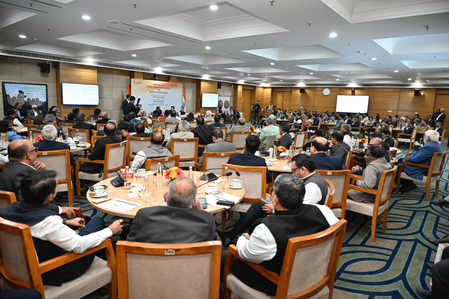
New Delhi, Feb 12 (IANS) Industry must now intensify its efforts to penetrate new markets, upgrade quality and become more competitive to take maximum advantage of trade agreements, according to Commerce and Industry Minister Piyush Goyal.
He urged exporters and industry bodies to take full advantage of the series of Free Trade Agreements (FTAs) signed with developed countries maximise job creation and boost exports of goods and services, according to an official statement.
During his meeting with 35 Export Promotion Councils (EPCs) and key industry associations, Goyal said the Prime Minister Narendra Modi government had signed FTAs with developed countries to help India’s farmers, workers, professionals, artisans and MSMEs take advantage of the global market with preferential access.
With these trade agreements, India’s traditional medicines and yoga will also get global opportunities, while the interest of India’s agriculture and dairy sectors have been protected, said the minister.
“India has made its mark in international trade since the ancient era. Our trade deals will accelerate our Viksit Bharat mission and carry forward Prime Minister Narendra Modi’s mantra of ‘Vikas bhi, Virasat bhi’,” Goyal noted.
According to an official statement, industry representatives conveyed their deep gratitude to the Prime Minister and the Minister of Commerce for the decisive leadership that enabled the successful conclusion of recent trade agreements with the United Kingdom, European Union and the US.
They expressed appreciation for the elimination of the additional 25 per cent tariff on Indian imports to the United States, as terminated through the United States Executive Order dated February 6 2026, which is expected to restore competitive market access for Indian exports.
The US is among India’s largest export destinations and that the tariff relief provides significant stability and renewed competitiveness to Indian exporters, said the industry.
Discussions also highlighted the progress under the Export Promotion Mission (EPM), the government’s flagship framework to support exporters.
Industry welcomed the Interventions already rolled out under the Mission, including enhanced access to trade finance through Interest Subvention Support for export credit loans, Collateral Guarantee for Export Credit extended to MSMEs and targeted market access support.
—IANS
na/
UN should declare Feb 11 as ‘International Anti-Smuggling Day’: Expert
New Delhi, Feb 11 (IANS) Anil Rajput, Chairman of FICCI CASCADE, one of the country's top industry bodies, on Wednesday said the United Nations should declare February 11 as the 'International Anti-Smuggling Day' to raise awareness against smuggling globally.
Speaking to IANS during an event here, Rajput said that smuggling is increasing both in the country and globally.
Therefore, “we urge the United Nations to declare February 11 as 'International Anti-Smuggling Day' to raise awareness against smuggling worldwide and to encourage all countries to join forces to raise their voice against the problem of smuggling on this day,” he added.
At an event in the national capital, experts said that India has signed 42 mutual customs cooperation agreements and is negotiating 21 more with major trading partners. This has significantly strengthened the country's international enforcement framework against smuggling.
At the event, Mohan Kumar Singh, Member (Compliance Management), Central Board of Indirect Taxes and Customs (CBIC), said that enforcement must move beyond incident-based seizures to network-based disruption.
He further stated that enforcement must shift to network-based disruption, targeting financial flows, logistics enablers, and international linkages that sustain the illicit ecosystem.
He stated that smuggling has evolved into an organized, technology-driven economic crime with a direct impact on national security and economic stability.
Referring to recent Union Budget announcements, Singh said that AI-powered image analytics and expanded container scanning at major ports will further strengthen enforcement capabilities, while GST simplification and customs reforms will continue to promote compliance and reduce incentives for illicit trade.
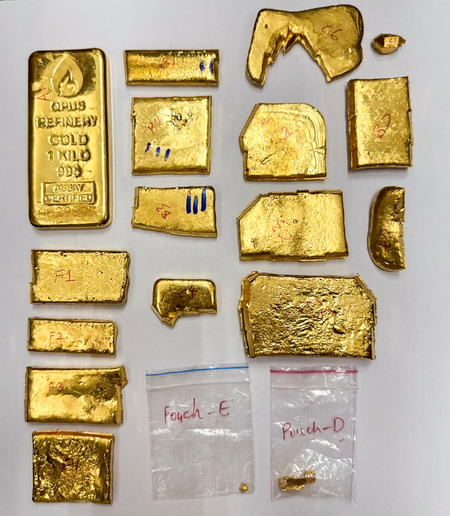
He highlighted the intensive enforcement results in the first three quarters of the current financial year, including the seizure of approximately 500 kg of gold, approximately 150 million illicit cigarette sticks, over 20 metric tons of red sanders, approximately 120 kg of cocaine.
In addition, approximately 50 kg of heroin, approximately 350 kg of amphetamines, and approximately 3,700 kg of hydroponic cannabis have also been seized at airports, the statement said.
-IANS
abs/na