
Defence PSU stocks rally up to 3 pc after Rs 52,000 crore procurement nod

Mumbai, July 6 (IANS) State-owned defence companies' shares traded higher on Monday, surging up to 3 per cent after the Defence Acquisition Council (DAC) approved capital acquisition proposals worth around Rs 52,000 crore to strengthen the operational capabilities of the Indian armed forces.
The Nifty India Defence index rose 1.70 per cent or 163 points to 9,737.15, hitting an intraday high at around 12 pm.
Among the major gainers, Navratna PSU Bharat Electronics Limited (BEL) rose as much as 2.84 per cent to an intraday high of Rs 429.90 on the BSE. At the last count, the stock was trading at Rs 425.15, up 1.71 per cent.
Similarly, Bharat Dynamics Limited (BDL) gained as much as 3.14 per cent to Rs 1,433.10 on the exchange before trimming gains to trade at Rs 1,411, up 1.56 per cent.
Hindustan Aeronautics Limited (HAL) advanced up to 1.55 per cent to Rs 4,497 and was later quoted at Rs 4,472, up 0.99 per cent.
In addition, other defence-related PSU companies’ stocks were trading higher.
Mishra Dhatu Nigam (MIDHANI) climbed as much as 3.32 per cent to Rs 441.70 and was later trading at Rs 438.10, up 2.48 per cent.
Mazagon Dock Shipbuilders Limited (MDL) touched an intraday high of Rs 2,582 before trading at Rs 2,569.60, up 1.04 per cent.
Garden Reach Shipbuilders & Engineers (GRSE) rose as much as 1.69 per cent to Rs 2,793.30 and later traded at Rs 2,758.50, up 0.43 per cent.
Cochin Shipyard Limited climbed to an intraday high of Rs 1,542 and was trading at Rs 1,530, up 0.41 per cent.
Investor sentiment was lifted after the Defence Acquisition Council (DAC), chaired by Defence Minister Rajnath Singh, accorded Acceptance of Necessity (AoN) for capital acquisition proposals worth about Rs 52,000 crore on Friday. The DAC is the country's highest decision-making body on defence procurements.
The approvals include the procurement of anti-drone systems, missiles, man-portable anti-tank guided missile (MPATGM) systems, Medium Range Surface-to-Air Missile (MRSAM) weapon systems, very short-range air defence systems (V-SHORADS), kamikaze drones, naval unmanned aerial systems and high-altitude surveillance platforms for the Army, Navy and Air Force.
--IANS
ag/
India’s macro outlook improves as oil prices ease: Report

New Delhi, July 6 (IANS) India's macroeconomic and growth outlook has improved as lower oil prices, easing foreign portfolio investment (FPI) outflows and attractive valuations in rupee assets strengthened the country's macro fundamentals, a report said.
"RBI is likely to remain growth supportive with liquidity support. Yields are likely to fall over time. With available excess capacity and a demand revival shaping up, it is possible that India's growth outlook improves from here," the report from DSP said.
The firm noted that improving growth, especially nominal growth, is likely to spur Corporate India's sales growth.
The report said that FY27 balance of payments, once a market concern, is now likely to become a strength for the economy.
"With many rupee assets yielding better, rupee REER at an extreme, a wide segment of large-cap stocks at cheap levels and FPI debt inflows picking up, the India macro picture looks strong," it added.
India’s REER fell below 88 in May 2026, a level usually seen only in major stress episodes, and the narrowing inflation gap with the United States weakens the long‑term case for faster rupee depreciation.
On equities, the firm recommended large‑cap stocks as the most attractive segment on valuation, arguing that if revenue growth recovers, these stocks have best odds of outperforming.
"Better growth is likely to percolate into stronger credit growth and improving demand. Construction activity is likely to result in a revival for the cement sector, which is staring at an improvement in operating performance," it said.
On Nifty IT stocks, the firm said they are cheap on valuations but have concerns around growth.
"The emerging market rally is running on one leg—technology. South Korea and Taiwan have made the EM index highly concentrated by sector and stocks. India now appears to be a contrarian buy within the EM basket," it added.
—IANS
aar/ag
Food prices remain stable despite rainfall deficit: Report

New Delhi, July 6 (IANS) India’s monsoon rainfall remained weak despite some improvement over the previous week, with food price inflation remaining stable, a report has said.
The report from Emkay Global Financial Services noted that food price inflation remains contained for now, with weekly retail changes showing vegetables up 1.5 per cent and eggs 1 per cent, while cereals rose 0.5 per cent and oils & fats up 0.2 per cent.
On an annual basis, oils and fats were up 11 per cent and eggs up 6 per cent, vegetables up 3 per cent, milk up 3 per cent, spices up 3 per cent, cereals up 2 per cent, and pulses up 1 per cent.
Continued deficient monsoons over key food-producing states such as Maharashtra, Gujarat, Madhya Pradesh, and Uttar Pradesh, among others, could imperil food supplies and put upward pressure on prices in the coming weeks.
The report further highlighted that cumulative rainfall as of July 3 was 31 per cent below the long‑period average.
The June month ended with rainfall 40 per cent lower than the long period average, making it the worst June month for rainfall in the last decade, it said.
The report said that sowing activity has declined, as the monsoon remains weak, leaving reservoir storage critically low.
Pan-India reservoir levels are at just 26 per cent of capacity and 39 per cent lower than over the same period last year.
Central India has the highest capacity (32 per cent), followed by North India (29 per cent) and West India (28 per cent). Storage levels are significantly low in South India (20 per cent) and East India (19 per cent).
The report flagged that the India Meteorological Department expects July 2026 rainfall to be below normal, keeping concerns around the monsoon and the Kharif sowing season elevated.
—IANS
ag/
Gold steady, silver slips as Fed rate hike expectations ease

New Delhi, July 6 (IANS) Gold traded flat while silver slipped in early trade on Monday as softer crude oil prices reduced expectations of further interest rate hikes by the US Federal Reserve.
On the Multi Commodity Exchange (MCX), gold futures (August 5) opened at Rs 1,47,135 per 10 grams, down Rs 243 or 0.16 per cent from the previous close of Rs 1,47,378.
At around 11 am, the yellow metal was trading at Rs 1,47,177 per 10 grams, down Rs 200 or 0.14 per cent. It touched an intraday low of Rs 1,47,032, down Rs 346 or 0.23 per cent and a high of Rs 1,47,509, up Rs 131 or 0.08 per cent so far.
Meanwhile, silver futures (September 4) opened at Rs 2,36,393 per kg, down Rs 1,017 or 0.42 per cent from the previous close of Rs 2,37,410.
At the last count, the white metal was trading at Rs 2,36,198 per kg, down Rs 1,212 or 0.51 per cent. It touched an intraday low of Rs 2,36,001, down Rs 1,409 or 0.59 per cent, and a high of Rs 2,37,676, up Rs 266 or 0.11 per cent.
However, in the international market, both precious metals traded higher. COMEX gold was up 1 per cent at $4,173.24 per ounce, while COMEX silver gained 2 per cent to $62.29 per ounce.
According to commodity market experts, gold remained steady near a two-week high and continued to trade above its key short-term moving averages, indicating underlying strength.
They said immediate resistance is seen at Rs 1,48,750 per 10 grams, with a breakout above this level likely to accelerate the upward momentum.
Silver, despite opening lower, also continued to trade above its short-term moving average and could move towards the next resistance level of Rs 2,45,184 per kg, the experts said.
Meanwhile, international benchmark Brent crude slipped 0.76 per cent, or 55 cents, to $71.55 per barrel, while US West Texas Intermediate (WTI) crude declined nearly 1 per cent, or 68 cents, to trade below $69 per barrel.
The decline in oil prices came after OPEC+ agreed to raise its production targets for August, easing concerns over global supply shortages.
--IANS
ag/
India emerges as contrarian bet in emerging markets: Report

New Delhi, July 6 (IANS) India has emerged as a contrarian investment opportunity within the emerging market universe as the ongoing rally in the asset class become increasingly concentrated around semiconductor companies, according to a report.
The report by DSP Netra said that the MSCI Emerging Markets (EM) Index has recovered to levels last seen in 2021, but the rally has been driven by a narrow set of markets and stocks.
Among the four markets with index weights exceeding 5 per cent. India is available at a discount of 2.39 per cent to its long-term average valuation.
In contrast, Taiwan and South Korea are trading at premiums of about 85 per cent and 71 per cent, respectively, above the MSCI Emerging Markets Index's overall premium of 24.71 per cent.
The report said Taiwan and South Korea have significantly outperformed other emerging markets this year.
It attributed the sharp outperformance of Taiwan and South Korea to the global artificial intelligence (AI)-driven semiconductor boom rather than a broad-based improvement in emerging market fundamentals.
Technology's weight in the MSCI Emerging Markets Index rose from 28.3 per cent in December 2025 to 44.2 per cent in May 2026, while the share of most other sectors, including communication services, consumer cyclical and healthcare, declined.
The report noted that technology alone contributed 25.6 percentage points to the benchmark's 25.3 per cent year-to-date return. Nearly 72 per cent of the index's gains came from just three semiconductor companies -- Taiwan Semiconductor Manufacturing Co. (TSMC), Samsung Electronics and SK Hynix -- which together account for around 30 per cent of the benchmark.
According to DSP, such concentration increases the vulnerability of the MSCI Emerging Markets Index to any reversal in investor sentiment towards AI and semiconductor stocks.
Against this backdrop, the report described India as one of the most attractive contrarian opportunities in emerging markets, noting that despite recent underperformance, the country continues to enjoy relatively stronger macroeconomic fundamentals while trading close to its long-term average valuations.
If investor participation broadens beyond technology stocks, India could witness renewed capital inflows, the report added.
--IANS
ag/
Global oil prices fall up to 1 pc as OPEC+ raises August output targets

New Delhi, July 6 (IANS) Global crude oil prices traded nearly 1 per cent lower on Monday after the alliance of oil-producing nations agreed to further increase production from August, while the recovery in crude exports through the Strait of Hormuz signalled improving global supplies.
International oil benchmark Brent crude slipped 0.76 per cent or 55 cents to $71.55 per barrel, while U.S. West Texas Intermediate (WTI) crude declined nearly 1 per cent or 68 cents to trade below $69 per barrel.
The decline in oil prices came after OPEC+ agreed to raise its production targets for August, easing concerns over global supply shortages.
Under the proposed plan, the combined production target of seven major producers -- led by Saudi Arabia and Russia -- will be increased by 188,000 barrels per day as the alliance continues to unwind the voluntary output cuts introduced in 2023 to support crude prices.
If implemented, the latest increase will take the cumulative production quota additions since OPEC+ began reversing its supply curbs to around 940,000 barrels per day, equivalent to nearly 1 per cent of global oil demand.
The recovery in crude exports from major producers through the Strait of Hormuz also weighed on prices, indicating that oil shipments through the key maritime route are returning to normal following recent geopolitical tensions in the region.
The easing of tensions after the interim peace agreement between the United States and Iran has enabled major Gulf producers to restore exports and output.
In addition, Saudi Arabia and the United Arab Emirates have already brought oil exports close to pre-conflict levels, increasing the availability of crude in the global market.
The return of additional supplies has also created a surplus in key Asian markets, reversing the sharp rise in oil prices witnessed during the conflict and raising the possibility of increased competition among OPEC producers for market share.
The latest production increase is expected to be the penultimate phase of restoring the output cuts announced in 2023, with one final increase likely in September to complete the rollback of the production curbs.
--IANS
ag/
Indian equities open higher amid monsoon revival, FII inflows

Mumbai, July 6 (IANS) Indian stock markets opened positively on Monday, supported by revival of monsoon, renewed foreign institutional investor (FII) buying, and softer crude oil prices.
Sensex started the session at 77,940.90, up 176.99 points or 0.23 per cent, while Nifty opened at 24,306.85, gaining 36 points or 0.15 per cent.
Among the sectoral indices, Nifty Realty was the top gainer, rising 0.86 per cent, followed by Nifty Metal which advanced 0.39 per cent.
Healthcare-related indices also traded in green, with Nifty MidSmall Healthcare gaining 0.32 per cent and Nifty Pharma rising 0.24 per cent. However, most other sectoral indices traded under pressure in early deals.
From the Nifty pack, Kotak Mahindra Bank, TCS, Tech Mahindra, Wipro, Infosys, Eicher Motors, IndiGo, Tata Consumer Products, ONGC and ITC were among the top losers.
According to market experts, the revival of the monsoon and FIIs turning net buyers on Friday are positive near-term triggers for the market.
Investor focus will now shift to the June quarter earnings season, with financials and automobiles expected to outperform, while IT companies are likely to post subdued earnings and modest guidance, according to them.
Technically, analysts said the Nifty remains in a constructive trend after extending gains for a third straight session last week and continues to trade above its key moving averages.
“Immediate resistance is seen around the 24,400 level, while support is placed in the 24,200-24,100 zone,” the experts said.
On the commodities front, international benchmark Brent crude declined 0.76 per cent to $71.55 per barrel, while U.S. West Texas Intermediate (WTI) crude fell about 1 per cent to trade below $69 per barrel.
In Asia, markets traded mixed, with Japan's Nikkei declining nearly 1 per cent and South Korea's KOSPI falling almost 2 per cent, while Hong Kong's Hang Seng edged higher.
--IANS
ag/
Seoul watchdog begins deliberations on popular Korean grill chain operator
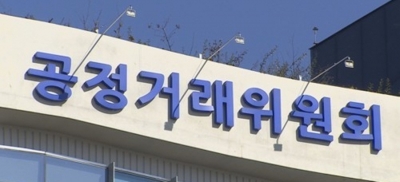
Seoul, July 6 (IANS) South Korea's fair trade watchdog said on Monday it has launched a deliberation process into Myeong Ryun Dang, which operates a Korean barbecue restaurant chain, for allegedly offering low-interest loans to its money-lending affiliates using funds from state financing programmes.
The Fair Trade Commission (FTC) said its examiners' report showed Myeong Ryun Dang, which operates Myeong Ryun Junsa Pork Ribs, offered excessive economic benefits to 14 credit businesses under its wing from December 2021 to April 2026 by lending funds at significantly low interest rates.
The report showed the restaurant chain operator provided up to 10 billion won ($6.5 million) per credit business using funds raised through policy financing from Korea Development Bank, with the affiliates then lending the money to stores, reports Yonhap news agency.
The 14 affiliates, which had faced difficulties securing funds independently as newly launched entities, received funds from Myeong Ryun Dang at a relatively low interest rate of 4.6 percent.
The FTC said such arrangements allowed the 14 companies to enjoy economic benefits of around 21.7 billion won.
The examiners' report said such actions were serious violations of the country's fair trade rules, recommending corrective orders, fines and filing complaints against the companies and individuals involved.
Meanwhile, the fair trade watchdog earlier approved voluntary corrective measures worth 3 billion won ($1.94 million) proposed by Coupang and its private-label affiliate over unfair dealings with subcontractors.
The decision by FTC came after the watchdog's probe found that Coupang and its wholly owned subsidiary, Coupang Private Label Brands (CPLB), had sought a consent decree to resolve the case without further legal proceedings.
According to the FTC, the two companies had provided 314 subcontractors with contracts that omitted legally required information and lowered supply prices for 94 subcontractors through discount promotions that were not stipulated in their agreements since 2022.
—IANS
na/
S. Korea to launch 4th next-generation medium-sized satellite from US
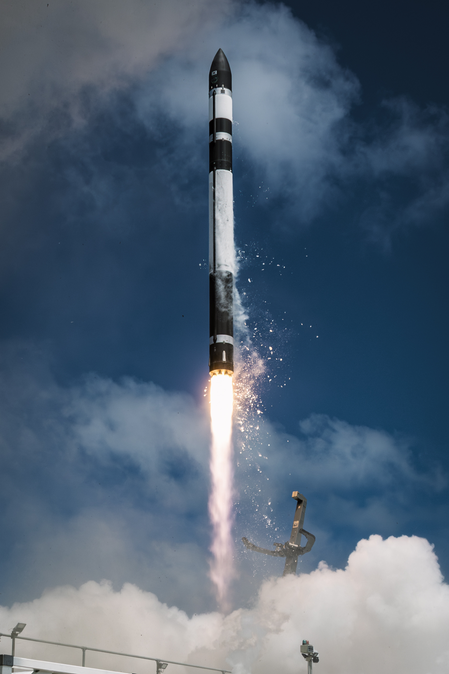
Seoul, July 5 (IANS) South Korea plans to launch its fourth medium-sized Earth observation satellite aboard a SpaceX Falcon 9 rocket from Vandenberg Space Force Base in California on Tuesday, the space agency said.
The Korea AeroSpace Administration (KASA) said the 500-kilogram satellite will be launched at 4:10 p.m. Korea time, reports Yonhap news agency.
The satellite has completed function inspections and fuel injection over the past month and is now awaiting launch aboard the Falcon 9.
It is scheduled to separate from the launch vehicle about 2 hours and 22 minutes after liftoff and make its first contact with the ground approximately 31 minutes later through the Svalbard ground station in Norway, KASA said.
The satellite carries homegrown payloads, including an observation camera capable of imaging the entire Korean Peninsula every three days.
The government expects the satellite to be used for a wide range of applications, including agriculture and forest management, forest change monitoring, disaster response, climate change analysis and public safety enhancement.
After reaching its target orbit at an altitude of about 888 kilometers, the satellite will undergo four months of initial in-orbit operations before beginning full-scale missions in the first half of next year, the agency said.
Meanwhile, South Korea aims to establish a low-Earth orbit satellite communications network composed of hundreds of satellites by 2035 and accelerate the country's first lunar landing to 2030, the state-run space agency said.
The Korea AeroSpace Administration (KASA) unveiled the plan during a public briefing on advanced industry development held in the southeastern city of Jinju. The strategy was approved earlier in the day by the National Space Council, chaired by President Lee Jae Myung.
KASA said building the network will help strengthen South Korea's domestic satellite and launch vehicle development and manufacturing ecosystem as the country pushes to build its own version of SpaceX's Starlink network.
—IANS
na/
KOSPI volatility interruptions hit record high in H1 2026
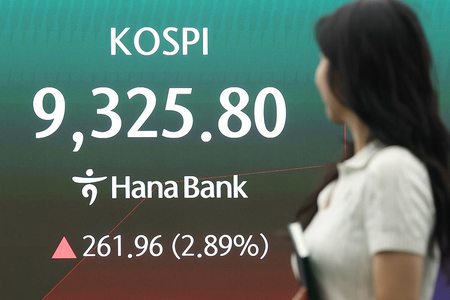
Seoul, July 5 (IANS) South Korea's bourse operator triggered a record number of Volatility Interruption (VI) measures on the benchmark KOSPI market in the first half of this year as the market swung sharply amid a strong rally, data showed on Sunday.
A total of 29,357 VIs were triggered on the KOSPI in the January-June period, the highest figure ever recorded for a six-month period, according to the Korea Exchange (KRX), reports Yonhap news agency.
The previous record was 24,401 in the first half of 2020, when the market was rattled by the COVID-19 pandemic.
A VI is a market mechanism designed to curb excessive price swings in individual stocks. When a stock's price moves sharply within a short period, trading is temporarily shifted to a two-minute call auction.
The KOSPI also posted its second-highest first-half volatility on record.
The benchmark index's average intraday volatility stood at 3.3 percent in the first six months of this year, the second-highest first-half figure after 3.51 percent in the first half of 1998.
Intraday volatility is calculated by dividing the difference between the day's high and low by the average of the day's high and low, measuring how widely the index fluctuates during a trading session.
The heightened volatility came as the KOSPI rallied on gains in semiconductor stocks amid the artificial intelligence-driven memory chip supercycle, triggering both aggressive buying and profit-taking after the market's sharp gains.
Market volatility was further amplified by geopolitical risks stemming from the conflict between the United States and Iran, which began in late February.
The KOSPI first surpassed the 5,000-point mark in January, broke above 6,000 in February, and crossed the 7,000-point and 8,000-point thresholds in May. It climbed above 9,000 on June 18 but has since backtracked to close at 8,088.34 on Friday.
--IANS
na/