

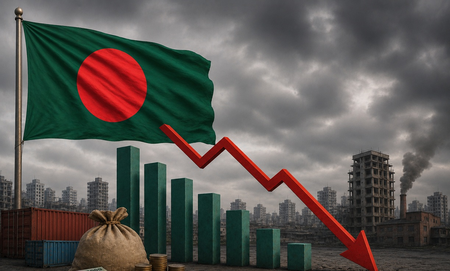
New Delhi, May 7 (IANS) Bangladesh slipped three places to 152nd out of 180 countries in the 2026 World Press Freedom Index, with renewed repression of the media following the fall of the Sheikh Hasina regime likely to have economic consequences, a report has said.
The report from Bangladesh-based news publisher The Business Standard highlighted that Bangladesh is in the “very serious” category, down three spots from 149th in 2025.
“After the fall of the Hasina regime, the media expected freedom, but was again denied meticulously. It faced a new normal. Some news outlets and journalists were branded as “cohorts” of the “fascist” Hasina regime,” it said.
Sharp fall in tolerance for critical journalism was identified along with pressure from political actors and weak support for media accountability.
It further outlined that press restrictions were followed by economic impacts historically, citing studies that show attacks on press freedom can shave about 1 to 2 per cent off real gross domestic product growth.
Moreover, press freedom is linked to greater financial stability, citing a global study which found countries with higher levels of press freedom are also more likely to foster corporate and political cultures preventing corruption that could jeopardise the stability of the banking sector.
Experts mention that the free press acts as a watchdog, reducing the expected benefits of corruption by exposing abuses and thus acting as a deterrent against the abuse of power.
Censorship, cyber harassment, pressure from military intelligence services, judicial harassment, a series of draconian laws, police violence, and assaults by ruling party militias were the hallmarks of Hasina’s regime, according to the report.
Meanwhile, Norway, the Netherlands, Estonia, Denmark, Sweden and Finland always perform better on the press freedom index, and similarly rank in the top spots on the Corruption Index as the least corrupt countries.
—IANS
aar/ag