

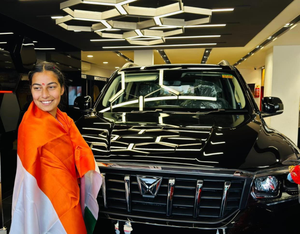
New Delhi, Aug 7 (IANS) Paralympic medallist and world champion para-compound archer Sheetal Devi believes the revamped Khelo India Scheme (KIS) can become a game-changer for para sport by ensuring talented children with disabilities are identified early and given the support they need to succeed.
Drawing from her journey from a remote village in Kishtwar, Jammu and Kashmir, to the top of archery, Sheetal emphasised that opportunity, not talent, often poses the biggest challenge for aspiring para-athletes. “The love and recognition I receive today as a Paralympic champion took years of work. I was an undiscovered child in Kishtwar. However, over the years, with access to good coaching and support, I became the Sheetal Devi that the world knows.
“While my story is one of success, an equally capable child in a remote village might not even know that para sports exist. The difference between us usually comes down to opportunity. I am thankful that I had that.”
Sheetal highlighted the Centre’s updated Khelo India Scheme, which has a budget of Rs 29,054 crore over five years. She explained that the program’s focus on finding talent, developing coaches, improving infrastructure, and providing high-performance training could change the sports landscape. This change is especially possible if states actively support its implementation.
“Across India, especially in villages and small towns, there are thousands of children with disabilities who have great potential, but many are never discovered. Some don’t know where to train, and others have never met a coach who understands para sport. That’s why I think India’s revamped Khelo India Scheme has the power to change the game for all sports, especially para sports.
“This five-year scheme, envisioned by Prime Minister Narendra Modi, invests Rs 29,054 crore for development. The nine main parts of this ambitious plan include finding talent, developing coaches and support staff, and most importantly, strengthening infrastructure and high-performance training environments. But what can really make a difference is the cooperation between the Centre and states or Union territories. States must get involved fully to turn plans into real outcomes.”
Reflecting on her rise, the 18-year-old credited her support system for helping her gain the confidence to compete against the world’s best.
“I received help from coaches, the Sports Authority of India, the Government, and more. I never felt anything important was missing from my preparation. That support gave me the confidence to dream bigger and compete with the world’s best.
“But my story shouldn’t be the exception.”
Sheetal also praised the scheme’s focus on building para-sport academies and training centres near athletes’ homes, pointing out that accessibility is a major challenge for children with disabilities.
“I am encouraged by the revamped Khelo India Scheme’s focus on enhancing para training facilities and accredited academies. Not every child can travel hundreds of kilometres to find a coach or training centre.
“Many talented kids stay in villages because the facilities simply aren’t close by. If quality para-sport academies and trained coaches were available nearer to where children live, families would feel more confident about encouraging them to take up sports. For many parents, that assurance is crucial.”
She mentioned that creating a larger group of Para Khelo India Athletes and introducing Emerging Khelo India Athletes would ensure promising youngsters receive support at an early stage.
“What excites me the most about the new KIS is that it recognises that talent shouldn’t wait to be found. By forming a larger group of Para Khelo India Athletes and introducing Emerging Khelo India Athletes, the scheme aims to discover promising kids earlier and support them through every stage of their development.
“For para-athletes, early identification is especially vital. Many children with disabilities start sports later not because they lack talent, but because they lack awareness, coaching, or opportunity. If we can identify them early and provide ongoing support, we can change their sporting journeys before they start to doubt themselves.”
The Paralympic medalist stressed the need for specialised coaching and local training systems for para-athletes.
“The revamped scheme also focuses on para-sports-specific academies and centres, highlighting them as critical for sports development. A child shouldn’t have to leave home just to find a coach who understands para sports. My own experience showed me how much confidence comes from knowing that nothing essential is missing from your preparation.”
Having competed at the Khelo India Para Games herself, Sheetal said regular competition is crucial for an athlete’s growth.
“Every competition teaches lessons that training alone can’t offer. The expansion of Khelo India Para Games means more young athletes will get a chance to build confidence and improve their performance. I have personally participated in the archery events at the Para Games, which is part of the annual sports competitions organised under Khelo India, showcasing the best talent on a competitive stage.”
In conclusion, Sheetal said the real success of the revamped scheme would be measured not just in medals, but in the confidence it fosters among children with disabilities across the country.
“The greatest impact of the revamped KIS may not only be seen in the number of medals India wins. It will be assessed by the number of children with disabilities who begin to believe they belong in sports. That confidence can’t be measured by statistics, but it’s where every medal-winning journey truly starts.
“Lastly, I truly believe the success of the Khelo India scheme will be evident when children with disabilities from every district, village, and corner of India enter sports with confidence, knowing there is a pathway ready for them.”
–IANS
hs/bsk/