

New Delhi, Aug 7 (IANS) Multiple intelligence assessments suggest that the Jaish-e-Mohammed is likely to focus more on ideological mobilisation than carrying out direct terror attacks.
The outfit was among the hardest hit during Operation Sindoor. Since then, its leadership has largely remained silent, with little to no public messaging or operational claims.
An official said there has been little indication of any revival within the Jaish-e-Mohammed (JeM). “The leadership has remained quiet, and there has been hardly any significant activity reported for nearly a year now,” the official said.
However, that is not the case with the Lashkar-e-Taiba (LeT). It has been recruiting people into the outfit. It has also been actively undertaking operations with the Islamic State Khorasan Province (ISKP), while also shifting training camps close to the Pakistan-Afghanistan border.
The Lashkar’s main training camp at Muridke near Lahore was destroyed during Operation Sindoor. The Jaish, on the other hand, has not attempted anything major since then. However, its name has surfaced during investigations into three major terror cases in India.
The Faridabad module that executed the Red Fort car bomb blast had members who were all inspired by the ideology of the JeM.
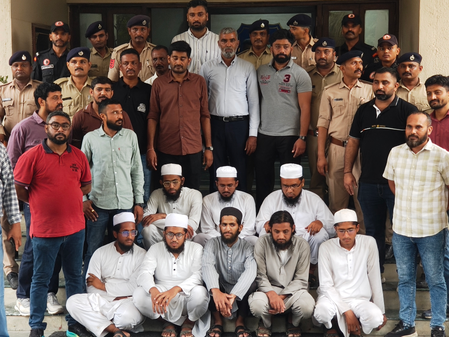
In Gujarat, the Anti-Terrorism Squad (ATS) has arrested over five persons who had run Improvised Explosive Device (IED) trials and were in the process of undertaking a major terror attack in the state. All of them were inspired by JeM ideology, and the outfit did not have a direct hand in their operations.
The case is similar in West Bengal. The Special Task Force (STF) arrested an operative on the charge that he was gathering sensitive information for the Inter Services Intelligence and was also planning to assassinate West Bengal Chief Minister Suvendu Adhikari.
The accused, Hamim Mondal, was also inspired by the Jaish, the probe had found. An Intelligence Bureau official says this is a new trend emerging.
“The probe has not found any direct involvement of the Jaish-e-Mohammed in these cases. The accused were in contact with their handlers. While some appear to have acted on their own, others were directed to carry out specific activities. The common thread, however, is that the Jaish has been able to spread its ideology without being directly involved in the execution of these acts,” the official said.
Basically, its name remains in circulation, and for now that is good enough for the group, the official said.
Such a strategy also gives the Jaish time to regroup and rebuild. With its leadership maintaining a prolonged silence, recruitment in Pakistan has declined sharply. However, incidents in India are likely to be exploited by the outfit as propaganda to revive recruitment and attract fresh cadres.
Another official said this could be part of a well-planned strategy by Pakistan’s ISI. By relying on modules inspired by the Jaish-e-Mohammed rather than operatives directly linked to the outfit, Pakistan can distance itself from the attacks and retain a degree of operational deniability.
Further, it gives the outfit time to revive itself while also remaining relevant through its ideology.
An official said that the JeM is likely to continue with this strategy for some time. Basically, it is looking for time to regroup, while, at the same time, it does not want its ideology to vanish. For this, the ISI has picked up certain elements to push the ideology of the outfit by selecting some Indian youth through social media.
The Pakistani spy agency is also using the likes of Shahzad Bhatti, a master at recruitment to help push the Jaish-e-Mohammed ideology in India, an official also added.
–IANS
vn/snj/skp