

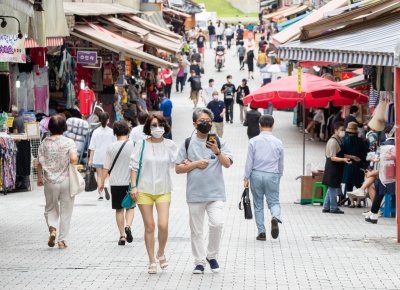
Seoul, Nov 18 (IANS) Nearly 7 in 10 South Koreans believe that couples can live together without getting married, a government report showed on Wednesday, signalling a shift in perceptions around marriage in the traditionally conservative country.
The report was based on a survey conducted by the Ministry of Data and Statistics in May 2026, involving 34,000 respondents aged 13 years and older. The survey is conducted biennially.
The findings showed that 67.8 percent of respondents believe couples can live together without being married, up 0.4 percentage point from the tally two years ago, reports Yonhap news agency.
Support for cohabitation has steadily risen since 2012, when only 45.9 percent of respondents had agreed with the view.
Notably, the rate was high among respondents in their 20s and 30s, with over 80 percent in the age groups expressing support for cohabitation without marriage.
The survey also revealed that 38.1 percent of respondents believe it is acceptable to have children outside of marriage, up 0.9 percentage point from the previous survey.
The rate has also been on a steady rise since 2012, when it was at 22.4 percent.
Additionally, the survey showed that 55 percent of South Koreans believe marriage is a must, up from 52.5 percent tallied two years earlier.
When asked why they might choose not to marry, the most common reason was insufficient funds, which came to 29 percent.
Meanwhile, South Korea’s household credit growth slowed in the third quarter of the year due to less demand for home purchases and investment-related loans, central bank data showed on Wednesday.
Outstanding household credit stood at a record 2,030.5 trillion won (US$ 1.52 trillion) as of end-September, up 9.8 trillion won from three months earlier, according to the preliminary data from the Bank of Korea (BOK).
The on-quarter increase marked the slowest since the first quarter of 2025, when the balance rose 2.7 trillion won.
Household credit refers to credit purchases and loans extended to households by financial institutions.
In detail, household loans stood at 1,896.8 trillion won at the end of September, up 4.7 trillion won from three months earlier, also marking the smallest on-quarter increase since the third quarter of 2025.
—IANS
na/