

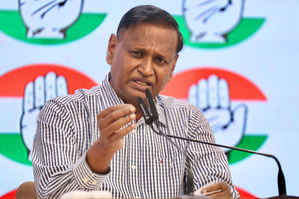
New Delhi, July 11 (IANS) Congress leader Udit Raj on Saturday called out factionalism as a structural problem within his party, and urged his party leaders to prioritise organisational unity and constitutional values.
“The internal factionalism within the Congress is not only a major reason for losing elections, but also the primary cause of the party’s weakening at the organisational level. It’s incomprehensible how infighting benefits anyone,” the National Chairman of Unorganised Workers and Employees Congress (KKC) posted on social media platform X.
Udit Raj resigned as an Internal Revenue Service officer in 2003 to form the Indian Justice Party. He later merged it with the Bharatiya Janata Party (BJP) in 2014, and was elected as its candidate from North West Delhi Lok Sabha seat.
Denied a ticket by the BJP in 2019, he subsequently joined the Congress.
His Saturday post is a direct critique of the fissures within, saying that infighting is a major reason for electoral defeats and organisational weakness.
He warned that mutual fighting yields nothing for anyone.
“Due to factionalism, Congress missed the opportunity to form the government in Uttarakhand. The leaders and workers of Punjab should learn from this. Punjab itself fell prey to severe factionalism during the previous Assembly elections. It was as if the party President had taken a contract to oppose every decision of his own government, and the result was that we lost,” he added on his social media account, tagging his party as well as its state party unit.
“If we consider the struggle to save the Constitution and Rahul Gandhi ji’s sacrifices and dedication, we must avoid factionalism. If there is any issue or disagreement within the organisation, it should be raised on the party’s appropriate platform,” Udit Raj added.
The 68-year-old Congress leader is also a social activist and politician with a long record of advocacy on behalf of Dalit communities and participation in national politics.
He frequently writes columns on politics and governance, and his public interventions are often aimed to influence party strategy and public debate rather than offer neutral analysis.
–IANS
jb/khz