

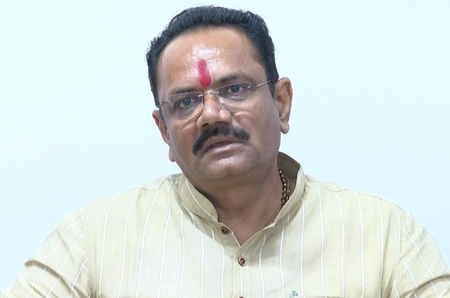
Gandhinagar, July 6 (IANS) The Gujarat government has invoked the Prevention of Black Marketing and Maintenance of Supplies of Essential Commodities (PBM) Act, 1980, against four persons accused of selling counterfeit and substandard fertilisers, with Agriculture Minister Jitu Vaghani saying repeat offenders involved in the sale of fake fertilisers and seeds will now face imprisonment in addition to cancellation of their licences.
Announcing the action on Monday, Vaghani said the four accused had been detained and sent to jail following an investigation into the sale of duplicate fertiliser in Amreli district.
He said the stringent provisions of the PBM Act would apply to cases involving repeat offenders who sell counterfeit fertilisers and seeds.
“We had already made it clear that the government under the leadership of Chief Minister Bhupendra Patel will not tolerate anyone cheating farmers. Those selling illegal, prohibited or substandard agricultural inputs will not only face cancellation of their licences, but repeat offenders will also be prosecuted under the PBM Act and sent to jail,” Vaghani said.
The action follows an investigation into alleged fertiliser fraud centred on Shree Fertiliser in Khambhala village, Babra taluka, Amreli district.
During the inspection, officials recovered 299 bags of low-quality DAP fertiliser packed in counterfeit IFFCO-branded bags. Three samples were sent to the Junagadh laboratory for testing, and all three failed quality standards.
Investigators also found that there was no purchase invoice or source certificate for the fertiliser, nor was there any corresponding entry in the stock register.
According to the government, one of the accused, Mahesh Japadiya, 33, of Jasdan in Rajkot district, was allegedly linked to the recovered stock.
Another accused, Jignesh Dabhi, 26, of Rampara village in Botad district, is alleged to have sold extremely low-quality fertiliser packed in counterfeit IFFCO-branded plastic bags by passing it off as genuine subsidised DAP supplied to farmers.
The investigation further found that Japadiya had purchased the fertiliser from Dabhi.
A third accused, Vijay Malviya, 30, of Surat, has been accused of conspiring with others to sell extremely low-quality fake DAP fertiliser in counterfeit bags carrying the branding of reputed companies, including IFFCO, while presenting it as genuine subsidised fertiliser to farmers.
The fourth accused, Bharat Dhanani, 39, of Amreli district, allegedly printed counterfeit plastic bags carrying the branding of IFFCO and the Pradhan Mantri Bharatiya Jan Urvarak Pariyojana (Bharat DAP).
Officials alleged that the bags contained substandard fertiliser and were sold as genuine products.
A search of his warehouse at Mota Ankadiya village led to the seizure of large quantities of low-quality “Sarovar Sardar” ammonium sulphate fertiliser, polyhalite, other fertilisers, organic fertiliser, empty bags, machinery used for fertiliser packing and truck loading, and other materials worth several lakh rupees.
Laboratory analysis also confirmed that the fertiliser was of substandard quality. Vaghani said fertilisers and seeds were essential inputs for farmers and described the action as only the beginning of a wider crackdown.
“Those selling duplicate products and destroying farmers’ crops and hard work will face strict action. Wherever similar complaints are received in other districts, investigations will be carried out, and equally stringent cases will be registered,” he said.
He also warned that any dealer found involved in black marketing or the sale of counterfeit agricultural products would receive no leniency from the government and would face prosecution under the PBM Act.
The minister said that during the current year, the licences of 98 dealers had been suspended or cancelled for irregularities, including 68 fertiliser dealers, 17 seed dealers and 13 pesticide dealers.
Assuring farmers that the government remained committed to protecting their interests, Vaghani emphasised that the campaign against those causing financial losses through the sale of counterfeit agricultural inputs would continue to ensure that farmers receive only genuine, high-quality products.
–IANS
mys/dan