

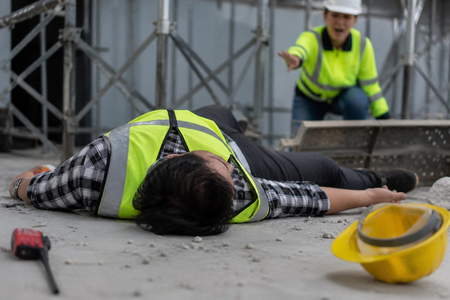
Dhaka, May 1 (IANS) At least 72 workers were killed and 573 injured in workplace accidents across Bangladesh in the first three months of 2026 — more than three times the number recorded during the same period last year, local media reported, citing a human rights organisation.
The findings were presented on Thursday by Dhaka-based Human Rights Support Society (HRSS) at a discussion titled “Workers’ Rights are Human Rights”, organised ahead of International Workers’ Day.
According to the report, injuries among workers in the first three months of this year nearly doubled the 294 injuries reported during the same period in 2025. These injuries were caused by workplace accidents, police action during protests, and other forms of violence, Bangladesh’s leading newspaper, The Daily Star, reported.
As per the data, a total of 168 workplace deaths were reported in 2025, including 19 that occurred in the first quarter and 64 in the final quarter.
Addressing the event, civil society platform, Nagorik Oikya President Mahmudur Rahman Manna criticised the lack of workers’ representation in the national parliament, stating that their rights and demands continue to be overlooked.
He expressed concern that despite parliament being in session for an extended period, issues including workers’ rights, living standards, or economic challenges have gone unaddressed.
Manna also took a dig at ongoing debates on state reform and constitutional amendments, arguing that the potential benefit for workers remains unclear.
He further alleged that the increase in prices of essentials, gas, and fuel in Bangladesh is not being effectively addressed, while social safety net benefits continue to miss their intended recipients.
Manna called on the labour leaders across the country to integrate the labour movement with mainstream politics and develop an accountable mass movement aimed at establishing a welfare state.
Bangladesh Sramik Kalyan Federation President Advocate Atiqur Rahman said, “Half of those killed in the July movement were workers. Yet, reform commissions have failed to address the concerns of 7.5 crore workers.”
He also criticised the persistent use of child labour in garment factories.
Highlighting wage discrimination and harsh conditions faced by female garment workers in Bangladesh, Rabita Islam, Deputy Director of Karmojibi Nari, a women-led advocacy group, said, “Workers receiving minimum wages are often laid off as they age and are forced to join subcontracting factories, where they earn only Tk 5,000 to Tk 7,000 a month,” she said.
–IANS
scor/rs