

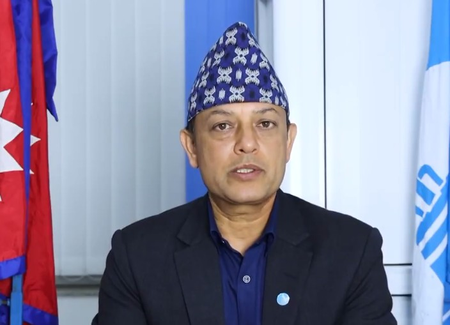
Kathmandu, April 5 (IANS) Dol Prasad Aryal, vice-president of the Rastriya Swatantra Party (RSP), was declared elected Speaker of Nepal’s House of Representatives after emerging as the sole nominee for the post.
At a meeting of the lower house on Sunday, senior-most lawmaker Arjun Narsingh KC formally announced Aryal’s unopposed election. He becomes the 10th Speaker of the lower house and the first non-communist to hold the post in nearly two decades.
Given that the RSP holds a near two-thirds majority in the 275-member House of Representatives, Aryal’s elevation to the post was widely seen as a formality.
In the recent elections held on March 5, the RSP emerged as the largest party in the lower house, securing 182 seats as it swept the polls amid public discontent with traditional political parties.
Aryal was elected to the lower house from Kathmandu-9 constituency, defeating his closest rival, Nepali Congress candidate Nanumaya Bastola, by a wide margin.
Born in Maidi (now Jwalamukhi Rural Municipality) of Dhading district, adjoining Kathmandu, the 51-year-old leader represents a rise from humble beginnings.
After moving to Kathmandu in search of work in the early 1990s, Aryal began his career as a labourer and worked in restaurants before leaving for Japan in 1996 for foreign employment.
He spent nearly eight years there. After returning to Nepal, Aryal became active in multiple businesses, including tourism, education, cooperatives, and remittance services.
He has been associated with ventures such as Sumire Tours and Travels, Yokohama Japanese Language Academy, HEMS School, Jansagar Savings and Credit Cooperative, and EasyLink Remittance, serving in executive roles including director and CEO.
A founding member and vice-chairperson of the RSP, Aryal has also served as the party’s acting chair, notably leading the organisation when party president Rabi Lamichhane was in custody over alleged irregularities in cooperatives.
Aryal entered Parliament after being elected in the 2022 general elections through the proportional representation system. He later served twice as Minister for Labour, Employment and Social Security, both tenures being brief due to the formation of multiple coalition governments under former Prime Minister Pushpa Kamal Dahal, as no single party had secured a majority in the previous lower house.
With the Speaker now elected, attention has shifted to the deputy Speaker position. As per constitutional provisions, either the Speaker or the Deputy Speaker must be a woman, and the two positions must be held by members of different political parties.
The Nepali Congress has signalled its claim to the post as the main opposition, while the Shram Sanskriti Party — a newly formed political party led by former Dharan mayor Harka Rai — has also announced plans to field a female candidate.
Given the RSP’s strong presence in Parliament, its support is expected to play a decisive role in determining the next deputy Speaker, a position that also carries influence within the Constitutional Council, which makes key appointments to constitutional bodies.
–IANS
scor/sd/