
Centre okays 25 lakh metric tonnes wheat exports, 5 LMT of sugar exports
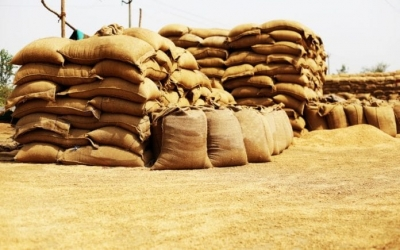
New Delhi, Feb 13 (IANS) In a farmer-centric step to stabilise domestic markets and ensure remunerative returns to producers, the Centre on Friday approved the export of 25 lakh metric tonnes (LMT) of wheat, along with an additional 5 LMT of wheat products.
According to a Consumer Affairs Ministry statement, wheat stock availability with private entities during 2025–26 stands at approximately 75 LMT, which is nearly 32 LMT higher compared to the corresponding period last year.
"This substantial year-on-year increase indicates a comfortable supply position in the country. Furthermore, as on April 1, 2026, total wheat availability in the central pool with FCI is projected at around 182 LMT, thus ensuring that export permissions will not impact domestic food security requirements," it said.
Moreover, wheat acreage in Rabi 2026 has also increased to about 334.17 lakh hectares compared to 328.04 lakh hectares last year.
This reflects strong farmer confidence in wheat cultivation supported by assured MSP and procurement mechanisms, and signals the likelihood of another robust harvest, the official statement further added.
The decision to permit export of 25 LMT of wheat and 5 LMT wheat products will help stabilise domestic prices, improve market liquidity, ensure efficient stock rotation, and further strengthen farmers’ income while ensuring national food security.
Meanwhile, to facilitate sugar exports, the government decided to allow export of an additional 5 LMT of sugar to willing sugar mills during the current Sugar Season 2025–26.
Earlier, the government had permitted the export of 15 LMT of sugar during the current Sugar Season 2025–26. This decision is expected to facilitate higher sugar exports and help in managing surplus sugar availability in the country.
As per data, only about 1.97 LMT of sugar has been exported up to January 31, 2026.
In addition, approximately 2.72 LMT of sugar has been contracted for export by sugar mills to date.
The ministry said that the additional export quantity of 5 LMT shall be made available to willing sugar mills, subject to the condition that at least 70 per cent of their allocated quantity is exported by June 30, 2026.
--IANS
na/vd
Big twist in Sadhvi Prem Baisa death case as FSL report rules out poisoning
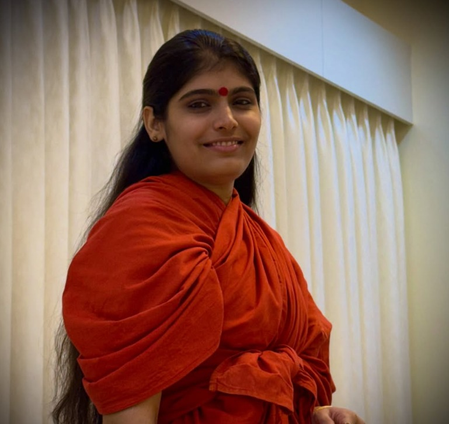
Jaipur, Feb 13 (IANS) In a significant development in the mysterious death of Sadhvi Prem Baisa, the State Forensic Science Laboratory (FSL) has submitted its viscera examination report to the police, ruling out poisoning or any unnatural cause of death.
The report, received late Thursday night, has brought a major twist to the case that had sparked widespread speculation and controversy.
According to sources, the FSL analysis found no traces of poison or toxic substances in Sadhvi Prem Baisa's body. This has dismissed earlier suspicions of foul play or forced poisoning.
However, the final cause of death will be determined by the medical board after a detailed review of the forensic findings. Investigators revealed that Sadhvi Prem Baisa had been suffering from asthma and had developed severe breathing difficulties after catching a cold on January 28.
As her condition worsened, she contacted a male nurse, Devi Singh, who administered Dexona and Dynapar injections.
Doctors at Mahatma Gandhi Hospital will now analyse whether these medications or underlying health conditions contributed to her death.
Sadhvi Prem Baisa fell seriously ill at the Aarti Nagar Ashram in Pal village under Boranada police station limits on January 28.
She was taken to a private hospital on Pal Road but was declared dead on arrival.
Following a complaint filed by her father, Biramnath, the police registered a case and conducted a post-mortem examination on January 29 through a medical board. Her viscera samples were sent to the FSL on February 2, and the forensic investigation was completed within 11 days.
During the investigation, compounder Devi Singh stated that the injections were administered based on a prescription allegedly given by a private hospital doctor.
Police are now examining who prescribed the injections and whether proper medical protocols were followed.
While the FSL report has ruled out poisoning, authorities say the case is still under investigation, and all aspects, including medical treatment, circumstances at the ashram, and statements of witnesses, are being scrutinised.
Officials said more clarity will emerge after the medical board submits its final opinion.
--IANS
arc/svn
Dalai Lama’s office rejects reports linking Tibetan spiritual leader to Jeffrey Epstein
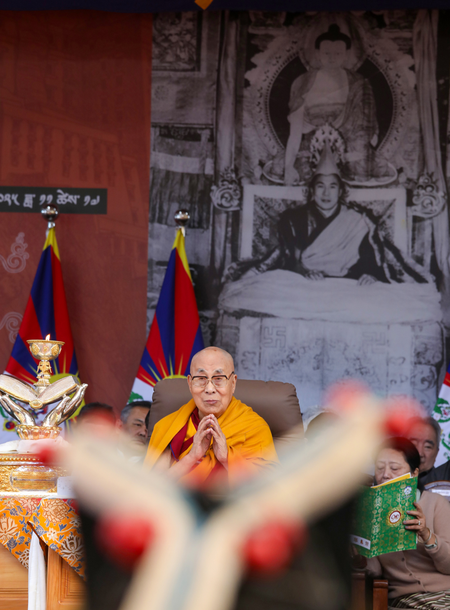
Dharamsala, Feb 8 (IANS) The office of the Dalai Lama on Sunday firmly denied media reports suggesting any association between the Tibetan spiritual leader and convicted sex offender Jeffrey Epstein.
The clarification comes after several media outlets, citing documents from the United States Department of Justice (DoJ), reported that the Dalai Lama’s name appeared 169 times in the widely discussed Epstein files.
According to some reports, the Buddhist leader’s name allegedly appeared in multiple personal emails and in the index of a book titled ‘Massage for Dummies’, which was included as a scanned document in files released earlier as part of the Epstein case records.
Following the circulation of these claims, the Dalai Lama’s office issued a statement categorically rejecting any alleged link.
“Some recent media reports and social media posts concerning the ‘Epstein files’ are attempting to link His Holiness the Dalai Lama with Jeffrey Epstein,” the statement read.
“We can unequivocally confirm that His Holiness has never met Jeffrey Epstein or authorised any meeting or interaction with him by anyone on His Holiness’s behalf,” it added.
Some reports have referred to emails dated October 2012 that allegedly contained references suggesting a meeting between the Tibetan spiritual leader and Epstein, and also indicated that the Dalai Lama was expected to attend an event alongside him.
Additionally, European media outlet 'Nexta TV' claimed that individuals described as followers of the Dalai Lama might have met Epstein, further fuelling speculation about possible indirect links.
The issue also gained attention last year after journalist Michael Wolff made claims during an appearance on the 'Daily Beast' podcast.
Wolff spoke about gatherings, described as “salons”, that were reportedly hosted at Epstein’s Manhattan residence and attended by several prominent personalities.
While naming attendees, Wolff included the Dalai Lama and speculated that the spiritual leader’s presence, if any, may have been connected to fundraising or philanthropic outreach, as several individuals were known to approach Epstein for financial contributions.
Independent journalist Jacob Silverman later referred to Wolff’s claims in an article titled “Why Was The Dalai Lama At Jeffrey Epstein’s House?”
In his report, Silverman mentioned that the Dalai Lama’s office did not respond to queries at the time, regarding whether the organisation had received any donations from Epstein or had any form of association with him.
The controversy has resurfaced after the US DoJ recently released a massive collection of records linked to Epstein.
The release reportedly includes more than three million files, over 2,000 videos and approximately 1,80,000 photographs connected to the disgraced financier’s activities.
According to reports, the newly released documents contain references to several influential personalities from across sectors, including political leaders, business figures, and globally recognised individuals.
Names mentioned in various reports include current and former US Presidents such as Donald Trump and Bill Clinton, as well as business leaders including Bill Gates and Elon Musk, among others.
--IANS
sd/dpb
Not just business deal, but step to elevate strategic friendship: BJP leader on India-US trade agreement
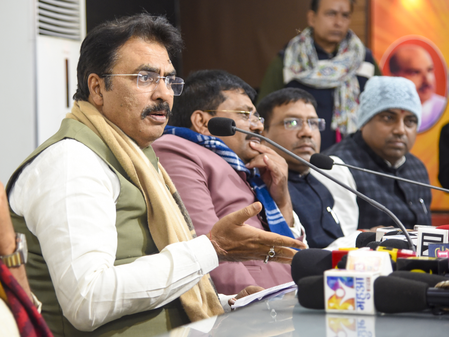
New Delhi, Feb 8 (IANS) Calling it a major boost to bilateral ties, Bihar BJP State President Sanjay Saraogi on Sunday said the India-US Interim Trade Agreement marks a new chapter in economic cooperation between the two nations.
Reacting to the development, Saraogi said, “The India-US interim trade agreement gives a new direction to economic cooperation between the two countries. This agreement will strengthen trade, investment, technology, and supply chains, helping India achieve its Viksit Bharat goals. It is not just a trade agreement but also a step to elevate the strategic and economic friendship between India and the United States.”
His remarks came after the US and India announced a framework for an Interim Agreement on reciprocal and mutually beneficial trade, aimed at paving the way for a comprehensive bilateral trade pact. As part of the announcement, the White House formally confirmed a reduction in tariffs on imports of Indian products from 25 per cent to 18 per cent, offering immediate relief to Indian exporters and industries.
According to a joint statement issued by both sides, the framework reaffirms India and America’s commitment to negotiations on a US-India Bilateral Trade Agreement, talks launched by US President Donald Trump and Prime Minister Narendra Modi on February 13, 2025. Officials said the interim arrangement is designed to deliver early outcomes while supporting more resilient and diversified supply chains.
“The Interim Agreement between the United States and India will represent a historic milestone in our countries’ partnership, demonstrating a common commitment to reciprocal and balanced trade based on mutual interests and concrete outcomes,” the announcement noted.
Earlier this week, President Trump also spoke with Prime Minister Modi and later wrote on 'Truth Social' that both countries had agreed on a trade deal. He highlighted reciprocity, expanded market access, and efforts to address long-standing trade imbalances, while underlining the broader strategic importance of economic ties with New Delhi.
Under the proposed framework, India will eliminate or reduce tariffs on all US industrial goods and on a wide range of American food and agricultural products. These include dried distillers’ grains, red sorghum for animal feed, tree nuts, fresh and processed fruits, soybean oil, wine and spirits, among others.
On another matter, reacting to the arrest-related developments involving MP Pappu Yadav, Sanjay Saraogi said, “Pappu Yadav has had ongoing cases for years and is currently absconding, with orders for attachment and seizure already issued. The court has emphasised that an absconding accused must surrender, and if warrants or attachment orders are executed, the administration must ensure their arrest and imprisonment.”
--IANS
rs/dpb
US trade deal boosts India’s target of $250 billion engineering exports by 2030
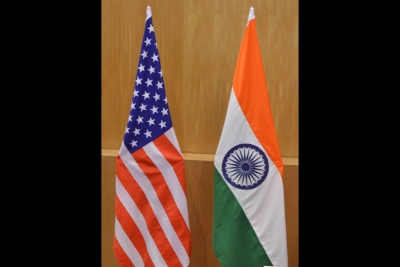
New Delhi, Feb 8 (IANS) The interim US trade deal framework supports India’s broader goal of crossing $120 billion in engineering exports in FY2025‑26, according to the industry.
Moreover, according to the Engineering Export Promotion Council of India (EEPC), the tariff reduction also strengthens India’s journey toward the target of achieving $250 billion in engineering exports by 2030, “especially as better access to the US market is a key to reaching that milestone”.
“The US being the largest market for engineering goods, EEPC India welcomes the release of a framework for an interim deal between the two countries, which reduces duties and trade barriers,” the council said in a statement.
The proposed agreement would boost local manufacturing and provide greater market access for Indian exporters, including those in the engineering space, into the world's largest economy, it added.
The US will cut tariffs on Indian goods to 18 per cent. Additionally, India will also get a preferential tariff rate quota for automotive parts.
This is set to help the engineering exports sector regain its competitiveness in the US market. MSME engineering exporters are expected to significantly gain from the trade deal with the US, said the EEPC.
EEPC India hopes that, going forward, duties imposed by the US under Section 232 on steel, aluminium, auto, and auto components would also ease.
“A deeper trade partnership with the US bodes well for both sides. Once an interim deal is signed and a comprehensive agreement follows, the Indian engineering sector could see much stronger export growth. It will significantly contribute towards achieving the engineering exports target of $250 billion by 2030,” it mentioned.
Moreover, the US-India joint statement has boosted the confidence of the Indian engineering sector.
The trade deal would not only help engineering exporters win back many old buyers but also get new customers, thus ensuring stronger export growth in the coming months.
—IANS
na/
PM Modi’s efforts in peacekeeping are unequivocal: Malaysian PM Anwar Ibrahim
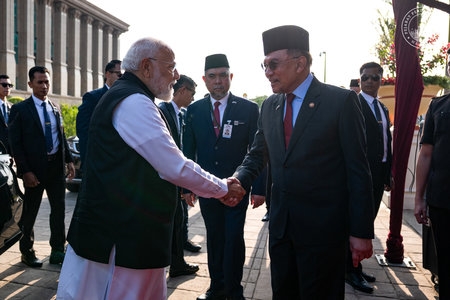
Kuala Lumpur, Feb 8 (IANS) Malaysian Prime Minister Anwar Ibrahim on Sunday hailed Prime Minister Narendra Modi's "unequivocal" peacekeeping efforts and thanked him for his firm commitment to support diplomatic talks regarding the same in the Russia-Ukraine war and the conflict in the Middle East.
In his remarks during the joint press meet with Prime Minister Narendra Modi in Kuala Lumpur, Malaysian PM Ibrahim said, "I must express my appreciation, because my discussions with Prime Minister Modi are not just normal diplomatic exchanges, but those between true friends, full of trust and understanding."
"Therefore, I must also take this opportunity to express my regard and thanks to him for his firm commitment to support all peace efforts, be it in Ukraine-Russia or in the case of the Middle East, particularly Gaza. His efforts in peacekeeping are unequivocal," he added.
"We consider this meeting and these exchanges very vital, very strategic and critical to advance and enhance relations between India and Malaysia... We had long-standing relations since 1957, but we have elevated it to a Comprehensive Strategic Partnership in 2024," he said, and highlighted the "deep historical ties, strong people-to-people linkages, and ever-expanding economic cooperation".
"We'll continue to deepen collaboration in all fields -- trade and investment, semiconductor, digital economy, trade in local currency, connectivity, energy, agriculture, food, security, defence, education, healthcare, tourism, culture and people-to-people. It is really comprehensive, and we believe that we can advance this and execute in a speedy manner with the commitment of both our governments, both foreign ministers," he said.
The Malaysian PM said that both nations exchanged 11 documents, including MoUs, in an exchange of letters which "extended beyond normal bilateral arrangements" as the peacekeeping cooperation on semiconductor, healthcare and security cooperation has also been covered in it.
Malaysian PM Ibrahim further expressed hope in expanding trade cooperation with India, extending beyond the $8.59 billion figure that was achieved in 2025. He also called the use of local currency -- the rupee and the Malaysian ringgit -- a "remarkable feat".
"India is growing by leaps and bounds, which is one spectacular rise in the international economic trade scene, and therefore Malaysia, in the ASEAN context, certainly benefits immensely if we could secure more ways and opportunities to collaborate with India to extend beyond the $18.59 billion that we achieved in 2025.
He said that the educational ties remain "pivotal" as many Malaysians were educated in India, and there is a growing number of Indian students in Malaysia too.
"Since the last decade or so under the premiership of my good friend Prime Minister Modi, you have seen the spectacular recognition of Indian centres of excellence in education. That's not only comparable, but many of them have achieved outstanding recognition beyond the known institutions in the West. Therefore, we would certainly explore this to increase the number of students in the disciplines and fields to study in India," the Malaysian PM said.
He also stressed the need to focus on tourism and connectivity.
"As a sign of our good relations, I have immediately agreed to support the decision of the Government of India to open a consulate of India in Kota Kinabalu, Sabah," he concluded.
Earlier in the day, both leaders held delegation-level talks, discussing ways to enhance bilateral ties across several sectors, including defence and security.
PM Modi accorded a ceremonial welcome at Perdana Putra in Putrajaya.
PM Modi's visit is being seen as a significant step toward further deepening the enduring friendship between India and Malaysia, rooted in mutual trust, shared values and common aspirations for the future.
--IANS
sd/
Our stance on terrorism firm, no double standards, no compromise: PM Modi in Malaysia
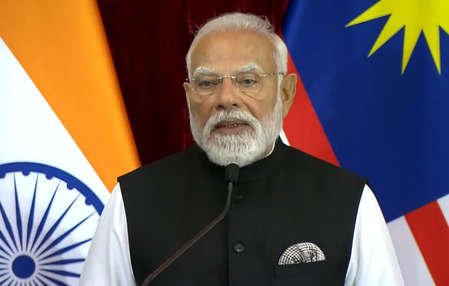
Kuala Lumpur, Feb 8 (IANS) Prime Minister Narendra Modi on Sunday said that India's stance on terrorism is firm -- "no double standards and no compromise" -- and also stressed that New Delhi will continue to expand cooperation with Malaysia in counter-terrorism, intelligence sharing and maritime security.
Addressing a joint press meet with his Malaysian counterpart, Anwar Ibrahim, in Kuala Lumpur, PM Modi said, "First of all, I thank my friend, Anwar Ibrahim, for this warm welcome. Last year, I was not able come to Malaysia for the ASEAN Summit, but I had promised my dear friend that I would soon visit Malaysia. For my first foreign visit of 2026, I have come to Malaysia."
Highlighting the "special" India-Malaysia relations, he said, "We are maritime neighbours. For centuries, there have been deep ties between people of our two nations. Today, Malaysia is the second biggest nation in the world that has an Indian-origin population. Our civilisations are connected to shared cultural heritage and democratic values."
He credited the Malaysian PM for his "significant contributions" in providing a "new pace" to the India-Malaysia ties in the past few years.
"Our cooperation in energy, infrastructure and manufacturing has strengthened. Mutual investment has also increased in the digital economy, biotech and IT. Tourism and people-to-people ties have also deepened. By drawing inspiration from these achievements, we have decided to bring in unprecedented speed and depth in our partnership," PM Modi said.
The Prime Minister further mentioned that the security cooperation between the two nations will be further enhanced by strengthening the cooperation in counter-terrorism, intelligence sharing and maritime security.
"We will also make defence cooperation more comprehensive," he said.
Along with AI and digital technologies, he said that India and Malaysia will further advance the partnership in semiconductor, health and food security.
"The CEO forum organised today has thrown open new opportunities for trade and investment. We will pave a path to economic transformation through strategic trust," he said.
On terrorism, PM Modi said, "We will continue to support all peacekeeping efforts. However, our stance on terrorism is very firm -- no double-standards and no compromise. I appreciate your (Malaysian PM Ibrahim) commitment to enhancing India-Malaysia ties. I hope that together we will continue to work towards achieving the resolutions of Prosperous Malaysia and Viksit Bharat."
PM Modi called the Indian diaspora living in Malaysia a "living bridge" between the two nations.
"Yesterday, I received the opportunity to meet the Indian diaspora living in Malaysia. With his presence, my friend PM Anwar Ibrahim enhanced the prestige of this event. This living bridge of 30 lakh people is a major power. Measures taken for their welfare provide a humanitarian focus to our relations," he said.
He also mentioned that steps like the Social Security Agreement for the protection of Indian workers in Malaysia, and a gratis e-visa, as well as a UPI digital interface for tourism in Malaysia, will "simplify the lives of citizens of both nations".
"Any partnership succeeds when the benefit reaches people directly," the Prime Minister said.
PM Modi highlighted the interest in the Tamil language in Malaysia and said, "Shared love for the Tamil language also connects India and Malaysia. In Malaysia, the strong and living presence of Tamil can be seen in education, media and cultural life. I am confident that with today's Audio Visual Agreement, film and music, especially Tamil films, will bring our hearts closer."
Emphasising that the Indo-Pacific region is emerging as a "hub of global growth", the Prime Minister said, "We are committed, along with ASEAN, to development, peace, and stability across the Indo-Pacific. India gives priority to ASEAN centrality."
"I once again congratulate Malaysia on its successful ASEAN leadership. With the support of friendly countries like Malaysia, India will further strengthen its ties with ASEAN. We agreed that the review of the ASEAN-India trade agreements should be completed soon," he added.
Earlier in the day, both leaders held delegation-level talks, discussing ways to enhance bilateral ties across several sectors, including defence and security.
PM Modi accorded a ceremonial welcome at Perdana Putra in Putrajaya.
PM Modi's visit is being seen as a significant step toward further deepening the enduring friendship between India and Malaysia, rooted in mutual trust, shared values and common aspirations for the future.
--IANS
sd/
S. Korea’s auto parts exports to US fall for 1st time in 5 years
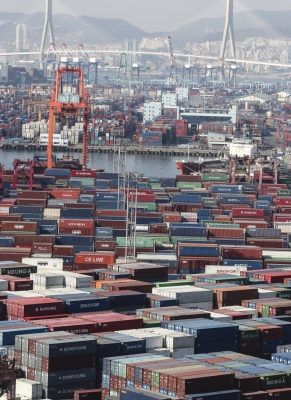
Seoul, Feb 8 (IANS) South Korea's exports of auto parts to the United States fell in 2025 for the first time in five years, data showed on Sunday, as domestic automakers expanded local sourcing in the US amid tariff measures.
Shipments of automotive parts to the U.S. declined 6.7 percent from a year earlier to US$7.67 billion last year, according to data compiled by the Korea Auto Industries Cooperative Association. It marked the first annual fall since 2020, when exports fell 11.5 percent, reports Yonhap news agency.
Exports to South Korea's largest overseas market had since risen steadily in recent years, increasing from $6.91 billion in 2021 to $8.03 billion in 2022, $8.08 billion in 2023 and $8.22 billion in 2024.
The association said proposed 25 percent tariffs on auto imports under the Donald Trump administration dealt a serious blow to South Korea's automotive exports and the broader industry.
Industry analysts said the higher tariffs prompted automakers, including Hyundai Motor Co. and Kia Corp., to expand local parts procurement in the U.S.
The U.S. began imposing a 25 percent tariff on imported auto parts in May last year. Under an agreement between Seoul and Washington, tariffs on South Korean auto parts were later reduced to 15 percent, retroactive to Nov. 1.
However, Trump threatened to raise "reciprocal" tariffs and auto, lumber and pharmaceutical duties on South Korea to 25 percent from 15 percent, citing a delay in the parliamentary process to pass a special investment bill facilitating the implementation of a trade deal reached by the two countries.
Under the trade deal, South Korea has committed to investing US$350 billion in the U.S., among other pledges, in return for the U.S. lowering reciprocal tariffs on South Korea to 15 percent from 25 percent, said the report.
—IANS
na/
After Oman talks, Iran sees opening for diplomacy with US but rejects nuclear, missile curbs
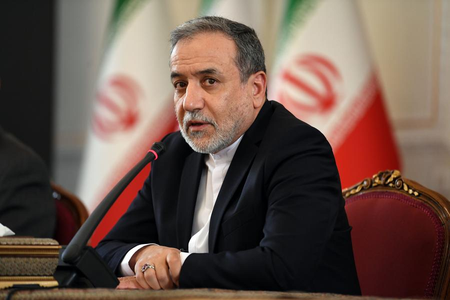
Cairo, Feb 8 (IANS) Iran's Foreign Minister Seyed Abbas Araghchi said that he expected a new round of talks with the United States to take place "soon," describing the meeting held a day earlier as a positive start while cautioning that rebuilding trust would take time.
In an interview with Al Jazeera, aired on Saturday and later shared in Persian on his Telegram channel, Araghchi also made clear that Tehran would not relinquish its uranium enrichment program, which he called an "inalienable right." He added that his country was open to an agreement that reassures the international community while preserving its enrichment activities, Xinhua news agency reported.
Araghchi also noted that Iran opposes transferring its uranium abroad and said the nuclear dispute could be resolved only through negotiations. He also rejected US demands that Iran curb its missile program, calling missiles a defensive matter that is "never negotiable."
He confirmed that members of the Iranian and American delegations briefly shook hands despite the talks being conducted indirectly. "Although the negotiations were indirect, an opportunity arose to shake hands with the American delegation," he said, disputing US reports that the two sides had held a short direct exchange during the discussions in Muscat.
After concluding the talks with Steve Witkoff, US President Trump's special envoy, Araghchi traveled to Doha, where he met with Sheikh Mohammed bin Abdulrahman bin Jassim Al-Thani, Qatar's prime minister and foreign minister, Qatari media reported.
Iran's military chief of staff, Abdolrahim Mousavi, struck a more confrontational tone, warning that any attempt to impose war on Iran would spread conflict across the Middle East. Iran would not initiate a war, he said, but would respond "decisively" to defend its sovereignty.
Trump, speaking to reporters aboard Air Force One en route to his Mar-a-Lago resort in Florida, described the Oman talks as "very good," saying Iran "looks like it wants to make a deal very badly." He said the sides would meet again early next week.
On Friday, Trump also signed an executive order threatening additional tariffs on countries that continue to trade with Iran. While the order does not specify a tariff rate, it cites 25 per cent as an example and says the measure could apply to goods imported into the United States from any country that "directly or indirectly" purchases goods or services from Iran.
The talks in Muscat marked a renewed diplomatic effort amid heightened regional tensions. In recent weeks, the United States has expanded its military presence in the Middle East, while Iran has stepped up its own preparations, fueling concerns among regional governments about the risk of a wider conflict.
Israel is watching the negotiations closely. Prime Minister Benjamin Netanyahu's office said on Saturday that he would travel to Washington later this week to discuss the talks with Trump. Netanyahu believes any agreement must include limits on Iran's ballistic missile program and an end to its support for allied militant groups, the statement said.
Earlier this week and ahead of the Muscat meeting, Witkoff visited Israel for consultations, during which Netanyahu said Iran had "repeatedly demonstrated it cannot be trusted to keep its promises."
Regional reactions were cautiously supportive. Egypt and the United Arab Emirates welcomed the talks as a constructive step toward dialogue and de-escalation.
Egypt's foreign minister, Badr Abdelatty, praised Oman's role in hosting the negotiations and reaffirmed Cairo's support for a negotiated settlement of the nuclear issue. The Emirati foreign ministry said Oman's mediation had helped create conditions conducive to dialogue and expressed hope for outcomes that would enhance regional security.
Saudi Foreign Minister Faisal bin Farhan Al Saud also welcomed the talks, voicing hope they would open a diplomatic path to ease tensions and promote regional stability.
"The region is burdened by multiple crises, and finding a diplomatic solution between the United States and Iran is essential for achieving peace and stability," he said during a press conference on Friday.
Qatar's foreign minister, during his Saturday meeting with Araghchi in Doha, voiced hope that the negotiations would lead to a comprehensive agreement that strengthens stability and security across the region, according to a statement from the Qatari Foreign Ministry.
--IANS
int/rs