
Delhi BJP urges police to probe all angles in murder of East Delhi youth
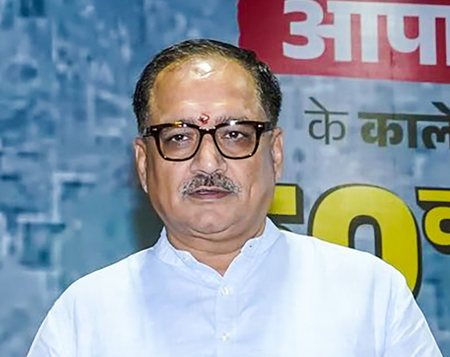
New Delhi, June 28 (IANS) Giving a conspiracy twist to a youth’s murder in East Delhi’s Geeta Colony, Delhi BJP President Virendra Sachdeva and Union Minister of State Harsh Malhotra on Saturday urged the Delhi Police not to treat the incident merely as a case of road rage.
They urged police to ascertain the true motive behind the killing, as the bereaved family has voiced some concerns and suspicions.
The two BJP leaders expressed grief over the murder of Yash, 21, on Friday, and stressed that the matter requires a swift and thorough investigation.
Malhotra, accompanied by local MLA Anil Goel, visited the victim’s residence in Rani Garden earlier in the day and met the grieving parents and offered their condolences and support.
The MoS assured the family that Delhi Police would investigate the case with full diligence, and a strong and watertight case would be prepared.
He stated that, if required, the Delhi government would provide the best legal assistance for action against the accused.
He affirmed that East Delhi BJP stands firmly with the bereaved family and for any assistance, the family can reach out to local MLA Goel or Shahdara District President Deepak Gaba.
In the evening, Gaba and other local BJP officials attended the last rites of the deceased Yash.
Yash’s relatives alleged that the incident was pre-planned and that he was killed allegedly due to his friendship with a girl from another community.
The accused, including a juvenile, were identified as relatives of Yash’s friend, they alleged.
The slain youth was stabbed in the back after his scooter brushed past the accused juvenile. The juvenile chased Yash and, with the help of his kin and stabbed him near the Geeta Colony Pushta flyover.
The victim’s family also alleged that the parents of Yash’s female friend had once come to their house and issued life threats to him.
--IANS
rch/dan
Gujarat-style smart boards in schools soon: Delhi Education Minister
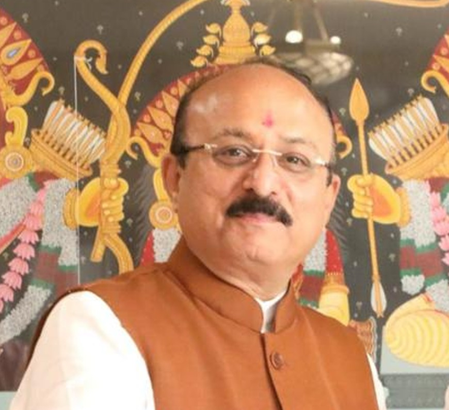
New Delhi, June 28 (IANS) Delhi Education Minister Ashish Sood on Saturday visited schools in Surat and said that an advanced education system featuring AI, smart boards, and robotics, on the lines of Gujarat, will soon be implemented in the capital’s schools.
Speaking to the media in Gujarat, Sood expressed confidence that this initiative would not only raise the quality of education in Delhi’s government schools but also enhance students’ exposure to modern technologies.
Sood criticised the so-called Delhi education model flaunted by the previous Aam Aadmi Party (AAP) government.
He said the self-proclaimed Delhi model of the AAP government and its Education Minister, who went to jail over the liquor scam, have completely failed.
Despite being the national capital with all available resources, Delhi’s government schools have just a few hundred smart boards. In contrast, Gujarat, despite facing natural challenges such as annual floods in several districts, has successfully established over one lakh smart classrooms, he said, adding that this completely exposes the failure of the so-called Delhi model.
On his educational trip to Surat, Sood visited Suman High School Number 6, Udhna, operated under the Surat Municipal Corporation.
The Education Minister visited various classrooms in the school and observed the teaching and learning process being conducted through smart boards.
He interacted with students to understand the utility of smart boards and the educational benefits they receive from this technology.
Sood also visited the school’s AI and Robotics Lab, where he observed practical projects being carried out by students on topics such as drones, 3D printers, and advanced sensor security systems.
While interacting with the students, he appreciated their efforts and extended his best wishes.
Sood’s visit was aimed at observing the implementation of the National Education Policy (NEP) 2020 and the best educational practices adopted by different states.
He remarked that the reforms introduced by Gujarat in government schools are commendable and that other states should take inspiration from them.
Present on the occasion were the District Education Officer of Surat, administrative officers from the Municipal Primary Education Committee, the District Primary Education Officer, and school administrators, along with other officials.
--IANS
rch/dan
‘A moment of pride and emotion’: Shubhanshu’s parents on PM Modi’s video call
New Delhi, June 28 (IANS) Prime Minister Narendra Modi made a heartfelt connection with Indian astronaut Group Captain Shubhanshu Shukla on Saturday via a video call from Mission Control.
The conversation not only highlighted India's growing strides in space but also offered a deeply emotional moment for Shukla's family.
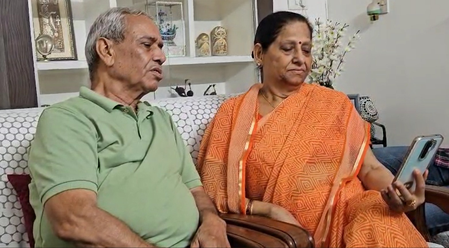
With hearts full of pride and eyes brimming with emotion, Shubhanshu Shukla's parents listened to their son speak to Prime Minister Modi from space -- a moment they say they will cherish forever.
IANS spoke to family members of the astronaut after PM Modi's conversation with him.
Shubhanshu Shukla's father, Shambhu Dayal Shukla, said, "When the Prime Minister called, I was overwhelmed. His blessings and encouragement filled us with pride. We thank him from the bottom of our hearts. His genuine concern truly touched us -- it's a matter of immense honour that our son is representing the entire nation."
He added that PM Modi's message underscored India's commitment to uninterrupted space exploration, benefiting generation after generation.
Shubhanshu Shukla's mother, Asha Shukla, expressed her admiration: "This is Prime Minister Modi's strength -- he resonates with each person in such a simple yet profound manner. We are grateful to him for reaching out to Shubhanshu. That moment of pride is unforgettable."
Cousin Ashish Dixit also shared his joy: "We were all eagerly waiting for this moment -- when the Prime Minister would speak to him. It was truly fulfilling."
During the video exchange, PM Modi inquired about Shukla's well-being and even cheekily asked if he had brought halwa.
Shukla replied that he had indeed -- and flew on to describe how India looks magnificent from up above, with no borders in sight, reinforcing the unifying vision of space exploration.
These personal exchanges aren't merely symbolic.
They also align with India's broader mission of asserting a sustained presence in space.
"The Prime Minister has sent a message that this kind of space exploration will continue relentlessly," noted Shambhu Dayal Shukla.
"It's not just for today -- it's for generations to come."
Group Captain Shukla, currently aboard the International Space Station as part of the Axiom‑4 mission, is set to spend the next fortnight conducting scientific experiments and engaging with communities back home.
The family's reaction reflects the optimism of a nation watching its dreams of space journey unfold.
--IANS
brt/khz
‘India appears bigger and more majestic from space’: Full text of astronaut Shukla’s interaction with PM Modi
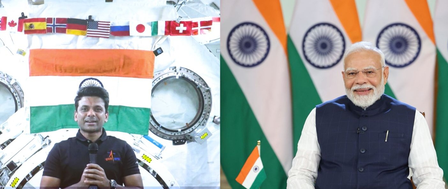
New Delhi, June 28 (IANS) The Prime Minister, Narendra Modi, interacted with Group Captain Shubhanshu Shukla, the Indian Astronaut, who became the first Indian to go to the International Space Station, via videoconferencing on Saturday.
The Prime Minister remarked that although Shubhanshu Shukla is presently the farthest from the Indian motherland, he remains closest to the hearts of all Indians. He noted that Shubhanshu’s name itself carries auspiciousness, and his journey marks the beginning of a new era.
PM Modi stated that while it was a conversation between two individuals, it embodied the emotions and enthusiasm of 140 crore Indians. He said that the voice speaking to Shubhanshu carried the collective zeal and pride of the entire nation and extended his heartfelt congratulations and best wishes to Shubhanshu for hoisting India’s flag in space.
PM Modi enquired about Shubhanshu’s well-being and whether all was fine aboard the space station.
Responding to the Prime Minister, astronaut Shubhanshu Shukla thanked him for the best wishes on behalf of 140 crore Indians and stated that he is in good health and deeply moved by the love and blessings he has received.
He described his time in orbit as a profound and novel experience, one that reflects not just his personal journey but also the direction in which India is advancing. The astronaut noted that his 400-kilometre journey from Earth to orbit is symbolic of the aspirations of countless Indians.
Recalling his childhood, he shared that he never imagined becoming an astronaut, but under the Prime Minister’s leadership, today’s India enables the realisation of such dreams. Shubhanshu called it a great achievement and said he felt immense pride in representing his country in space.
The Prime Minister remarked, with a touch of humour, that although Shubhanshu is in space where gravity is nearly absent, every Indian can see how grounded he remains. He asked whether the carrot halwa that Shubhanshu carried from India had been shared with his fellow astronauts.
Shubhanshu Shukla shared that he brought along several traditional Indian delicacies to the space station, including carrot halwa, moong dal halwa, and aam ras. He expressed his intent to offer his international colleagues a taste of India’s rich culinary heritage.
He informed the Prime Minister that they all sat together and enjoyed the dishes, which were very well received. He noted that his fellow astronauts appreciated the flavours so much that some even expressed a desire to visit India in the future to experience these dishes on Indian soil.
Stating that circumambulation, or parikrama, has been a revered Indian tradition for centuries, the Prime Minister said that Shubhanshu now had the rare honour of performing parikrama of Mother Earth herself.
He inquired which part of the Earth Shubhanshu might be orbiting over at that moment. Responding to that, the astronaut said, while he did not have the exact location at that instant, just a short while earlier, he had seen through the window that they were passing over Hawaii.
He shared that they complete 16 orbits a day, witnessing 16 sunrises and 16 sunsets from space, an experience that continues to amaze him. He informed that although they are currently travelling at a speed of nearly 28,000 kilometres per hour, that velocity isn’t perceptible inside the spacecraft. However, he reflected that this great momentum symbolically mirrors the pace at which India is advancing today.
Shubhanshu Shukla, responding to the Prime Minister, shared that the first thought which struck him upon entering orbit and witnessing the vastness of space was the view of Earth itself. He said that from space, one cannot see borders—there are no visible boundaries between nations, and what stood out most was the sheer unity of the planet.
He noted that when we look at maps, we compare the sizes of countries, including India, and often see a distorted picture because we’re flattening a three-dimensional world onto paper.
But from space, Shubhanshu said, India appears truly grand, majestic in scale and spirit. He further described the overwhelming sense of oneness he experienced, a powerful realisation that aligns perfectly with India’s civilizational motto of “unity in diversity.”
He shared that from above, Earth looks like a single home shared by all, reminding humanity of the harmony and connection we inherently share.
Highlighting that Shubhanshu Shukla was the first Indian to be on board the International Space Station, the Prime Minister enquired with him about the contrast between his rigorous preparation on Earth and the actual conditions aboard the space station.
The astronaut shared that despite knowing about zero gravity and the nature of experiments in advance, the reality in orbit was entirely different. He remarked that the human body becomes so accustomed to gravity that even the smallest tasks in microgravity become unexpectedly complex.
He humorously noted that during the conversation, he had to strap his feet down; otherwise, he’d just float away. Simple acts like drinking water or sleeping become significant challenges in space, he added.
Shubhanshu explained that one can sleep on the ceiling, on the walls, or wherever, since orientation becomes fluid. Adjusting to this altered environment takes a day or two, but he described the experience as a beautiful harmony of science and wonder.
On being asked whether meditation and mindfulness had benefited him, Shubhanshu Shukla wholeheartedly agreed with the Prime Minister’s reflection that ‘science and spirituality are twin pillars of India’s strength’. He affirmed that India is already progressing rapidly, and his mission represents only the first step in a much larger national journey.
Looking ahead, he envisioned many more Indians reaching space, including establishing India’s own space stations. Shubhanshu emphasised the vital role of mindfulness in such an environment. Whether during rigorous training or the high-pressure moments of launch, mindfulness helps in maintaining inner calm and clarity. He shared that staying mentally centred is crucial for making sound decisions in space.
Quoting a profound Indian adage, he said, one cannot eat while running, underscoring that the calmer one is, the better choices one makes. Shubhanshu added that when science and mindfulness are practised together, they greatly aid adaptation to such challenging environments, physically and mentally.
The Prime Minister asked whether any of the space experiments being conducted would benefit the agriculture or health sector in the future. Shubhanshu Shukla shared that, for the first time, Indian scientists have designed seven unique experiments which he has taken to the space station.
He informed that the first experiment, scheduled for that day, focuses on stem cells and explained that in the absence of gravity, the body experiences muscle loss, and the experiment seeks to test whether specific supplements can prevent or delay this loss.
He highlighted that the outcome of this study could directly help elderly people on Earth who face age-related muscle degeneration. Shubhanshu further stated that another experiment focuses on the growth of microalgae. He remarked that though microalgae are small in size, they are highly nutritious. He noted that if methods can be developed to grow them in larger quantities based on the findings in space, it could significantly aid food security on Earth.
He underlined that one major advantage of conducting experiments in space is the accelerated pace of biological processes, enabling researchers to obtain results much faster than on Earth.
The Prime Minister observed that following the success of Chandrayaan, a renewed interest in science and a growing passion for space exploration have emerged among India’s children and youth. He remarked that Shubhanshu Shukla’s historic journey is further strengthening that resolve. PM Modi stated that today’s children no longer just look at the sky; they now believe they too can reach it. He emphasised that this mindset and aspiration form the true foundation of India’s future space missions.
The Prime Minister asked Shubhanshu Shukla what message he would like to convey to the youth of India.
Shubhanshu Shukla, responding to the PM, addressed the youth of India and acknowledged the bold and ambitious direction in which the country is headed. He emphasised that achieving these dreams requires the participation and commitment of every young Indian.
He remarked that there is no single path to success; each individual may walk a different road, but the common factor is perseverance. He urged the youth to never stop trying, stating that no matter where one is or which route one chooses, refusing to give up ensures that success will come, sooner or later.
The Prime Minister stated that he was confident Shubhanshu Shukla’s words would greatly inspire the youth of India. He remarked that, as always, he never ends a conversation without assigning some “homework.”
He emphasised that India must move forward with Mission Gaganyaan, build its own space station, and achieve the landing of an Indian astronaut on the Moon. He asserted that Shubhanshu’s experiences in space would be immensely valuable for these future missions. PM Modi expressed trust that Shubhanshu was diligently recording his observations and learnings during the mission.
Shubhanshu Shukla affirmed that throughout his training and current mission, he has absorbed every learning like a sponge. He stated that the lessons gained during this experience will prove to be highly valuable and important for India’s upcoming space missions. He expressed confidence that upon returning, he will apply these insights with full dedication to accelerate mission execution.
He shared that his international colleagues on the mission had inquired about their chances of participating in Gaganyaan, which he found encouraging, to which he responded to them with optimism, saying, "Very soon." Shubhanshu reiterated that this dream would be realised in the near future, and he is fully committed to applying his learnings 100 per cent towards achieving it swiftly.
Expressing confidence that Shubhanshu Shukla’s message would inspire the youth of India, PM Modi fondly recalled meeting Shubhanshu and his family before the mission, and observed that they, too, were filled with emotion and enthusiasm.
He conveyed his joy in speaking with Shubhanshu and acknowledged the demanding responsibilities he carries, especially while working at a speed of 28,000 kilometres per hour.
The Prime Minister affirmed that this marked the first chapter in the success of India’s Gaganyaan mission. He remarked that Shubhanshu’s historic journey was not limited to space alone, but would accelerate and strengthen India’s progress toward becoming a developed nation.
“India is opening new frontiers in space for the world, and the country will now not just soar, but also build launchpads for future flights”, stated PM Modi. He invited Shubhanshu to speak freely from the heart—not as a response to a question, but as an expression of whatever sentiments he wished to share, adding that he—and the entire nation—were eager to listen.
Shubhanshu Shukla thanked the Prime Minister and reflected on the depth of learning throughout his training and journey to space. He acknowledged his personal sense of accomplishment, but emphasised that this mission represents a much larger collective achievement for the country. He addressed every child and youth watching, encouraging them to believe that building a better future for themselves contributes to building a better future for India.
He remarked that “the sky has never been the limit”—not for him, not for them, and not for India. He urged young people to hold onto this belief, as it would guide them forward in illuminating their own and the nation’s future. Shubhanshu expressed heartfelt emotion and joy at having had the opportunity to speak with the Prime Minister—and through him, with 140 crore citizens.
He shared a moving detail: the Indian national flag visible behind him had not been present at the International Space Station before. It was hoisted only after his arrival, making the moment profoundly meaningful. He said it gave him immense pride to see India now present aboard the International Space Station.
PM Modi extended his heartfelt wishes to Shubhanshu Shukla and all his fellow astronauts for the success of their mission. He conveyed that the entire nation awaits Shubhanshu’s return and urged him to take care of himself.
He encouraged Shubhanshu to continue upholding the honour of Maa Bharati and offered countless good wishes on behalf of 140 crore citizens. The Prime Minister concluded by expressing deep gratitude for the immense effort and dedication that brought Shubhanshu to such heights.
--IANS
dan/
A day of 16 sunrises and sunsets: Indian astronaut describes life on ISS
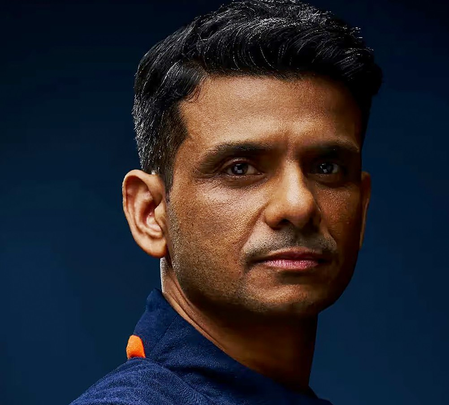
New Delhi, June 28 (IANS) A little while ago, when I looked out of the window, we were passing over Hawaii. From here, we see sunrise and sunset 16 times a day, said Group Captain Shubhanshu Shukla, the first Indian to enter the International Space Station (ISS), during a video interaction with Prime Minister Narendra Modi on Saturday.
Shukla, who became only the second Indian to travel to space after Rakesh Sharma’s historic journey in 1984, reached the ISS on Thursday as part of the international Axiom-4 mission.
He travelled aboard SpaceX’s Dragon spacecraft ‘Grace’, launched from NASA’s Kennedy Space Centre in Florida, completing a 28-hour journey through low Earth orbit.
Shubhanshu Shukla was warmly welcomed by the ISS crew after docking was completed at 4:15 pm IST.
In his interaction with the Prime Minister, Shukla reflected on his experience so far, calling it transformative.
“This is not just my journey, but also our country's journey. I am absorbing these new experiences like a sponge,” he said, speaking from the orbiting laboratory where he will spend the next 14 days conducting scientific experiments and public outreach.
Describing the view of Earth from space, Shukla said: “When I saw the Earth from space, the first thing that struck me was that the planet is truly one — no borders are visible. When I saw India, it looked incredibly grand, much larger and more majestic than it appears on a map.”
The astronaut added that seeing the Earth from above gave him a sense of unity beyond man-made divisions, calling it a humbling and inspiring perspective.
Shukla is joined on the mission by Axiom-4 commander Peggy Whitson, Polish engineer Slawosz Wisniewski, and Hungarian mechanical engineer Tibor Kapu.
Shortly after entering the station, the crew was greeted with hugs, handshakes, and astronaut pins.
“I am astronaut 634. It is a privilege to be here,” said Shukla.
In his brief address during the welcome ceremony, he said: “With your love and blessings, I have reached the International Space Station. It looks easy to stand here, but my head is a little heavy, facing some difficulty, but these are minor issues.”
Expressing his pride, he added, "I have brought the Tricolour with me, and I have brought all of you along with me. In the days to come, this journey will become even more exciting."
--IANS
brt/dan
BJP ‘first party’ to push for caste census: Union Minister
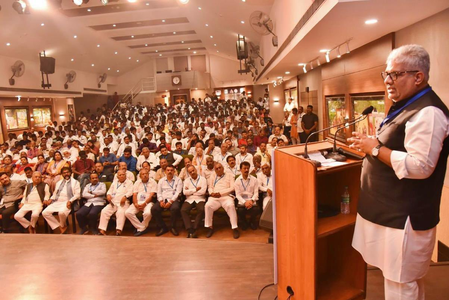
Bengaluru, June 28 (IANS) Union Minister for Environment, Forest and Climate Change Bhupender Yadav claimed on Saturday that the BJP is the “first party” since Independence to push for a caste census.
He said that under the "Sabka Saath, Sabka Vikas" (Together with all, development for all) policy, the BJP aims to bring change to all sections of society based on scientific data.
He said that over the past 11 years, under Prime Minister Narendra Modi’s leadership, numerous development and welfare schemes have been implemented for the benefit of the poor and marginalised.
He noted that it was PM Modi who gave constitutional status to the OBC Commission.
Yadav emphasised that the Registrar General of India is empowered to conduct caste censuses and said that for the first time since Independence, such an exercise is being carried out to responsibly collect data on social, economic, caste-based, and educational indicators.
He recalled that after the end of the Emergency, a non-Congress government, the Janata Party, came to power at the Centre and constituted the Mandal Commission.
Yadav asserted that the BJP is the first party since Independence to push for a caste census.
He mentioned that the Congress mouthpiece 'National Herald' had even published an article advocating for one-party rule in India. Following this, B.K. Nehru had written a letter, and a committee was reportedly formed within the Congress on this matter.
Yadav alleged that Congress had long been engaged in a systematic effort to equate the party with the family, and the family with the nation. This ideology, he said, led to the declaration of Emergency.
He concluded by saying that the Emergency is remembered as a dark chapter in Indian democracy, one that ignited a people’s struggle driven by national self-respect and democratic values.
--IANS
mka/dan
PM Modi talks to India’s ‘first astronaut’ Shubhanshu Shukla, calls him ‘pride of 140 crore Indians’
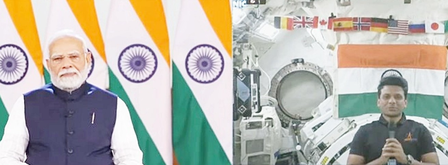
New Delhi, June 28 (IANS) Prime Minister Narendra Modi on Saturday spoke to astronaut Shubhanshu Shukla, who is currently on a landmark Indian space mission, orbiting 400 kilometres above the Earth.
The conversation, streamed live, reflected India's growing ambitions in space and the emotional connect between the nation and its first astronaut aboard an international space station.
“You may be far from us, but the hearts of 140 crore Indians beat with you,” said PM Modi, congratulating Shubhanshu for raising the nation’s pride globally.
“Your name itself carries the word ‘Shubh’ (auspicious). And your journey symbolises the direction in which ‘New India’ is heading,” he said.
Responding with humility, Shubhanshu said, “This journey is not mine alone. It belongs to every Indian. When I was young, I never imagined becoming an astronaut, but under your leadership, this dream came true.”
The young astronaut also lauded the rising development which the country is witnessing and said, “Today, what we are aiming at is now not far from reality. We need collective unity, and we need all the strength from our youth.”
He also shared the food which he had taken with him on this historic mission.
In a lighter moment, PM Modi asked if he shared Indian food with fellow astronauts.
“Yes, I brought some memories of India with me, gajar ka halwa, moong dal halwa, and aamras. I wanted my colleagues here to taste our rich culinary heritage,” Shubhanshu said with a smile.
As PM Modi praised the astronaut’s “down-to-earth” nature despite being in zero gravity, Shubhanshu described the awe of seeing Earth from space.
“From up here, there are no borders—just one planet, one humanity. India looks vast and unified. Borders vanish, and you realise Earth is our one shared home.”
Discussing scientific experiments that he will be conducting in this mission, Shubhanshu highlighted India's breakthrough research in zero gravity.
“I’ve brought here seven new experiments conducted by Indian scientists. We’re testing how stem cell supplements may help delay muscle loss, something that could benefit the elderly back home. We’re also studying micro-algae for agricultural and health uses.”
PM Modi emphasised India's twin strengths of science and spirituality. “Does meditation help in space, too?” PM asked. To this, Shubhanshu confirmed, “Absolutely. Mindfulness keeps us centred amid extreme conditions.”
When PM Modi asked Sudhanshu what message he would like to give to the youth, Shubhanshu replied: “Never stop trying. This journey proves that space is not the limit, it’s just the beginning.”
PM Modi emphasised by stating, “India is not just dreaming of a space station or moon landings, it is preparing to lead the next era of space exploration. Your journey will inspire generations.”
When PM Modi asked him how his learnings could benefit India’s space mission, Shubhanshu replied, “I’ve been making records. All my experience in this mission is being absorbed, and I would feel proud to use and channelise this experience in India’s future space missions.”
--IANS
sas/dan
Chennai airport authorities step up action against laser flashes amid safety concerns
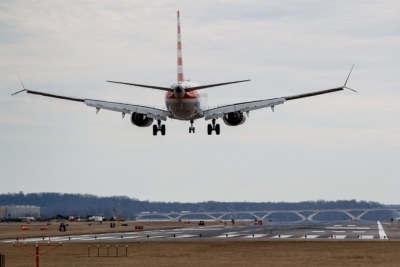
Chennai, June 12 (IANS) In the wake of multiple incidents involving laser lights disrupting aircraft operations, the Airports Authority of India (AAI) has initiated coordinated efforts with Air Traffic Control (ATC) and Chennai police to curb the dangerous practice of beaming lasers at flights near Chennai airport.
In the past two weeks alone, at least three such incidents were reported, prompting heightened concern among aviation and law enforcement officials.
These laser beams, directed at aircraft during critical phases like landing and take-off, pose a serious threat to pilot visibility and flight safety.
To address the issue, the AAI convened a high-level meeting with representatives from the ATC, airlines, and the Greater Chennai Police.
The meeting focussed on identifying effective strategies to pinpoint the origin of laser flashes and enable quicker police response.
According to sources, police officials expressed difficulty in tracing the exact location of the laser emissions based on the current reports they receive.
In response, the airport authorities have assured that accurate coordinates and real-time data from the ATC will be provided to assist in ground-level enforcement.
“Once we have the precise location of the laser source, our teams can act swiftly and apprehend those responsible,” said a senior airport police official.
In a related move, the city police recently issued a prohibition order banning the use of lasers, hot air balloons, tethered balloons, and other light-emitting flying objects in the vicinity of Chennai Airport.
The order aims to eliminate visual distractions and hazards that could jeopardise aircraft operations.
Laser beam incidents are not new to Chennai airport. Over the past year, several flights have reported sudden flashes of green or red laser lights during descent, forcing pilots to take precautionary measures and sometimes delaying landings.
In a few cases, pilots have filed safety incident reports with the Directorate General of Civil Aviation (DGCA), citing temporary vision impairment and cockpit distractions due to laser exposure.
Aviation safety experts warn that such pranks can have catastrophic consequences, particularly in low-visibility conditions or during night operations.
“It’s not just a nuisance, it’s a potential disaster in the making,” one senior pilot noted.
Authorities have urged the public to refrain from using laser devices near flight paths and warned of strict action against violators.
With enhanced coordination now in place between AAI, ATC, and the police, officials hope to clamp down effectively on this recurring menace.
—IANS
aal/rad
Delhi Police nabs fugitive linked to Khalistani propaganda in Uttarakhand
Dehradun, June 12 (IANS) The Special Cell of Delhi Police has arrested Gurdas Singh, a fugitive wanted in connection with a shooting at a property dealer's office in the Mansarovar Park area of the national Capital, officials said on Thursday.
Acting on a tip-off, Singh, who had been absconding after being granted bail, was apprehended by the Special Cell from Uttarakhand on June 6, where he had been deliberately evading arrest for an extended period.
In a significant revelation, authorities found that Singh was allegedly promoting the ideology of slain Khalistani terrorist Jarnail Singh Bhindranwale and designated pro-Khalistani terrorist Gurpatwant Singh Pannun.
"Gurdas Singh's mobile phone has been found containing inflammatory material and statements made by designated terrorist Gurpatwant Singh Pannun, along with content glorifying Jarnail Singh Bhindranwale, indicating potential ideological links to extremist and anti-national elements," the police said.
Additionally, the Delhi Police also mentioned that the security and Intelligence agencies will jointly interrogate Gurdas Singh to verify any formal or informal association with anti-national organisations.
The arrest is being treated as a major breakthrough in an ongoing investigation linked to the recovery of an illegal firearm.
Singh's capture has prompted the Special Cell to expand its operations, with plans to conduct multiple raids in Uttar Pradesh and Uttarakhand to identify and apprehend the original supplier of the illegal weapon recovered earlier.
Investigators are currently examining both forward and backward linkages of the recovered firearm, seeking to determine whether Singh is part of a broader arms supply network.
They also plan to explore any additional leads that may emerge during the ongoing probe.
Singh had been on the run since the shooting incident at the Mansarovar Park office and was the subject of a Non-Bailable Warrant (NBW) issued by the Karkardooma Court.
During the arrest, police recovered a pistol from the toolbox of his motorcycle in Dilshad Garden, as well as a photo from his phone showing him holding a firearm. The motorcycle, police said, was reported stolen from Sagarpur.
--IANS
sd/rad
Honeymoon murder case: ‘Mangalsutra’ clue made Sonam Raghuvanshi a prime suspect

Shillong, June 12 (IANS) The murder of Raja Raghuvanshi during his honeymoon in Meghalaya was unravelled after investigators found a mangalsutra and a ring left behind in a suitcase by his wife, Sonam Raghuvanshi, at a Sohra homestay, Meghalaya Police said.
The ornaments became the first crucial lead in what turned out to be a chilling case of contract killing, allegedly masterminded by Sonam and her boyfriend.
Raja, 29, and Sonam, 25, who had recently tied the knot in Indore on May 11, reached Meghalaya on May 20 for their honeymoon. The couple vanished on May 23 in Sohra, East Khasi Hills, just hours after checking out of a homestay in Nongriat village.
On June 2, Raja's body was discovered in a gorge near Weisawdong Falls. The search for Sonam concluded when she surrendered in Uttar Pradesh's Ghazipur on June 9.
Police also arrested her boyfriend, Raj Kushwaha, along with three contract killers allegedly hired by Sonam to carry out the murder.
Meghalaya Director General of Police (DGP) I Nongrang revealed that a breakthrough in the case came when police recovered a mangalsutra and a ring from the suitcase Sonam had left at the Sohra homestay.
"A married woman leaving behind the ornaments gave us a clue to pursue her as a suspect in the case," Nongrang said.
According to a police officer involved in the investigation, the couple had arrived at the Sohra homestay on May 22 without prior booking and were unable to secure a room.
They left their luggage at the property and planned to trek over 3,000 steps to reach Nongriat village, famous for its double-decker living root bridge.
The couple spent the night at a homestay in Nongriat and checked out early on May 23. After trekking back to Sohra, they collected their scooter from a parking area and rode toward Weisawdong Falls.
It was at this location that Raja was allegedly murdered in front of Sonam by the three hired assassins.
A tour guide later informed police that he had seen the couple accompanied by three Hindi-speaking men while trekking back from Nongriat to Sohra, a detail that significantly aided the investigation.
"All the accused have admitted to the crime, and with all the evidence gathered, there is no room for denial," the officer added.
The police on Wednesday also said that all five accused have confessed to their roles in murdering Raja.
A court in Shillong has since remanded Sonam, her boyfriend, Raj Kushwaha, and the three contract killers to eight days of police custody as the probe into the gruesome murder continues.
--IANS
sd/